

Yoga is a centuries-old practice that includes physical postures, focus, and deep breathing.
Performing yoga regularly can enhance your strength, flexibility, peace of mind, endurance,
and overall well-being.
The term yoga is derived from the Sanskrit word “yuj,” which denotes “union” or “to join.”
The Rig Veda is the place where the word “yoga” has been used for the first time. In the late 1890s, awareness of yoga was spread by Indian monks, and in 1970, modern yoga practice became popular widely in Western countries.
There are different types of yoga asanas, such as mountain yoga, Iyengar yoga, yin yoga, and Restorative Yoga. Among all, Ustrasana yoga is one of the best and most effective types of yoga. In this blog, we know about the power of Ustrasana, and how to go about it in detail.
What is Ustrasana (Camel Pose) ?
- Sanskrit Name: Ustrasana
- Pronunciation: OOH-strah-sah-nah
- Meaning: ‘Ustra’ means camel, and ‘Asana’ means posture.
- Type: Backbend / Kneeling Pose
- Level: Intermediate
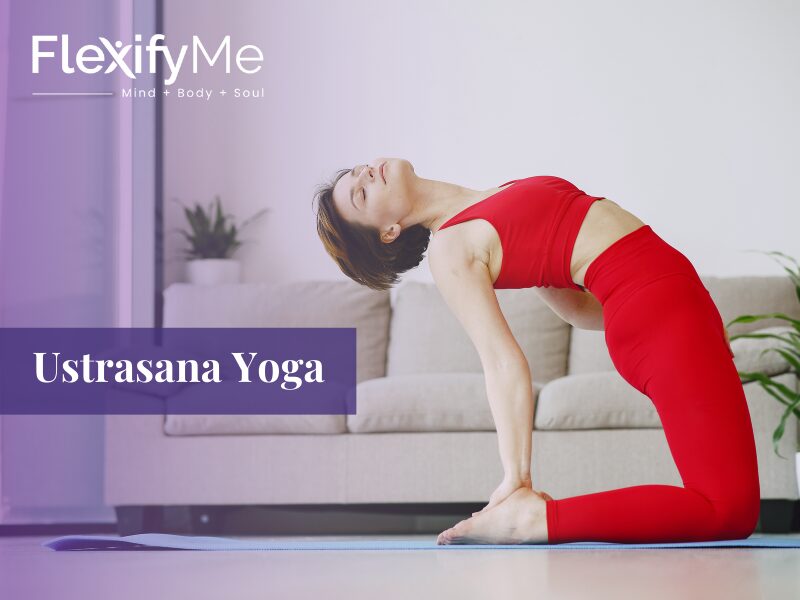
Ustrasana means “Ustra” = camel and “Asana” = posture. Therefore, it is also commonly known as a camel pose. It is a mid-level back-bending yoga posture known as open “Anahata”. This pose increases the strength and flexibility of the body and also improves digestion. It is also good for preventing sagging, and it relieves stiffness in the lower back.also Ustrasana is a heart-opening pose that targets the front body — chest, abdomen, thighs, and hip flexors. It also improves spinal alignment by enhancing mobility in the thoracic spine.
Step-by-Step Guide: How to Do Ustrasana?
Here are some Ustrasana steps. To perform this asana first wear proper attire which will help you to perform the asana comfortably.
- First step: It includes kneeling on the yoga mat in a manner that the hips and back are upright in position above the knees. If you have sore knees, it is advised to put a pad below the knee. If a pad is not available, then a folded blanket or mat can be used. People with joint pain or joint operation should seek proper advice from a professional trainer before performing the exercise.
- Step Two: Now put your palms alongside your ribcage. While performing this, you lift your hands to the sidewards of your body. Maintain the position where your elbow is facing outward and then try to encircle the fronts and sides of the rib cage mainly using the four fingers. After that, put your thumb on the back side of the ribcage which will allow you to provide proper support to your lumbar spine and help to relax a bit.
- Step Three: Next inhale and lengthen your spine. Try to open your chest in the upward direction towards the ceiling and support the position by placing your hand to uplift the rib area.
- Step Four: In the next step, try to continue to arch your back, reaching out for your heels with your hands as much as possible. Your fingers should grip your heels or if not, they should rest lightly on your feet. Lift your chest if more height is required for your hands to reach the heels.
- Step Five: Now keep your chest lifted try to avoid compressing the back side of the neck and raise your hips above the knees. Try to maintain this position for 10-15 seconds.
- Step Six: Open your mouth and if comfortable, you can put your head back. However, if you face any discomfort, you can tuck your chin.
- Step Seven: Now, exhale while maintaining this position and ensure your gaze upward or forward depending on comfort. You can feel that abdominal muscles are getting involved while performing this asana. To exit from the pose, gently release your heels and bring your hand to the back of your lower back. Then slowly come to a kneeling position, sit on your heels and relax.
Be aware of how you breath
- While lifting the body from a sitting to a kneeling position, inhale deeply.
- On the other hand, lean back and hold the pose while breathing in and breathing out slowly.
- Duration for beginners: keep the Ustrasana pose for 20 – 60 seconds.
- Duration for advance: keep the Ustrasana pose for 1 – 3 minutes.
5 Health Benefits of Ustrasana
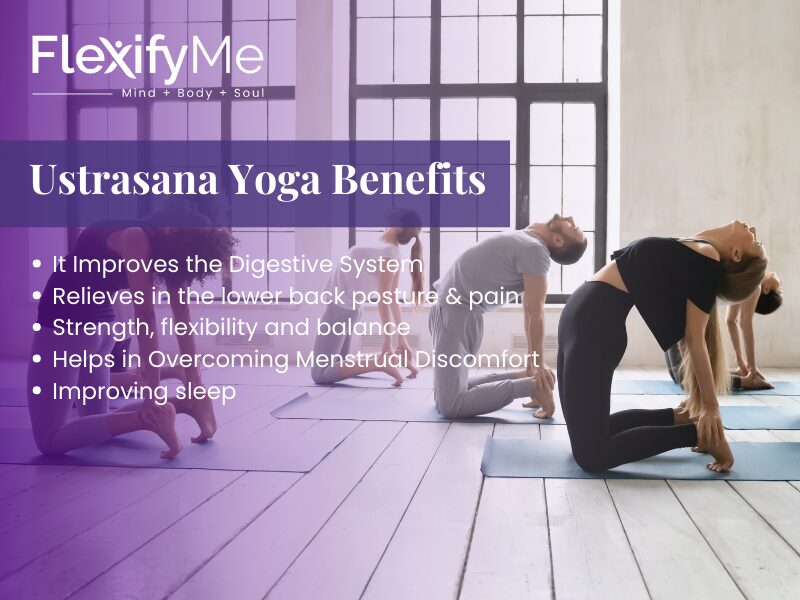
There are lots of benefits in practising Ustrasana yoga regularly and correctly. Here are some:
1. It Improves the Digestive System
Certain yoga poses create force or pressure on the intestines, while others provide a stretch. Ustrasan yoga helps food to move properly through the digestive tract. Breathing exercises include diaphragmatic movement, which plays an important role in activating the digestive system. Inversion’s position helps in improving gut health. This position aids in removing the waste products easily from the tract, and it also helps in treating constipation problems.
2. Relieves in the lower back posture and pain
The back carries a load of stress, improper postures, excessive sitting, standing, and walking. The spine is also a very important body part, and neglecting it can lead to the worst of conditions with age. The spine holds multiple muscles throughout the body. Its role is crucial in maintaining the stability and strength of nerves, muscles, and ligaments. The Ustrasana pose stretches, strengthens and stimulates the nerve that finishes in the spine. This improves releasing stress, healing the body and mind, strengthening organs, muscles, tissues and systems, and it also helps in improving the back posture.
3. Strength, flexibility and balance
In today’s busy life, finding an integrated approach to physical fitness is necessary. Flexibility means the various movements in muscles and joints. Ustrasana promotes flexibility with a combination of dynamic and fixed stretches, which gradually increase the ability of the body to move comfortably and freely. Deep breathing and slow movement help increase the blood flow to the different body parts, which warm up the whole body and increase strength.
Furthermore, it helps build strength, balance, and flexibility. Many studies have proven that doing regular yoga practice helps people with chronic joint pain.
4. Helps in Overcoming Menstrual Discomfort
Menstrual pain is generally a cramping pain in the lower abdomen. Most women face menstrual cramps during their menstrual periods or just before starting. In this case, Ustrasanay is an ideal yoga pose that soothes menstrual cramps if you practice correctly. Our pelvis, belly, lower back and hips are the areas where you feel the cramping pain. Certain yoga poses like Ustrasana pose target these areas for pain relief. These poses can be done by beginners also as they are very easy to do.
5. Improving sleep
While doing Ustrasana yoga the blood circulates throughout the body, making us feel relaxed and stress-free. It further increases melatonin levels, which helps in better sleep.
Are you on your quest to fix your pain issues with natural yet effective remedies? With FlexifyMe, it is now possible in the comfort of your home! Book a free consultation now!
Ustrasana Contraindications
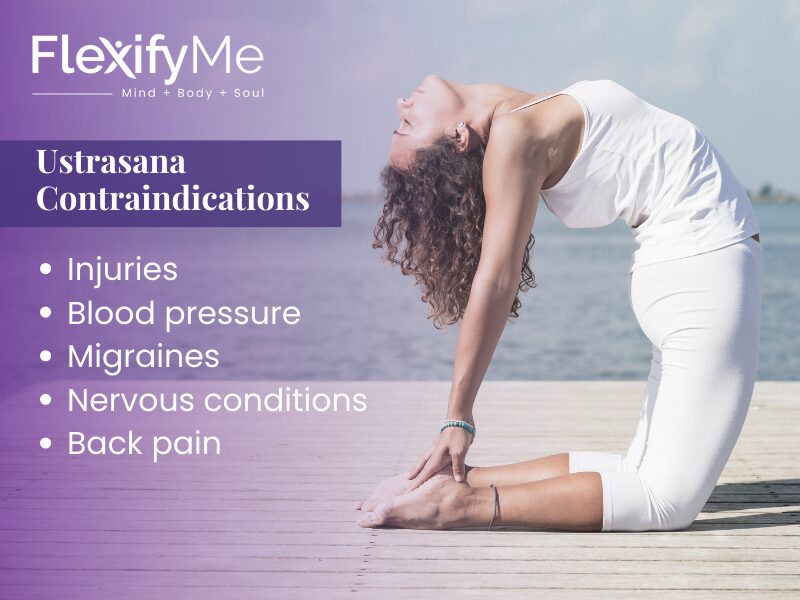
While Ustrasana yoga is an impactful pose, it should not be performed at certain instances. Here are some contraindications one should be careful about before starting Ustrasana yoga.
- It is important to be aware of the limitations of your body while performing yoga poses, including Ustrasana yoga. Avoid overstretching when performing Ustrasana as this could result in pain and injuries.
- You should practise the steps gently. Injuries may occur from doing the steps incorrectly.
- Avoid doing camel pose if you have got any type of injuries like hurt in the shoulder, feet thighs, and spine.
- If you are suffering from migraines, insomnia and fluctuating blood pressure then it is better to avoid doing camel pose as it can have a bad effect on the body.
- People who are suffering from epilepsy should avoid this yoga pose.
- Those who are suffering from lower back pain, balancing issues, trauma, anxiety, vertigo and advanced spondylitis should avoid doing the Ustrasana pose.
- Avoid doing camel poses during pregnancy.
- High blood pressure patients should avoid doing this asana.
Modifications & Props
- Beginners: Keep hands on lower back if reaching heels is difficult.
- Props: Use blocks beside the feet to place hands higher.
- Wall Support: Kneel against a wall for back and hip alignment.
- Advanced Variation: Perform with thighs perpendicular to the floor, head fully dropped back, and arms extended.
Ustrasana Precautions
Following a few tips can save you from major injuries and help you savour the benefits of Ustrasana Yoga to the fullest. Follow the tips below and enjoy practicing camel pose as per your convenience.
- Drink an adequate amount of water before and after doing yoga as it prevents dehydration and excess tiredness.
- Sip herbal tea after doing Ustrasana yoga as its anti-inflammatory properties reduce muscle pain and make you feel relaxed.
- After doing Ustrasana yoga, go for heat therapy to relax your torn muscles and improve blood circulation. It also helps in reducing fatigue.
Conclusion
Performing Ustrasana yoga improves spine flexibility and stretches the front body. This pose strengthens the core muscles of the body and stimulates the digestive organs. Furthermore, it relaxes the shoulders and chest, which can alleviate tension. Wikipedia says While Ustrasana offers many benefits, it’s important to approach it with proper alignment and awareness of the body’s limitations.
If you have any back issues or injuries, consult a professional trainer or a healthcare provider before performing this pose. It encourages emotional release and helps to boost your confidence. Maintaining balance and focus for performing this asana requires mental concentration, which can improve overall mindfulness and focus.
Ustrasana (Camel Pose) FAQ’s
1. What is Ustrasana and what are its benefits?
Ustrasana, also known as Camel Pose, is a deep backbend yoga posture that stretches the front body and strengthens the back. Benefits include improved posture, spinal flexibility, chest opening, reduced fatigue, and better lung capacity.
2. How to do Ustrasana step by step for beginners?
Start by kneeling on the floor, keeping knees hip-width apart. Place hands on the lower back, lift your chest, and slowly arch backward. Reach for your heels (or use blocks), push hips forward, and breathe deeply. Hold the pose for 20–30 seconds and release slowly.
3. What are the common mistakes to avoid in Ustrasana?
Avoid collapsing the lower back, squeezing the neck, or letting the hips fall behind the knees. Don’t hold your breath—keep it smooth and steady. Always warm up your spine before doing Ustrasana.
4. Is Ustrasana good for back pain and posture correction?
Yes, when performed with proper alignment, Ustrasana helps strengthen the back muscles and opens tight shoulders and chest—making it effective for correcting poor posture and relieving mild to moderate back pain.
5. Can Ustrasana help with emotional release or stress relief?
Yes. Ustrasana is a heart-opening pose that activates the Anahata (heart) chakra, helping release stored emotional tension and promoting relaxation, balance, and inner calm.
6. What are the precautions and contraindications for Ustrasana?
Avoid Ustrasana if you have neck injuries, hernia, vertigo, or recent abdominal surgery. Pregnant women and individuals with low blood pressure should consult a yoga therapist before attempting this pose.
7. How long should Ustrasana be held for best results?
For beginners, 20–30 seconds is ideal. Advanced practitioners may hold Ustrasana for up to 60 seconds. Always focus on steady breathing and spinal alignment rather than duration alone.
8. What muscles are stretched and strengthened in Camel Pose?
Ustrasana stretches the chest, abdomen, thighs, and hip flexors, while strengthening the back, glutes, and hamstrings. It also improves flexibility in the spine and shoulders.
9. Is Camel Pose suitable for beginners or only advanced yogis?
Camel Pose is suitable for beginners with proper guidance and modifications. Beginners can keep hands on hips or use yoga blocks to support the backbend until flexibility improves.
10. What yoga poses should be done after Ustrasana?
Counterposes like Child’s Pose (Balasana), Seated Forward Fold (Paschimottanasana), or Cat-Cow Stretch are ideal to neutralize the spine and relax the back after deep backbends like Ustrasana.


