
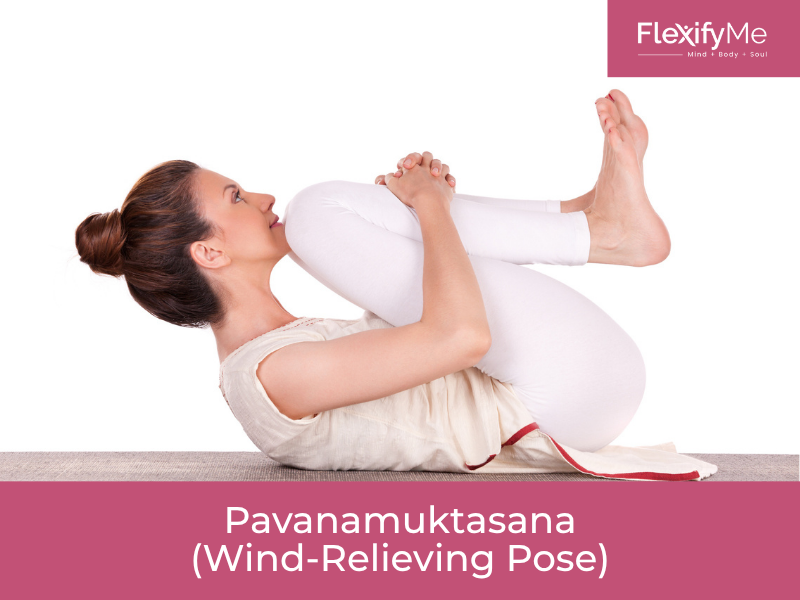

Pawanmuktasana (Wind Relieving Pose) is a posture in yoga which is suitable for beginners to practise. As the name suggests, it helps to release abdominal gas to eliminate the feeling of bloatedness. Often, the feeling of gas build-up in our stomach after a heavy meal can be both discomforting and unhealthy. This could be due to various reasons, like indigestion or the natural tendency of the abdominal muscles. The slow rate of metabolism can also be held responsible for such a situation. Asanas like the Pawanmuktasana a beneficial postures to improve digestion and strengthen the core muscles.
Let us find out more about Pawanmuktasana in this article and how to conduct this posture. We will also learn about the different benefits of the Wind Relieving Pose and the precautions to observe.
What Is Pawanmuktasana (Gas Release Pose)
Pawanmuktasana is a posture which involves inclinations and angles in the body that can release the built-up gas. In this reclined yoga posture, the abdomen is subjected to gentle massage, which relaxes the abdominal muscles.
The name Pawanmuktasana is derived from the Sanskrit terms, Pavana meaning air, Mukta meaning release and asana referring to a posture. By releasing the excess digestive gas from the stomach, the posture gives you a feeling of lightness. This asana is sometimes also called the One-Legged Knee-to-Chest Pose.” Let’s find out the steps to conduct Pawanmuktasana at home to derive its benefits.
Pawanmuktasana Benefits
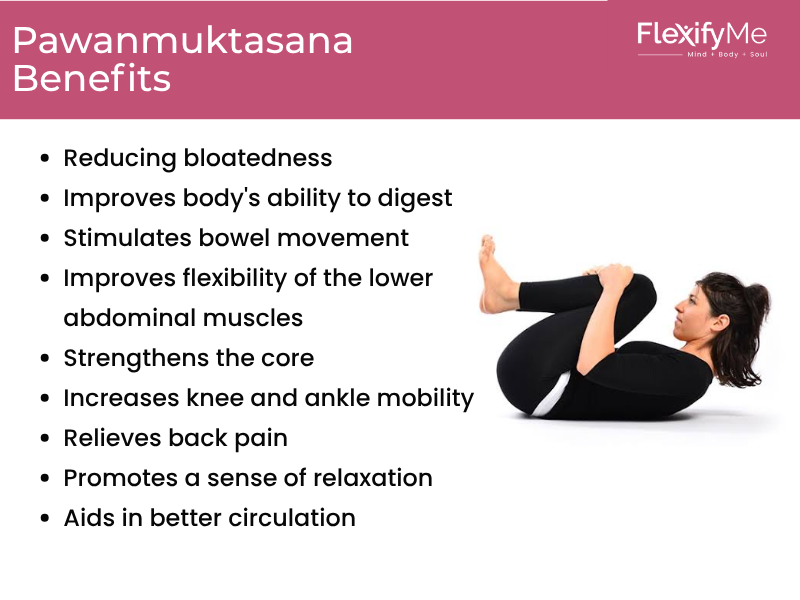
There are various benefits of practising Pawanmuktasana regularly. Being a relatively easy posture for beginners, the asana is good for all kinds of yoga practitioners. Here are some of the major Pawanmuktasana benefits:
- Reducing bloatedness: The pose lays pressure on the abdominal region. This compresses the organs and releases the digestive gases that are built up after a meal. By practising this posture, you can reduce the feeling of bloatedness by expelling gas.
- Improves body’s ability to digest: The massage-like action on the abdominal muscles through Pawanmuktasana can improve the ability of the intestine and other digestive organs to function faster and better. As a result, yoga like this also helps to address conditions like constipation.
- Stimulates bowel movement: Regular engagement in yoga postures like Pawanmuktasana can also help to regulate bowel movement. Hence, it is considered an essential yoga pose that you should incorporate into your daily sessions.
- Improves flexibility of the lower abdominal muscles: By stretching the abdominal region, the muscles of the lower back are relaxed and stretched from time to time. This aids in the release of built-up gases in your stomach to offer relief. Muscles of the hips and shoulders are also engaged in this posture, which further leads to greater flexibility of the body.
- Strengthens the core: This pose also engages the core, which helps to maintain balance and stability. As a result, the core muscle gets stronger with time and enhances the flexibility of the body in the lower regions.
- Increases knee and ankle mobility: Postures like Pawanmuktasana are effective in enhancing the mobility of the knees and the ankles. This helps to reduce the stiffness in the joints and avoid cramps.
- Relieves back pain: One can also address complications like lower back pain and sudden cramps by increasing flexibility in the back. Engage in such yoga poses every day to gradually observe the positive impact on your enhanced fitness level.
- Promotes a sense of relaxation: Through gentle compression and relaxation of the muscles, you can allow your body to enter into a state of rest. This offers a calming effect on the nervous system and helps the body to recover from any other intense exercise.
- Aids in better circulation: Yoga styles like Pawanmuktasana ( Wind Relieving Pose) can also have a beneficial impact on the overall circulation in the body. Through these postures, the blood is delivered better to the abdominal region, which aids in assimilation, absorption and adequate digestion.
How To Do Pawanmuktasana Step By Step
To conduct the Pawanmuktasana ( Wind Relieving Pose) at home, follow these steps:
- Initially, you need to lie down on your back such that your back faces the ground. Keep your legs and feet close together while you are lying down.
- Now, you need to bend your raised legs and bring them up to your knees.
- Breathe throughout the process so you can maintain a steady state.
- Now, raise your legs off the floor. Make sure that while you raise your legs, they are still placed close together.
- Use your hands to grasp both your legs, preferably around the knees.
- Your knees are pulled back towards your head.
- At this point, you need to lift your head off the ground and move it forward until your forehead reaches the knees and touches them.
- Keep your breathing even throughout the process to gather energy.
- To unwind from the posture, you need to straighten your legs out slowly and then allow your head to fall back on the ground.
- Disengage and then relax. You can repeat this posture a couple of times in every yoga session to observe effective results.
When To Do Pawanmuktasana
Are you wondering when is the right time to do Wind Relieving Pose? The best time to engage in such asana is early in the morning. Since it involves the movement of your abdomen, you should be on an empty stomach before practising this yoga. It is also a highly beneficial posture that you can practise at the beginning of the session. With Pawanmuktasana, the trapped air inside your abdomen is released, making it easier for you to flex during the other postures.
However, you can also engage in the Wind-Releasing posture in the evening after a heavy meal. But it is recommended that you provide yourself with a lapse time of 3 to 4 hours before doing Wind Relieving Pose. Many practise this asana even before going to bed to feel a sense of lightness. Performing Pawanmuktasana before meditation also sets the mood for a deep and purposeful yoga session every day.
Pawanmuktasana Precautions
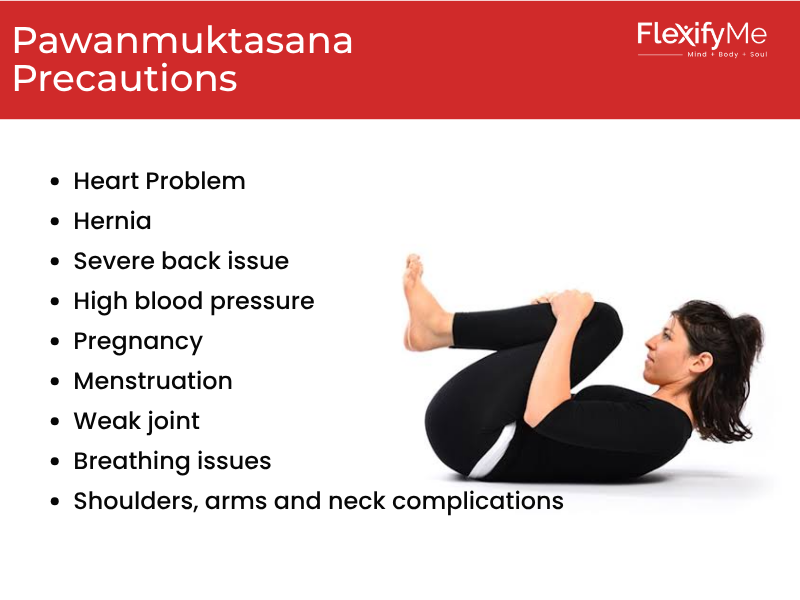
It is always advisable to take necessary precautions as you engage in something like Wind Relieving Pose. Even though it is a pose that is easy for beginners, certain measures can help you avoid any unpleasant situation and enjoy the benefits better.
- If you experience pain in the neck during this yoga, then simply lower your head to the ground and release the weight on the spine.
- Make sure you do not put excessive pressure on the thighs.
- If you are facing situations like piles, then it is best to avoid Wind Relieving Pose for a while.
- Try to avoid overstretching your neck and chest muscles as this can later result in pain.
- Make sure that your lower back remains grounded to the floor and flat on the surface while you try to lift your neck and head to a higher position.
- Your buttocks must be present in a lifted state during this asana.
Pawanmuktasana Contraindications
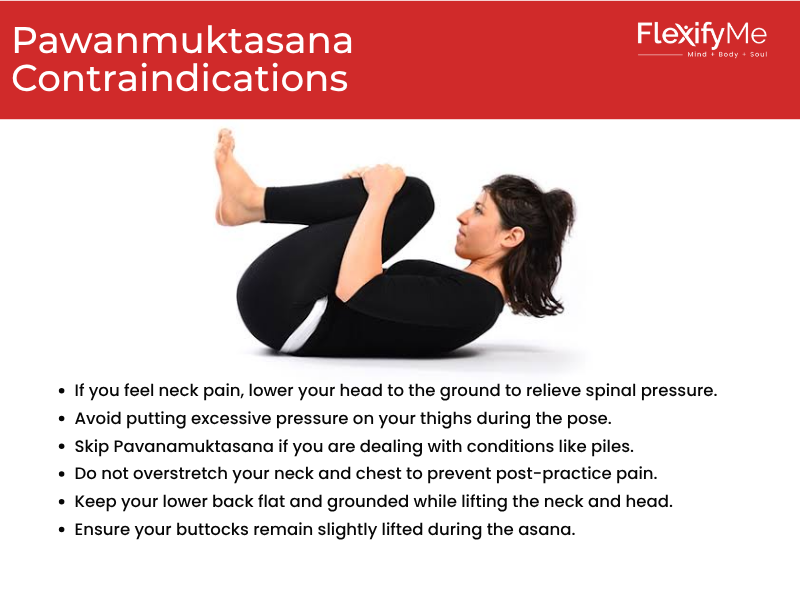
Before you engage in such a yoga posture every day, follow these Wind Relieving Pose contraindications so you can take the best measures:
- Heart Problem: Individuals who suffer from heart problems should avoid this posture as it can exacerbate the ailments. It is best to speak to a healthcare professional for the necessary steps of precautions.
- Hernia: The condition of hernia can further worsen when it comes to Pawanmuktasana. Hence, you should avoid such yoga when herniated conditions or inflammation are concerned.
- Severe back issue: People who face the situation of sciatica, or slipped disc issue, should stay away from Wind Relieving Pose. Conditions of back issues can be aggravated when you are being careless during yoga and other exercises.
- High blood pressure: Individuals with high blood pressure are also likely to face complications when engaging in Pawanmuktasana. With a potential increase in strain on the blood vessels and greater circulation level during such postures, the blood pressure levels might escalate even more.
- Pregnancy: Pregnant women should avoidWind Relieving Pose as it can put pressure on the belly. There is a potential risk of hiding the fetus if you engage in Pawanmuktasana without taking many precautions.
- Menstruation: During the menstruation phase, it is best to avoid asanas which involve the abdomen. With increased pressure on the abdomen, there can be more bleeding and cramps.
- Weak joint: Ones with weak joints in the back, knees and shoulders should avoid Wind Relieving Pose, which involves strength of the knees and the lower body.
- Breathing issues: Many might also face breathing discomfort during Pawanmuktasana as they hold their heads up during this posture.
- Shoulders, arms and neck complications: Individuals with conditions like osteoporosis or any form of arthritis should also stay away from Wind Relieving Pose as it can further put pressure on the bones and lead to aches or even sprains in adverse cases.
Who Should Avoid Pawanmuktasana
While it is a beginner-friendly posture, you should be aware of your health concerns before engaging in anything intense. Generally, patients with abdominal surgeries are asked to avoid Wind Relieving Pose as it can be harmful to the healing stitches. Many with a history of surgery might also experience pain in the abdomen when not exercising caution while doing this asana. If you are someone who has recently undergone surgery, stay away from Pawanmuktasana for a while. If you experience any kind of pain or discomfort in the stomach region, consult a healthcare professional immediately or speak to an expert yoga practitioner to find out what the best Wind Relieving Pose variation is for you.
Learn Wind Relieving Pose and 50+ digestive health yoga poses from certified instructors in our live online yoga classes. Get personalized guidance, proper alignment corrections, and a customized routine that fits your body’s needs.
Pawanmuktasana Variations
Pawanmuktasana variations make it easy for many to engage in this yoga state despite some complications and ailments. Based on your flexibility and experience, you can opt for the following:
Sulabh Pawanmuktasana
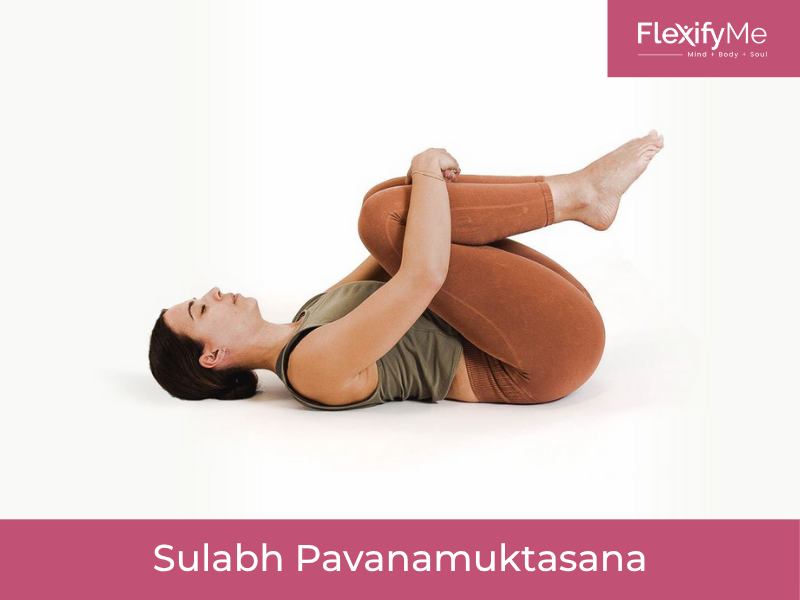
In this variation, you can keep your head on the floor instead of lifting it off the ground like in the initial yoga. This helps to reduce the intensity and pressure on the neck and lifts some weight off the chest.
Ardha Pawanmuktasana:
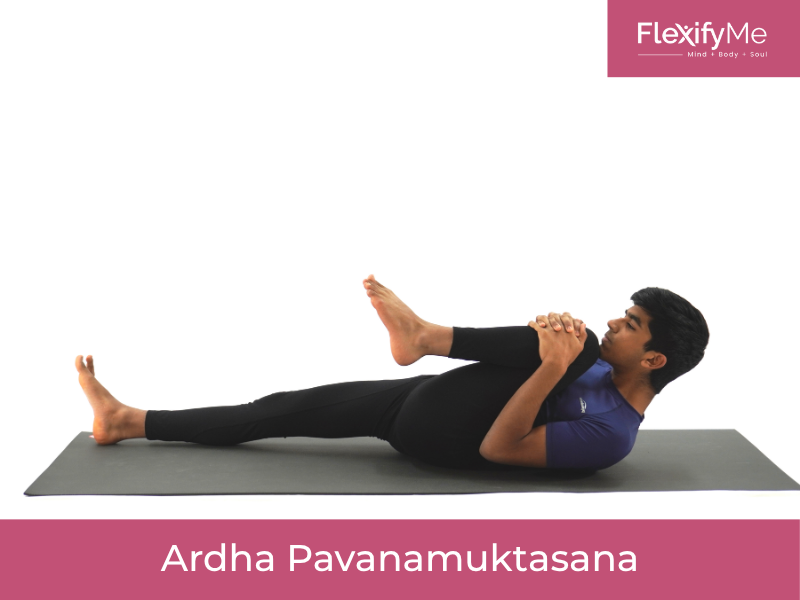
This posture involves one leg at a time. Gradually bring your knees to your chest and then do the same with the alternating legs. It is considered a gentler way to experience this pose, where the leg movement is not very challenging.
DvPada Pawanmuktasana (Both Legs Dynamic):
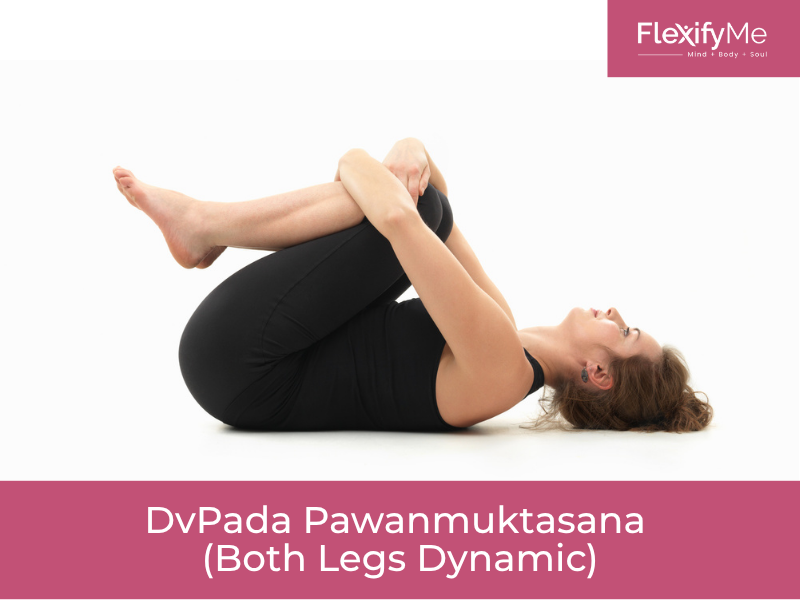
Inhale as you engage in this pose and then exhale as you bring both knees towards your chest.
Conclusion
Pawanmuktasana ( Wind Relieving Pose) is a posture in yoga which provides relief from extreme bloatedness and conditions of constipation. By regulating the movement of muscles and their flexibility in the abdominal region, the digestion rate is improved. This has a major impact on the bowel movement and eliminates unwanted digestive gas accumulation in the stomach.
Knowing the right way to address and perform Wind Relieving Pose with a healthy approach can help you derive all its excellent benefits. However, you need to keep the contraindications in mind and exercise necessary precautions.
Frequently Asked Questions for Pawanmuktasana (Wind Relieving Pose)?
1. What is Pawanamuktasana?
Pawanamuktasana, or Wind-Relieving Pose, is a simple yoga pose that helps release gas from the stomach and improves digestion. In this pose, you lie on your back and pull your knees close to your chest. It is one of the most commonly practised yoga poses for bloating, constipation, and stomach discomfort.
2. What are the benefits of Pawanamuktasana?
Pawanamuktasana is mainly known for improving digestion and relieving gas. It also helps reduce bloating, supports better bowel movement, stretches the lower back, and relaxes the abdominal muscles. Many people practise it daily to feel lighter and more relaxed.
3. How to do Pawanamuktasana correctly?
Start by lying flat on your back. Slowly bend your knees and bring them toward your chest. Hold your knees with both hands and gently lift your head toward your knees if comfortable. Hold the pose for a few breaths and then relax slowly. Avoid rushing while doing the pose.
4. Does Pawanamuktasana reduce belly fat?
Pawanamuktasana can support belly fat reduction when practised regularly along with proper diet and exercise. The pose puts gentle pressure on the stomach area, activates abdominal muscles, and improves digestion, which may help in managing weight over time.
5. Is Pawanamuktasana good for gas and bloating?
Yes, this pose is especially popular for relieving gas and bloating. The pressure created on the abdomen helps release trapped gas and makes the stomach feel more comfortable. Many people practise it after long sitting hours or digestive discomfort.
6. Can Pawanamuktasana help with constipation?
Yes, Pawanamuktasana may help relieve constipation naturally. The movement and pressure around the abdominal area stimulate the intestines and support smoother bowel movement when practised regularly.
7. What is the best time to do Pawanamuktasana?
The best time to practise Pawanamuktasana is early in the morning on an empty stomach. You can also do it in the evening, but make sure there is a gap of at least 3 to 4 hours after eating.
8. How long should you hold Pawanamuktasana?
Most people hold the pose for around 20 to 30 seconds while breathing normally. If you are comfortable, you can slowly increase the duration. The focus should always be on relaxed breathing rather than holding the pose for too long.
9. Can beginners do Pawanamuktasana?
Yes, beginners can easily practise Pawanamuktasana. It is a gentle yoga pose that does not require much flexibility. Even people who are new to yoga usually find it simple and comfortable to do.
10. Is Pawanamuktasana good for lower back pain?
Pawanamuktasana may help relieve mild lower back stiffness because it gently stretches the lower spine and relaxes tight muscles. However, if someone has severe back pain or an injury, it is better to consult a doctor or yoga expert first.
11. Can Pawanamuktasana be done daily?
Yes, this pose is safe for daily practice for most people. Regular practice may help improve digestion, reduce gas problems, and keep the lower back relaxed and flexible.
12. Who should avoid Pawanamuktasana?
People with hernia, severe back injury, neck problems, recent abdominal surgery, or pregnancy should avoid this pose unless advised by a healthcare professional or experienced yoga trainer.
13. Is Pawanamuktasana good for digestion?
Yes, Pawanamuktasana is considered one of the best yoga poses for digestion. It helps stimulate the digestive organs, improves bowel movement, and may reduce common stomach issues like gas, heaviness, and bloating.
14. What are the contraindications of Pawanamuktasana?
Pawanamuktasana should be avoided in cases of severe spinal issues, abdominal surgery recovery, pregnancy, and serious neck pain. Doing the pose incorrectly may also cause strain, so proper posture is important.
15. What are the common mistakes in Pawanamuktasana?
One common mistake is pulling the knees too hard against the chest. Some people also hold their breath or strain their neck while lifting the head. It is always better to move gently and keep the breathing relaxed throughout the pose.