


Understanding Lower Back Pain
Here are Yoga poses for lower back pain is among the most frequent physical complaints troubling millions of people around the world. It can result from multiple reasons, including poor posture, spending a long time seated in one position, stress, and/or injury. Continuously experiencing back pain can undermine your quality of life. Yoga is a safe, gentle and effective complement to relieving back pain by building strength, improving flexibility and achieving a naturally aligned spine.
The magic of yoga is that it is holistic. It does not just treat symptoms; it addresses the underlying causes of back pain by releasing tension, improving circulation and strengthening your core. When practised regularly, the yoga poses for back pain will help restore balance to your body and mitigate future occurrences of discomfort.
In this article, we review nine highly effective yoga poses designed to reduce back pain. Each yoga pose has unique benefits, and all poses can be modified for different levels of fitness and experience. Whether you are experiencing pain in your lower back, upper back, or general discomfort from spinal compression, these asanas will help you achieve a pain-free back.
How Yoga Helps Lower Back Pain
Yoga helps treat back pain in several ways. It is therapeutic in its own right and facilitates many of the therapeutic elements needed to treat pain.
Strengthening The Core Muscles
A strong core provides vital stability for the spine, taking the load off the back muscles and preventing strain.
Improved Flexibility
Tight muscles around the hip region, hip flexors, hamstrings and lower back increase the pull on the spine to become out of alignment. Yoga stretches these areas to improve the posture of the spine and overall spinal health.
Improved Body Awareness
Yoga promotes body awareness in a challenging way, developing mindful posture practice to help people recognise and correct poor postural habits that contribute to their back pain.
Reduce Stress and Tension
People tend to hold stress in their back and shoulders. The focus in yoga on each breath helps promote relaxation and release stress and tension that have accumulated.
Increased Circulation
Yoga poses will definitely increase a person’s blood supply to their spine and outer muscular body layers that facilitate the delivery of nutrients to those areas, increasing blood flow, aiding recovery and healing.
Benefits of Yoga for Back Pain
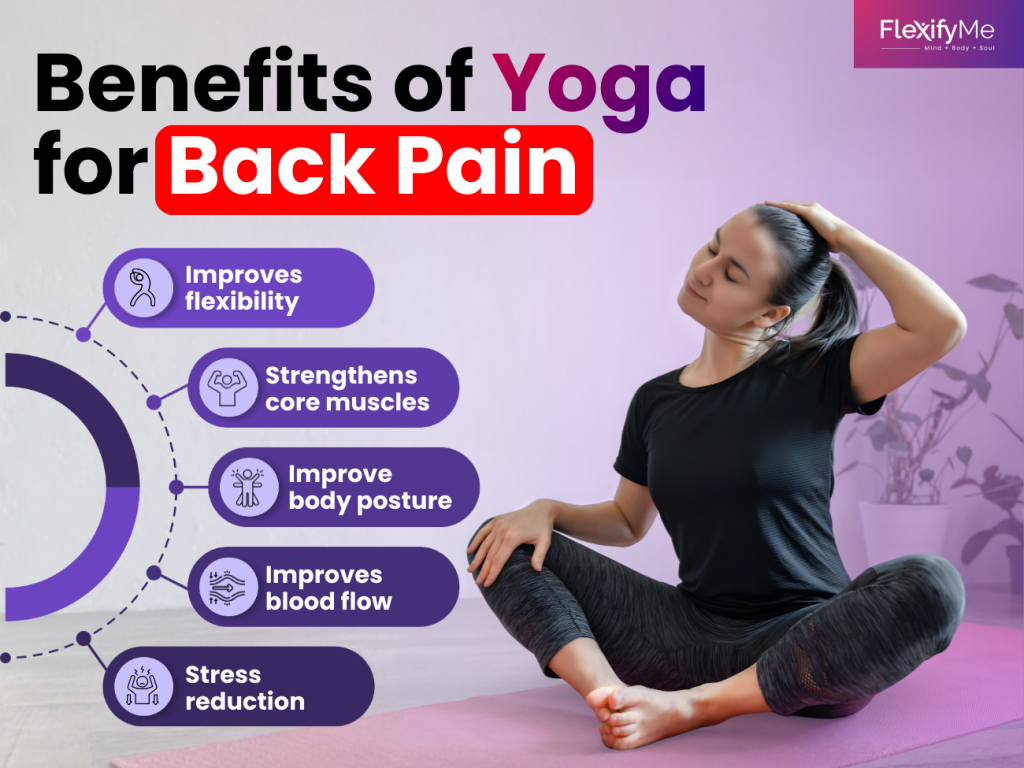
Yoga is a classic practice that helps the body maintain strength and flexibility. It is a comprehensive approach towards relieving the back ache. Involving a sequence of postures and breathing techniques, yoga helps to reduce muscle tension, increase body strength, and improve balance and bone strength. Before diving into yoga poses, let’s glance at how yoga offers lower back pain relief.
Improves flexibility
Yoga poses or asanas are delicately designed to stretch the muscles and the spine, alleviating muscular tension and providing elasticity, which can help you move better by relieving stiffness. Studies highlight that just 8 weeks of regular yoga practice has improved flexibility among people.
Strengthens core muscles
Many yoga poses work with muscle groups, strengthening the core muscles and providing support and firmness to the lower back. Apart from lower back pain, it builds the core muscles, which helps increase stability and muscle tone.
Improve body posture
Most of the time, muscle soreness is due to wrong body posture, but when you have stronger core muscles, it automatically enhances your body posture, helping in lower back pain management.
Improves blood flow
Yoga exercises often tend to increase blood flow around the areas of the spine and surrounding muscles, allowing more oxygen to reach cells and enhancing their functions, resulting in pain relief and muscle relaxation, promoting healing.
Stress reduction
Stress is one of the preeminent reasons for any pain to elevate. Practising yoga regularly unquestionably manages stress, anxiety, and depression, promoting muscle relaxation and causing lower back pain prevention.
9 Best Back Pain Yoga Poses
1.Cat-Cow Pose (Chakravakasana)
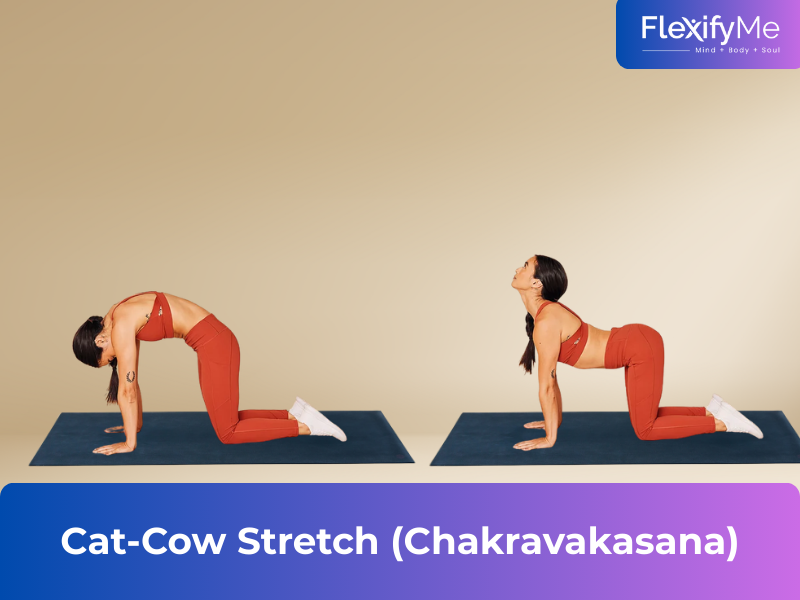
The Cat-Cow routine helps to warm up the spine and release tension in the back and neck.
Steps
- Begin in an all-fours position with your hands and knees on the ground, wrists below shoulders, and knees below hips.
- Inhale as you arch your back, chest, and tailbone towards the ceiling (Cow Pose).
- As you exhale, round your spine by tucking your chin into your chest and drawing your belly button into your spine (Cat Pose).
- Continue to flow between these two positions for 5-10 breaths.
Benefits for Back Pain:
- Encourages focused breathing and awareness of the body.
- Increases flexibility in the spine.
- Gently massages the vertebrae and surrounding muscles.
- Increases circulation to the spinal discs.
- Relieves tension in the neck, shoulders and upper back.
- Encourages spinal alignment.
2.Balasana or Child Pose
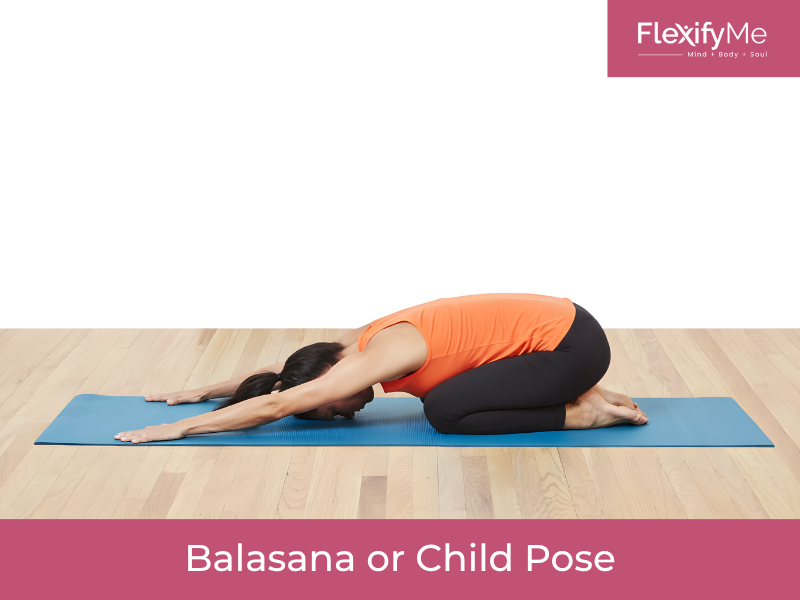
Child’s Pose is a restorative posture that gently stretches the lower back and provides deep relaxation.
How to Do It:
- Kneel on the floor with your big toes touching and your knees wide.
- Sit back on heels, folding forward with arms outstretched.
- Rest your forehead on the mat. Let go and relax your body.
- Stay in this position for 1-3 minutes, breathing deeply into your back.
Child Pose Benefits for Back Pain:
- Encourages deep, restorative breathing
- Gently stretches the muscles along the spine
- Releases tension in the lower back and hips
- Decompresses the spine and creates space between vertebrae
- Calms the nervous system and reduces stress-related back tension
- Provides a safe resting position during yoga practice
3.Downward-Facing Dog (Adho Mukha Svanasana)
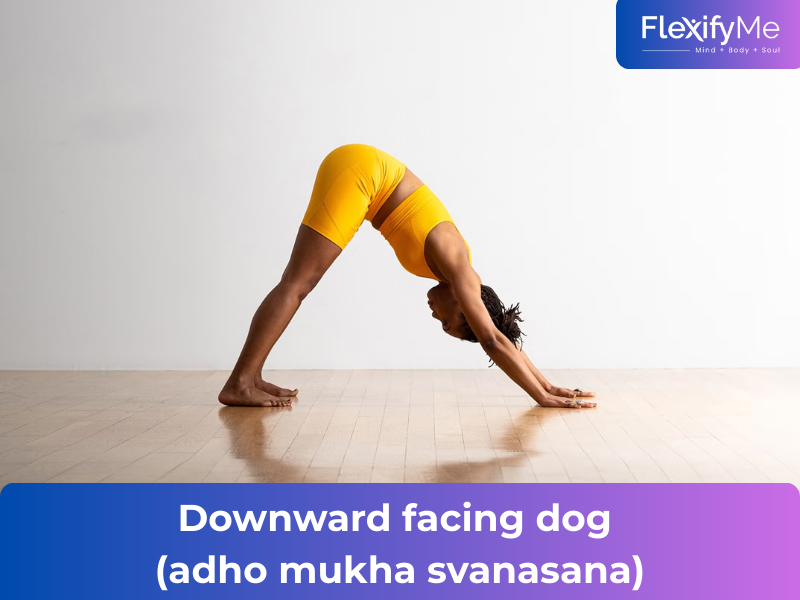
The Downward-Facing Dog pose is a common yoga pose that strengthens and stretches the entire back side of the body.
How to Do It:
- Get on your knees and hands in a tabletop position
- Tuck your toes underneath and lift your hips up toward the ceiling
- Straighten and press the legs down while pulling the heels down toward the ground
- Keep your arms straight and fingers spread wide
- Create an upside-down V-shape with your body
- Hold it for about 5-10 breaths
Benefits for Back Pain:
- Creates length in and decompresses the entire spine
- Strengthens the shoulders, arms and the core muscles
- Provides a stretch for the hamstrings, which can contribute to lower back pain
- Assists in better postural alignment of the spine
- Assists with blood flow to the brain and upper body
- Provides enough overall body strength to provide support for the back
4.Sphinx Pose (Salamba Bhujangasana)
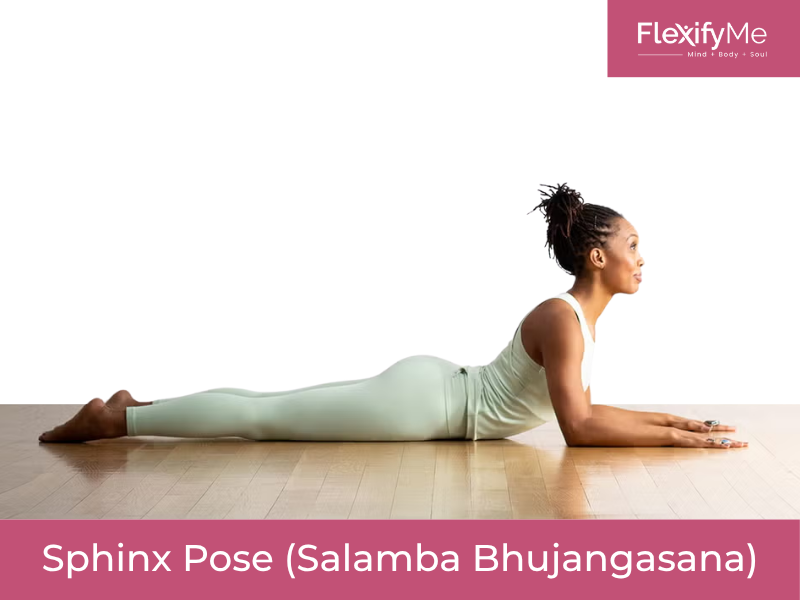
Sphinx Pose is a gentle back bend that strengthens the spine while opening the chest and shoulders.
How to Do It:
- Lie on your stomach with your legs extended behind you
- Place your forearms on the mat with elbows under your shoulders
- Press through your forearms to lift your chest whilst keeping your hips on the ground
- Draw your shoulders back and down
- Keep your neck long and gaze forward
- Hold for 1-3 minutes
Benefits for Back Pain:
- Strengthens the muscles along the spine
- Gently stretches the chest and shoulders
- Improves posture by counteracting forward slouching
- Increases flexibility in the upper and middle back
- Stimulates circulation in the spinal region
- Helps relieve stress and fatigue in the back muscles
5.Bridge Pose (Setu Bandhasana)
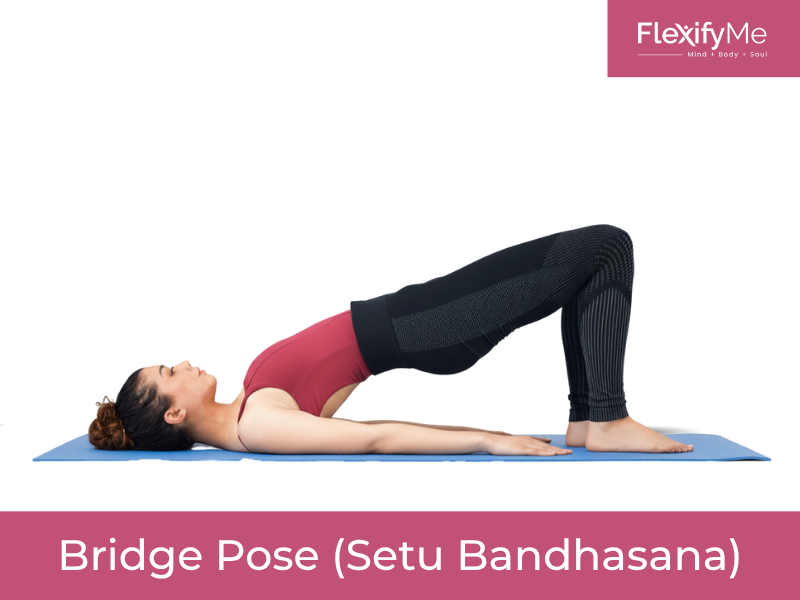
Bridge Pose strengthens the entire back body whilst opening the front of the body and improving spinal flexibility.
How to Do It:
- Lie on your back with knees bent and feet hip-width apart, flat on the floor
- Place your arms alongside your body with palms facing down
- Press through your feet and lift your hips up towards the ceiling
- Press your arms into the mat and interlace your fingers under your back.
- Keep your thighs parallel and hold for 5-10 breaths
- Lower down slowly, vertebra by vertebra
Benefits for Back Pain:
- Strengthens the glutes, lower back and hamstrings
- Stretches the neck. chest and spine
- Improves spinal flexibility and mobility
- Reduces stress and mild depression
- Stimulates the nervous system and improves circulation
- Helps realign the spine and improve posture
6.Pigeon Pose (Eka Pada Rajakapotasana)
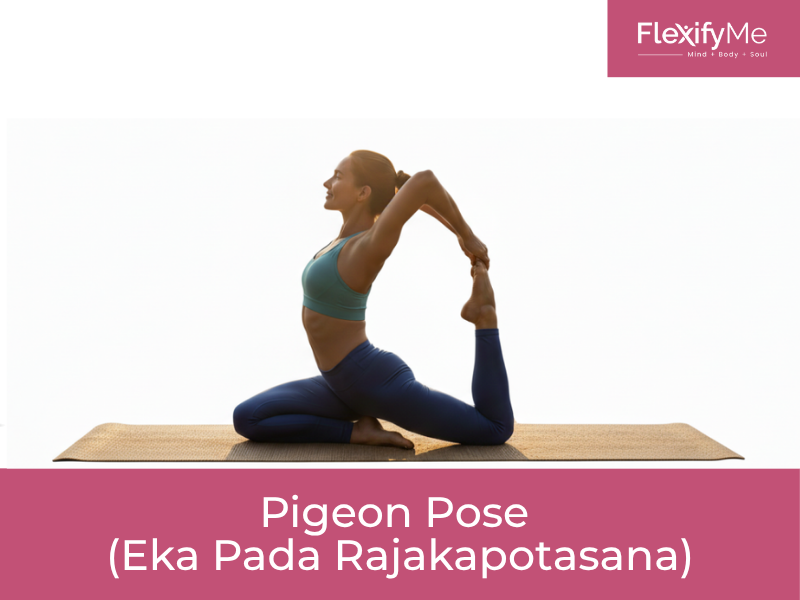
Pigeon Pose is a deep hip opener that relieves tension in the hips and lower back.
How to Do It:
- Start in a tabletop position or move into the pose from downward-facing dog.
- Bring your right knee forward toward your right wrist.
- Stretch your left leg straight back behind you.
- Square your hips towards the front of the mat.
- Fold forward over your front leg, resting on your forearms or extending your arms forward
- Hold for 1-3 minutes, then switch sides
Benefits for Back Pain:
- Deeply stretches the hip flexors and the piriformis muscle
- Relieves sciatic pain and lower back tension
- Releases tight hips that contribute to back pain
- Improves hip mobility and flexibility
- Reduces stress and anxiety held in the hips
- Promotes better pelvic alignment
7.Supine Twist (Supta Matsyendrasana)
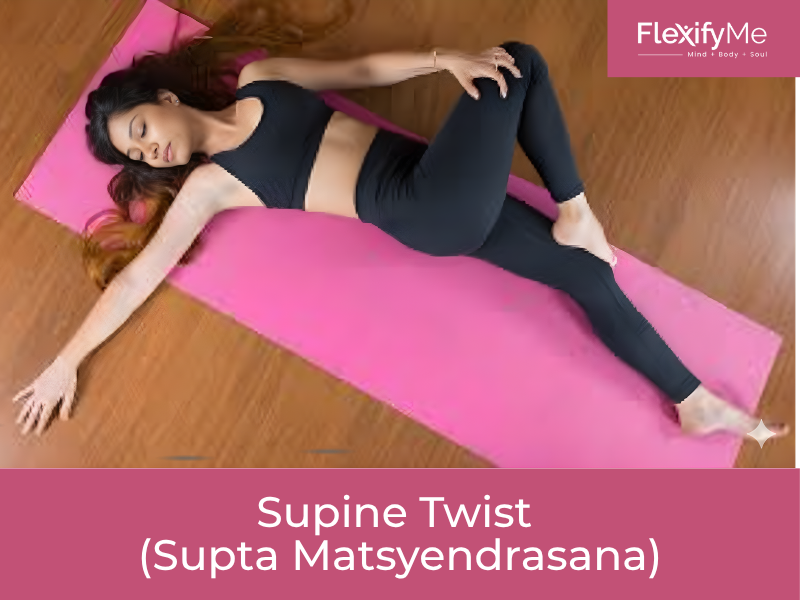
Supine Twist is a gentle spinal rotation that releases tension throughout the back and promotes spinal health.
How to Do It:
- Lie on your back with arms extended out to the sides
- Draw your right knee towards your chest
- Guide your right knee across your body towards the left side
- Keep both shoulders on the mat and turn your head to the right
- Hold for 1-2 minutes, then switch sides
Benefits for Back Pain:
- Gently stretches and realigns the spine
- Massages the internal organs and improves digestion
- Releases tension in the lower back and hips
- Improves spinal mobility and flexibility
- Helps detoxify the body through gentle compression
- Calms the nervous system and promotes relaxation
8.Legs-Up-the-Wall Pose (Viparita Karani)
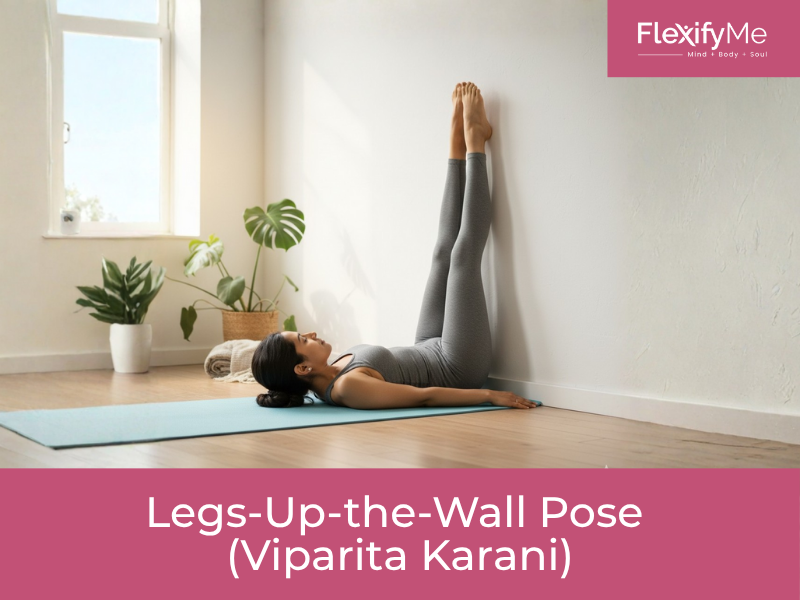
Legs-Up-the-Wall is a restorative inversion that helps tired, aching backs and promotes circulation.
To Do This Pose:
- Sit sideways next to a wall with your hip touching the wall
- Swing your legs up the wall as your back lowers toward the floor
- Shift your bottom as close as is comfortable, or use a bolster (or pillow) under your bottom for support
- Relax your arms at your sides or on your belly
- Close your eyes and stay for 5-10 minutes
Benefits for Back Pain:
- Relieves pressure on legs, lower back and spine
- Decreases swelling and tension in legs and feet
- Promotes circulation and decreases inflammation
- Calms and slows the nervous system and promotes stress reduction
- Gently decompresses the spine
- Helps relieve mild back pain and sciatica
9.Thread the Needle Pose (Parsva Balasana)

Thread the Needle is a gentle twist that releases tension in the upper back, shoulders and neck.
To Do This Pose:
- Start on your hands and knees in a table-top position
- Shift your right arm under your left one, palm facing up
- Lower your right shoulder and ear to the mat
- You can keep your left hand planted or extend your left arm in front of you as a stretch
- Stay for 1-2 minutes and then switch sides
Benefits for Back Pain:
- Releases tension in the upper back and between the shoulder blades
- Stretches the shoulders, chest and neck
- Gently twists the spine, improving mobility
- Helps relieve stress and tension headaches
- Improves posture by opening the chest
- Promotes relaxation and body awareness
Tips for Practising Yoga for Back Pain
To maximise your yoga practice in a way that is beneficial and prevents more injury, consider these recommendations:
Listen to Your Body
Do not push through any sharp pain. Yoga should feel challenging, not painful. If the pose causes pain, change the pose or skip it entirely.
Take It Slow and Be Mindful
Do not rush pose to pose. Move with some intention and focus on aligning your poses to maximise the benefit and minimise the risk.
Focus on Your Breath
Breath provides deeper tools to release tension in your body, so you can safely move more deeply within poses.
Use Props When Necessary
Yoga blocks, bolsters, and blankets can help with accessibility and comfort, especially when experiencing back pain.
Be Consistent
Practising even a little every day is better than practising a lot and not very often. Aim for around 15-20 minutes. A little gentle yoga is better than none.
Warm Up First
Always start with gentle movements like Cat-Cow to prepare the spine for deeper stretches.
Consult If Necessary
If your back pain is severe or chronic, consult a healthcare provider before practising yoga. Consider working with a qualified yoga instructor who can give you modifications that are unique to you.
When to Avoid Yoga for Back Pain
Whilst yoga is generally safe and beneficial for back pain, there are situations where you should avoid certain poses or seek medical advice first:
- Acute back injury or severe pain
- Recent surgery or spinal procedures
- Herniated discs or severe spinal conditions without medical clearance
- Osteoporosis or other bone-related issues
- Pregnancy (some positions may need to be modified),
- Any condition that produces sharp, shooting pain when you move
Conclusion
Yoga serves as a gentle, effective and holistic remedy for the management and prevention of back pain. The nine poses in this guide work synergistically to help build core strength, flexibility, tension release, and improve spinal alignment.
Practising these poses for back pain every day may give you significant relief, as well as a stronger and more resilient back. Remember that recovery takes time and practice. Go at it slowly, listen to your body, and build length and intensity gradually. Your consistency with the above will ultimately create a process more than just relieving back pain, but developing a healthy, balanced relationship with your body.
Whether you are suffering from chronic pain or are committing to a healthier spine, building on these postures will provide a solid foundation for wellness. Roll out your mat, breathe easy and start a journey to a pain-free back today.
Frequently Asked Questions About Yoga for Lower Back Pain
10 High-Volume PAA-Friendly FAQs for Yoga for Back Pain
1. Can yoga help back pain?
Yes, yoga can help back pain by improving flexibility, strengthening the muscles that support the spine, reducing stiffness, and promoting better posture. Regular yoga practice may also help reduce chronic back pain and improve overall mobility.
2. Which yoga is best for back pain?
Gentle styles such as Hatha Yoga, Iyengar Yoga, and Therapeutic Yoga are often considered best for back pain. These practices focus on proper alignment, controlled movements, and poses that help strengthen and stretch the back muscles safely.
3. What are the best yoga poses for lower back pain?
Some of the best yoga poses for lower back pain include Child’s Pose (Balasana), Cat-Cow Pose (Marjaryasana-Bitilasana), Cobra Pose (Bhujangasana), Bridge Pose (Setu Bandhasana), and Supine Spinal Twist (Supta Matsyendrasana). These poses help relieve tension and improve spinal flexibility.
4. Is yoga or walking better for back pain?
Both yoga and walking can help relieve back pain. Walking improves circulation and keeps the body active, while yoga combines stretching, strengthening, and relaxation techniques. Many healthcare professionals recommend combining both for optimal back health.
5. Can yoga cure lower back pain permanently?
Yoga may not permanently cure lower back pain, especially if it is caused by an underlying medical condition. However, regular yoga practice can significantly reduce pain, improve posture, strengthen core muscles, and help prevent recurring episodes.
6. Which yoga pose relieves back pain fast?
Child’s Pose (Balasana) is one of the most recommended yoga poses for quick back pain relief. It gently stretches the spine, hips, and lower back, helping reduce muscle tension and promote relaxation.
7. Is yoga good for sciatica and back pain?
Yes, yoga can be beneficial for sciatica and back pain. Specific poses may help reduce pressure on the sciatic nerve, improve flexibility, and strengthen the muscles that support the lower back. However, individuals with severe symptoms should consult a healthcare professional before starting.
8. How often should I do yoga for back pain?
For noticeable results, practicing yoga for back pain 3–5 times per week is generally recommended. Consistency is key, and even short sessions of 15–30 minutes can help improve flexibility, strength, and pain management.
9. Can beginners do yoga for back pain?
Yes, beginners can safely practice yoga for back pain by starting with gentle poses and focusing on proper alignment. Beginner-friendly yoga classes or guidance from a certified instructor can help prevent injury and maximize benefits.
10. What should you avoid in yoga if you have back pain?
If you have back pain, avoid deep backbends, intense twists, and any pose that causes discomfort or sharp pain. Practicing with proper form and modifying poses when necessary can help prevent further strain on the spine.


