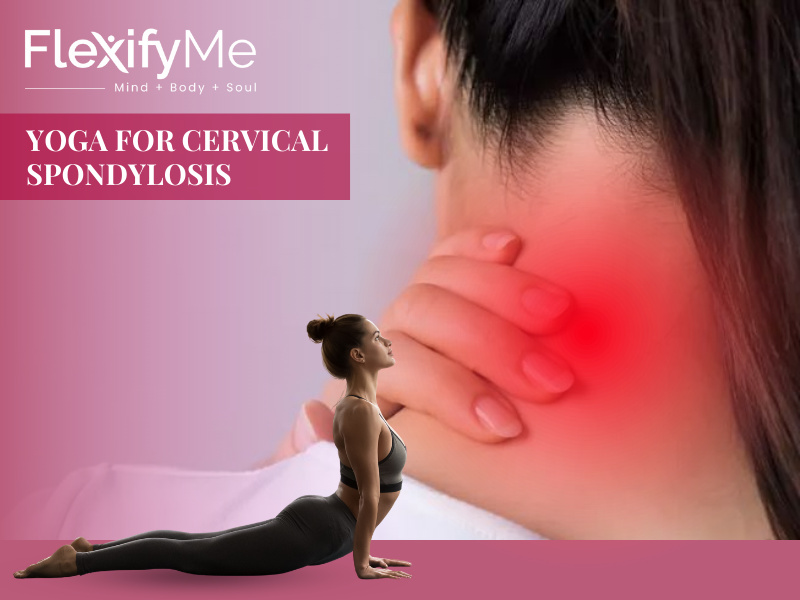


Yoga For Cervical spondylosis, commonly known as neck arthritis, is a condition where bones and cartilage in the neck region go through wear and tear, causing chronic pain in the neck, head, and shoulder blades and stiffness in the neck. It can even lead to vertigo in some extreme cases, leading to the disintegration of discs in the spine, cervical vertebrae, and ligaments. Worldwide, this condition mostly affects elderly people above the age of sixty.
The most common symptoms of cervical spondylosis are pain and stiffness in the neck and shoulder blades spreading towards the arms and sometimes headache. These kinds of pain can be managed with the help of yoga and physiotherapy. In many cases, researchers have found that the pain has almost disappeared with regular yoga and physiotherapy.
Take control of your neck pain with online yoga for Cervical Spondylosis. Join our supportive community and discover a holistic approach to managing your condition.
Causes of Cervical Spondylosis
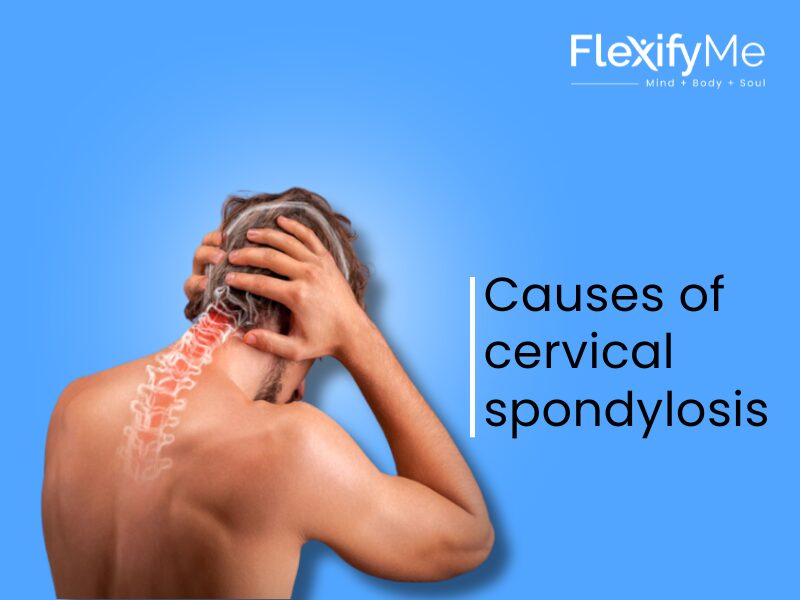
In general, the main reason for cervical spondylosis is the age factor, but today’s tech-savvy era and sedentary lifestyles are also contributing enough. Let’s look at the causes of cervical spine disorder.
Age
Ageing is one of the dominant reasons for cervical spondylosis. Studies say that more than 85% of people above the age of 60 suffer from this condition. With age, the bones and ligaments in our spine tear down, and the intervertebral disc starts degenerating, causing discomfort and neck arthritis.
Genetics
Genetics plays an important role in our overall health; many diseases like diabetes, high blood pressure, and heart issues are mostly hereditary diseases that are passed on from our past generations. Likewise, cervical spondylosis is also something that can run in the family.
Injuries
Injuries can also cause cervical spondylosis. Another reason that can trigger this neck arthritis is lifting heavy weights, which causes tension in the spine. Sports professionals are also at risk of developing this condition.
Sedentary Lifestyle
A sedentary lifestyle has become the starting block for numerous diseases, including spondylolysis, sitting for long hours, and hunching on the devices weakens the back muscles, putting strain on the spine and leading to wrong postures, making it one of the prime neck pain causes.
Yoga for cervical spondylosis
Cervical spondylosis can be managed with the help of a combination of yoga asanas(poses) and breathing practices(pranayama). Here, we will see some yoga poses and their benefits for neck pain relief.
Bhujangasana (Cobra Pose)
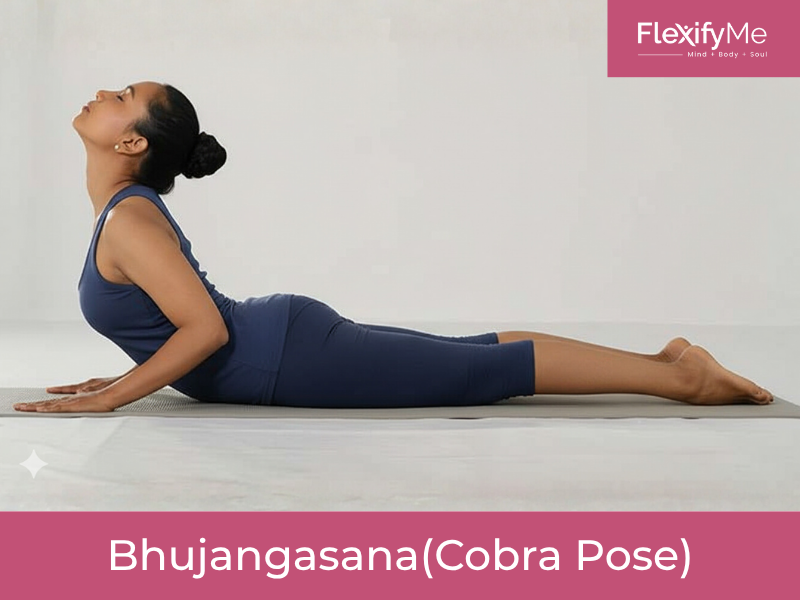
Bhujangasana or cobra pose helps soothe the pain or discomfort in the back by stretching it out entirely. This pose helps eliminate the stiff neck, shoulder and spine by strengthening the spine and improving the body posture. Let’s check out the steps below.
- Lie on your stomach with your legs straight.
- Place your palm on the ground near your shoulder.
- Now, slowly try to lift your chest off the ground.
- Straighten your elbow, head facing the ceiling.
- Arch the back, and come back.
- Inhale and exhale through the poses.
This pose helps increase blood circulation, making the spine muscles flexible and reducing the pain in the cervical spine.
Dhanurasana (Bow Pose)
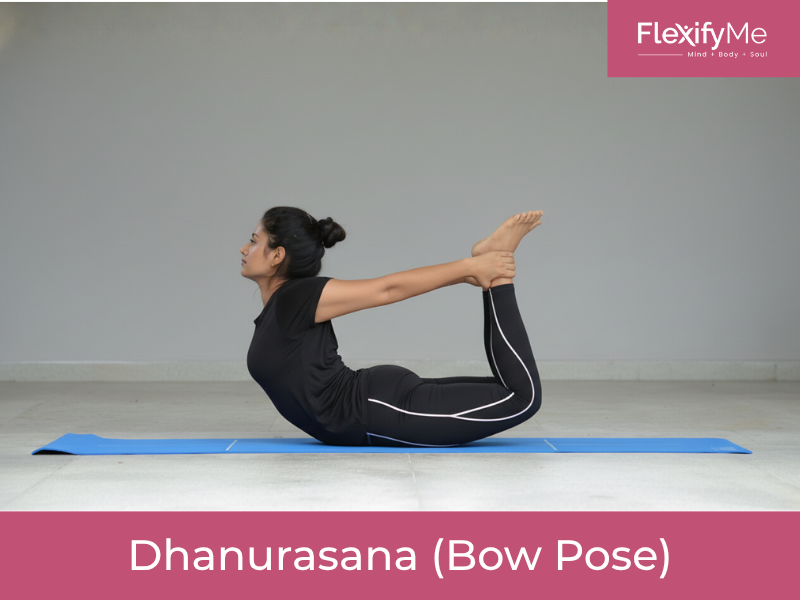
Dhanurasana or bow pose may be difficult to practice initially, but with time, this can be effective in eliminating cervical spondylosis discomfort and aches and helps correct body posture. Here are the steps to practice this posture correctly.
- Lie on your tummy with straight legs, like the bhujangasana or cobra pose.
- Slowly bring your heel near your butt by bending your knees.
- Hold your feet with your hands and arms stretched.
- Stretch your spine by forming an arch.
- Breathe in and out as you perform these asanas.
This practice helps stretch the entire body, strengthen the back muscles, improve flexibility, and enhance neck pain relief.
Ardha Matsyendrasana (Sitting Half Spinal Twist)
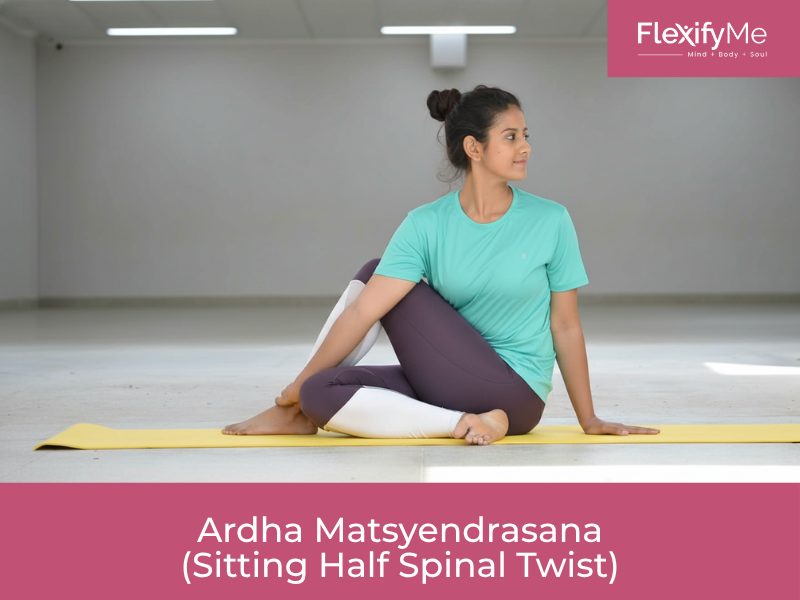
This is a twisted pose that energises the spine and stretches the neck and shoulder, enhancing flexibility and soothing the stiff neck.
Steps to follow.
- Sit straight with your legs stretched out in front.
- Bend the right leg over the left leg, bringing your foot near your left hip.
- Slowly twist your upper body towards the right side, looking at your shoulder.
- Place your left arm around the right knee.
- Keep your spine, neck and head aligned.
- Inhale and exhale as you practice.
Ardha Matsyendrasanan, or sitting in a half spinal twist pose, relieves the tension in the upper back region caused by prolonged sitting in the wrong posture.
Marjariasana (Cat Pose)
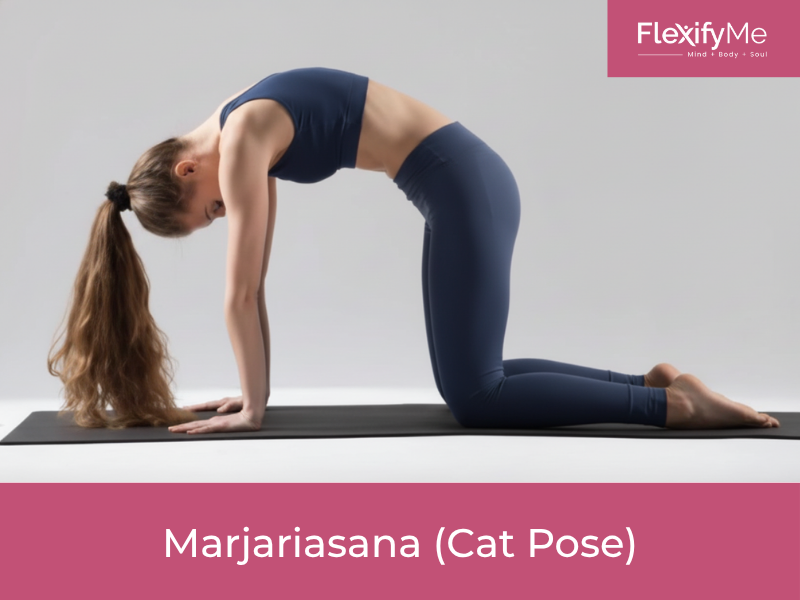
Marjariasana, or Cat pose, is one of the easiest yoga asanas. This pose stretches the neck, taking out the tension and stiffness. This can be one of the best Neck exercises that also helps in relaxing the mind. Let us see the steps.
- Come on your knees and hands, forming a table-like structure.
- Gently, look towards the ceiling, stretching your throat and making an arch from your back.
- Respire as you perform the stretches.
This pose or asana not only increases the elasticity in the back but also helps to strengthen the wrist and shoulders, alleviating any sort of pain in the shoulders.
Setu Bandhasana (Bridge Pose)
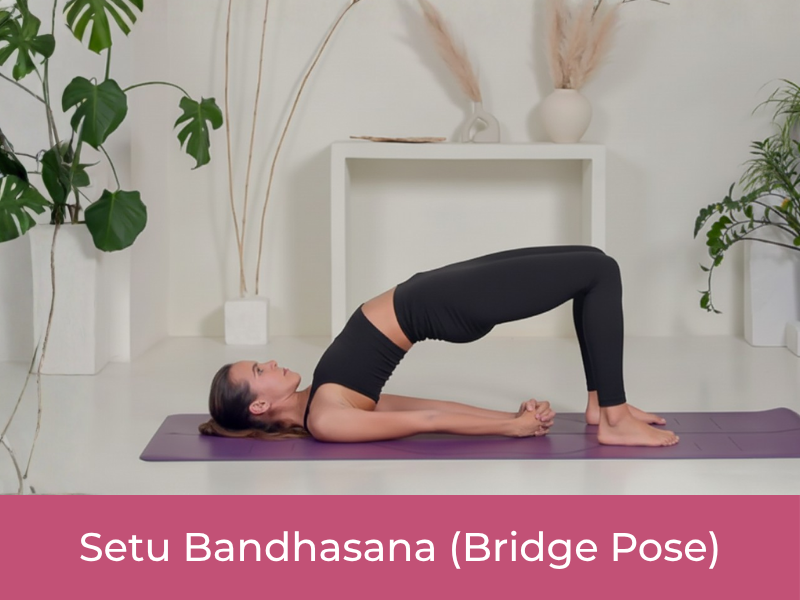
Setu bandh asana or bridge pose can be a beginner-friendly pose that helps alleviate headaches and stretches the cervical spondylosis, improving the spine flexibility. Let’s learn how to do the bridge pose.
.
- Lie on your back and bend your knees.
- Slowly try to bring your heels towards your butt.
- Keeping your arms alongside your body, palm on the floor.
- Now, slowly lift your lower back, middle back and upper back off the floor.
- Uphold your weight on your shoulders, arms and feet.
- Then, gently roll back while breathing in and out throughout.
This posture strengthens the back muscles and instantly improves blood flow, giving a soothing effect.
Makarasana (Crocodile Pose)
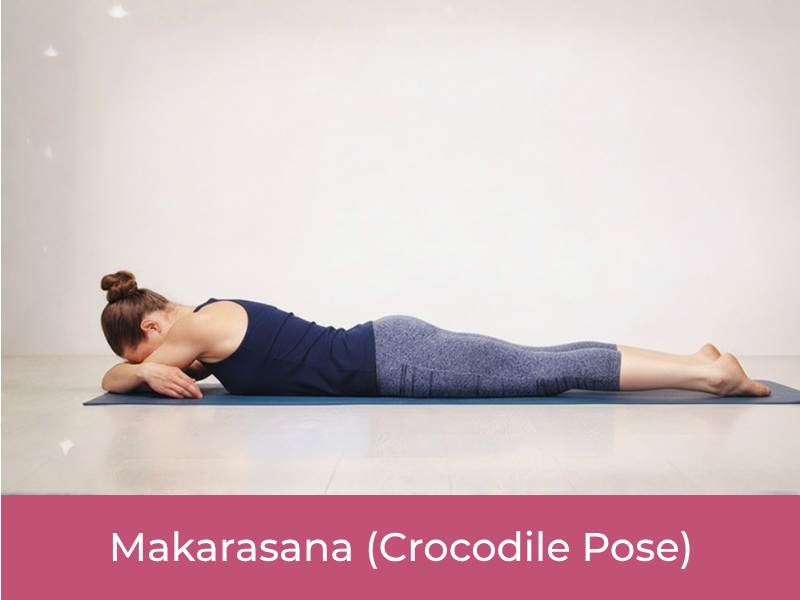
Makarasana, or crocodile pose, is the most relaxed position that inspires the cervical spondylosis to a neutral position, getting some relief from cervical spine pain, which calms down the whole nervous system. Steps to do this easy exercise.
- Lie down on your tummy, and bring your hands in front.
- Straighten your spine and legs.
- Crossing your arms, rest your forehead on it.
- Slowly lift your upper body.
- Inhale and exhale as you perform.
This pose opens the chest, releasing the tightness in the back and shoulder. This asana can be accomplished to conclude the yoga session.
Get proper guidance from a Expert Yoga Instructor. Book your free Demo Class from Home for a smooth journey of recovery.
Conclusion
cervical spondylosis An amalgamation of yoga can erode the chronic pain due to cervical spondylosis. It might take a little longer than the medication or surgery, but regular and firm practice of yoga and will gradually help you get back to your daily routine easily and without any side effects. You can see a positive change in your body that will help you lead a happy and pain-free life. This amazing pair of yoga can help you with physical aspects and give you mental health benefits, enhancing your life overall. But always make sure that you take the guidance of a qualified professional trainer whenever you want to start your regime.
Frequently Asked Questions for Yoga for Cervical Spondylosis
1. Can yoga cure cervical spondylosis permanently?
Yoga cannot cure cervical spondylosis permanently, as it is a degenerative condition of the cervical spine. However, regular practice of yoga can significantly reduce pain, stiffness, and improve mobility. Yoga enhances posture, relaxes tight muscles, and promotes spinal health, which helps manage symptoms naturally.
2. Which yoga poses are best for cervical spondylosis relief?
Gentle and therapeutic yoga poses such as:
- Bhujangasana (Cobra Pose)
- Marjariasana (Cat-Cow Stretch)
- Balasana (Child’s Pose)
- Makarasana (Crocodile Pose)
- Shavasana (Corpse Pose)
These poses relieve neck tension, improve blood circulation, and support the cervical spine. Always practice under the guidance of a certified yoga therapist or physiotherapist.
3. Is it safe to do yoga if I have cervical spondylosis?
Yes, gentle yoga is generally safe and beneficial when tailored to your condition. Avoid sudden movements, inversions, and any pose that strains the neck. It’s recommended to practice yoga under professional supervision to avoid aggravating the condition.
4. How often should I do yoga for cervical spondylosis?
For optimal relief, yoga can be practiced 3 to 5 times per week, with each session lasting 20–30 minutes. Consistency is key. Complement your routine with breathing exercises (pranayama) and postural awareness throughout the day.
5. Can yoga help avoid surgery for cervical spondylosis?
In many mild to moderate cases, consistent yoga practice, along with physiotherapy, can delay or even prevent the need for surgery by managing symptoms naturally. However, always consult your orthopedic or spine specialist before making decisions related to surgical options.
6. What are the benefits of yoga for cervical spondylosis patients?
Yoga offers several benefits:
- Reduces neck pain and stiffness
- Improves flexibility and posture
- Enhances nerve function and blood flow
- Supports spinal alignment
- Reduces stress and muscle tension
7. Are pranayama and meditation helpful for cervical spondylosis?
Yes. Pranayama (breathing exercises) like Anulom Vilom and Bhramari help reduce stress, improve oxygenation, and ease muscle tension around the neck and shoulders. Meditation promotes relaxation and enhances pain tolerance.
8. Should I avoid any yoga poses if I have cervical spondylosis?
Yes. Avoid:
- Headstands and shoulder stands
- Deep backbends
- Forward neck rolls or aggressive neck stretches
These can worsen symptoms or cause nerve compression. Stick to gentle, restorative yoga and consult an experienced instructor or healthcare provider.
9. How long does it take to see improvement from yoga in cervical spondylosis?
Some people notice improvements in 2–4 weeks, such as reduced neck pain and better flexibility. Long-term benefits come with consistent practice over 2–3 months, especially when combined with posture correction and lifestyle changes.
10. Can yoga prevent cervical spondylosis from getting worse?
Yes. Yoga helps in slowing the progression of cervical spondylosis by correcting posture, strengthening supporting muscles, and improving spinal flexibility. Early and regular practice can be a preventive tool in managing chronic neck problems.