


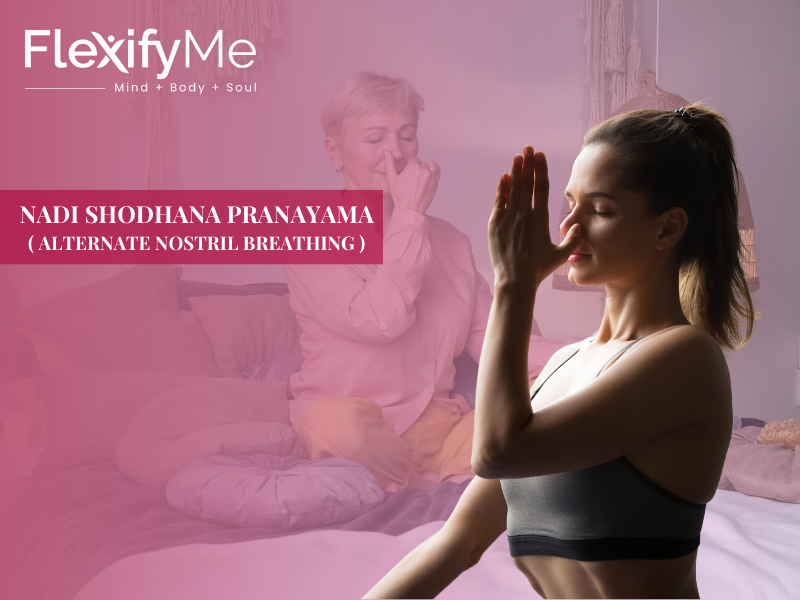
Nadi Shodhana Pranayama, also known as Alternate Nostril Breathing, is a yogic breathing technique. It is widely practised to calm the mind, reduce stress, and improve breath awareness. This pranayama involves breathing alternately through each nostril in a controlled rhythm to promote relaxation and balance within the body.
If you want to learn how to do nadi shodhana pranayama step-by-step, this blog has you covered. We will also discover the benefits and necessary precautions of this pranayama.
What is Nadi Shodhana Pranayama?
Nadi shodhana pranayama is a Sanskrit term meaning “subtle energy-clearing breathing technique.” It is a part of yoga and meditation practice used to relieve stress. According to yogic philosophy, stress and an unhealthy lifestyle may disturb the body’s natural energy flow. Nadi shodhana pranayama is traditionally practised to restore balance and calmness.
Preparing for Nadi Shodhana Pranayama
You can do nadi shodhana pranayama independently. However, at the beginning, it is recommended that you seek help from a yoga teacher to ensure you are doing it correctly. Initially, you should focus on slow, smooth, and continuous breathing.
Yoga experts suggest practising alternate nostril breathing at any time of the day when you are relaxed. However, morning or evening is the perfect time for this breathing technique. You should start on an empty stomach. It is generally practised after yoga or before meditation.
How to Do Nadi Shodhana Pranayama: Step-by-Step
To begin your nadi shodhana pranayama practice, you should find a comfortable sitting position. You may sit cross-legged on the floor with a cushion supporting your spine, or sit on a chair with your feet flat on the floor. Keep your spine straight so that your back, neck, and head are erect throughout the pranayama.
Synchronise with your breathing
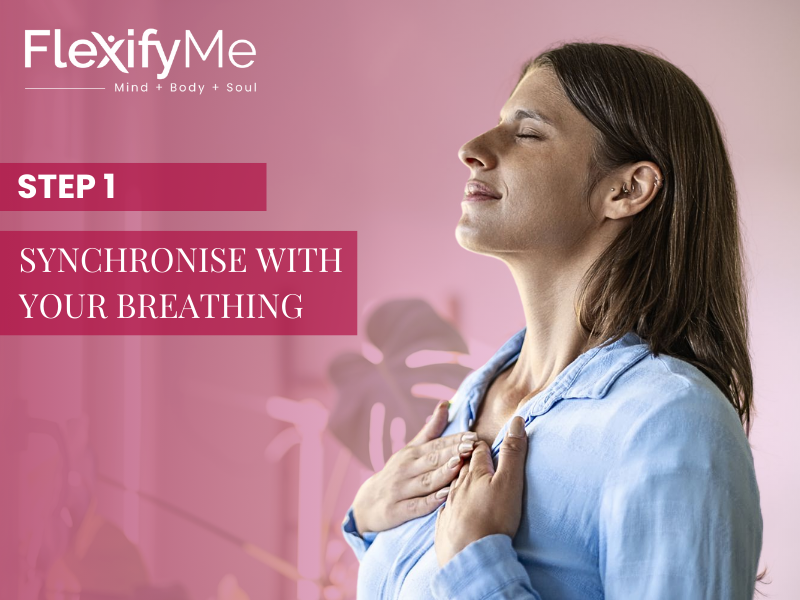
Close your eyes. Begin your nadi shodhana pranayama by taking a deep breath and exhaling slowly. Repeat this several times to warm up your body.
Find Mrigi Mudra
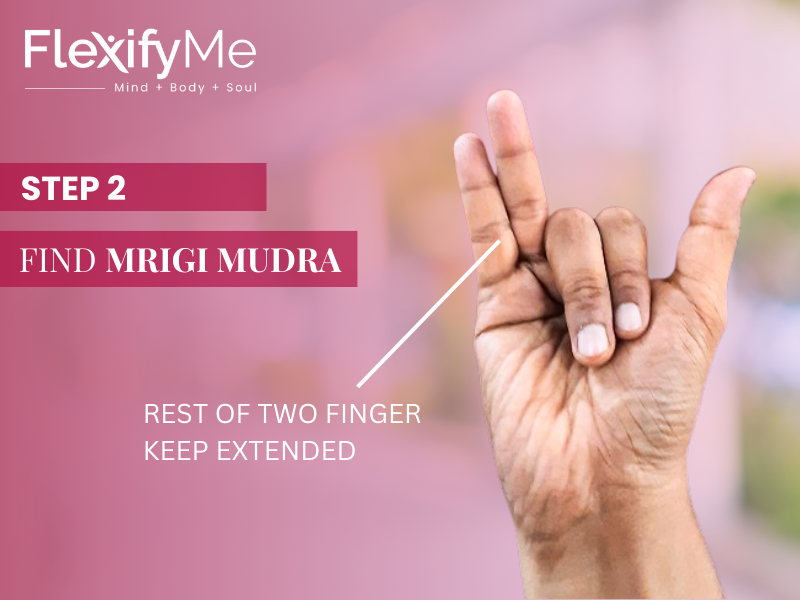
The position of the fingers is called Mrigi Mudra or Vishnu Mudra. Fold the right hand’s index and middle fingers inwards, touching the palm at the base of the thumb. Then, use the thumb, ring, and little finger to close the right and left nostrils.
Inhale through the left nostril
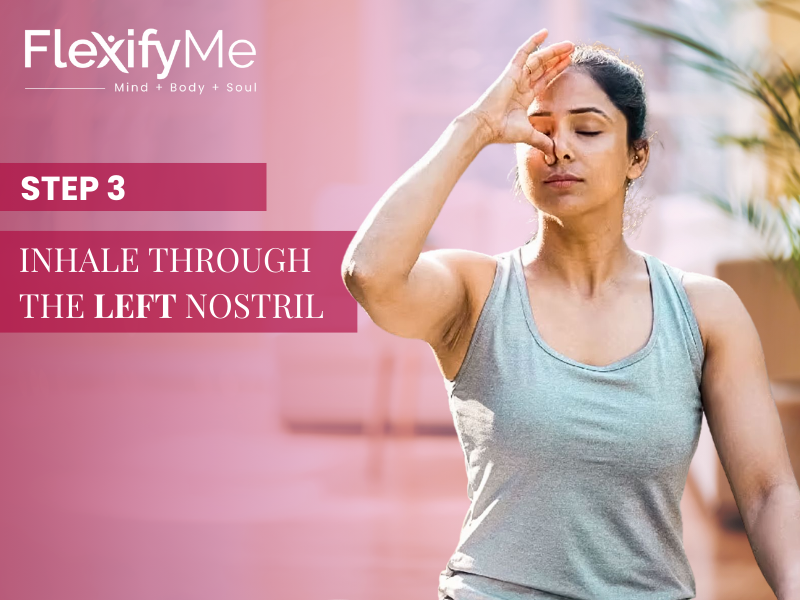
Gently close the right nostril with your right thumb. Then, inhale slowly and deeply through the left nostril.
Exhale through the right nostril
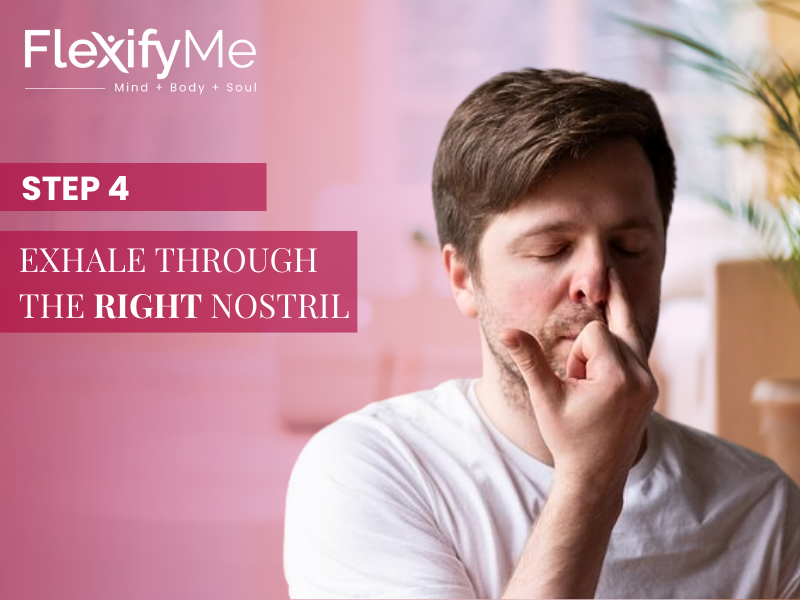
Close the left nostril with your ring and little finger. Simultaneously, exhale slowly through the right nostril.
Inhale through the right nostril
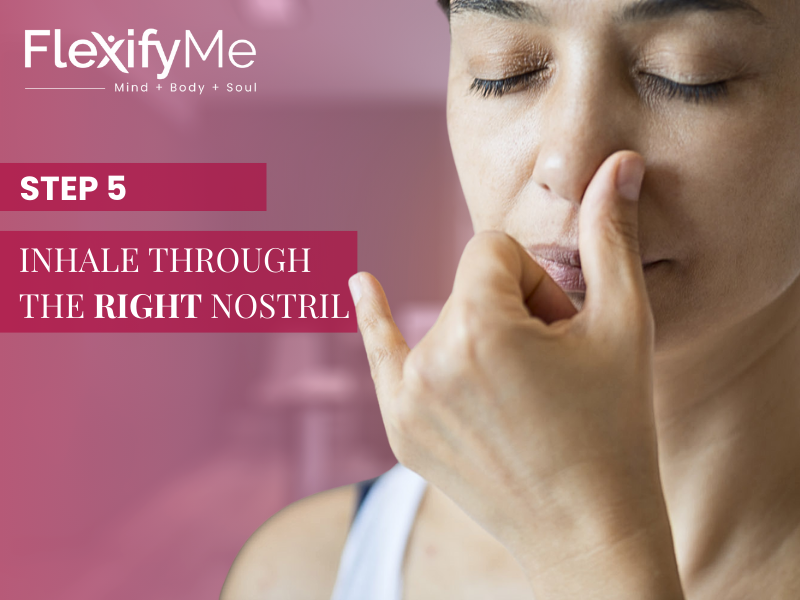
Keep your left nostril closed with your fingers, and inhale through the right nostril.
Exhale through the left nostril
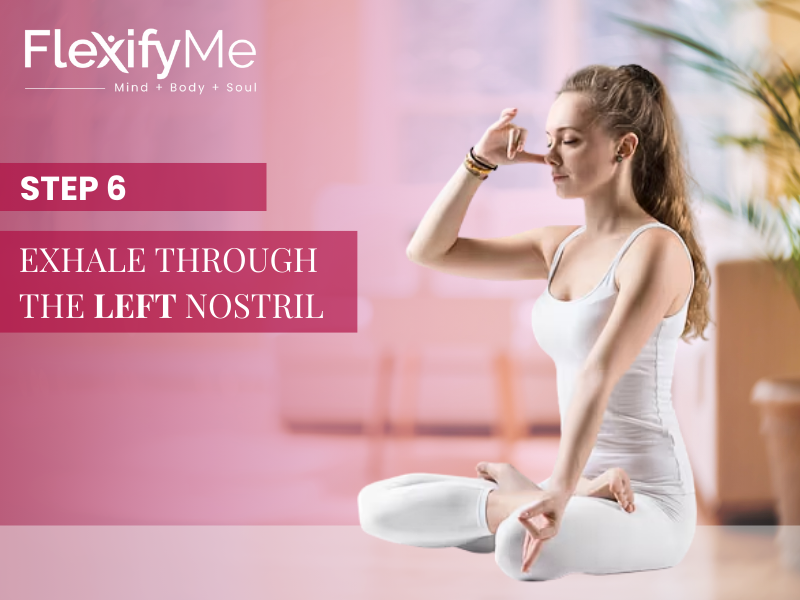
Then again, use the thumb to close the right nostril and exhale slowly through the left nostril.
Observe the effects
Quietly observe the practice’s results. Then, open your eyes slowly and get up.
This is one complete round. Repeat this several times by inhaling on the left, exhaling on the right, and then inhaling on the right and exhaling on the left. Repeat this alternative pattern multiple times. Focus on the pathway of the breath. Breathe flowing up one side and released down the other.
You should practise regularly for 10 to 15 minutes to get fuller benefits. Remember to complete the nadi shodhana pranayama with an exhalation from the left nostril. Bring back your breath to normal and notice your state of mind. You will find the difference in your state. If you find it difficult to raise your hand for a long time, keep a bolster across your legs and place your elbow to support your hand.
Nadi Shodhana Pranayama Benefits
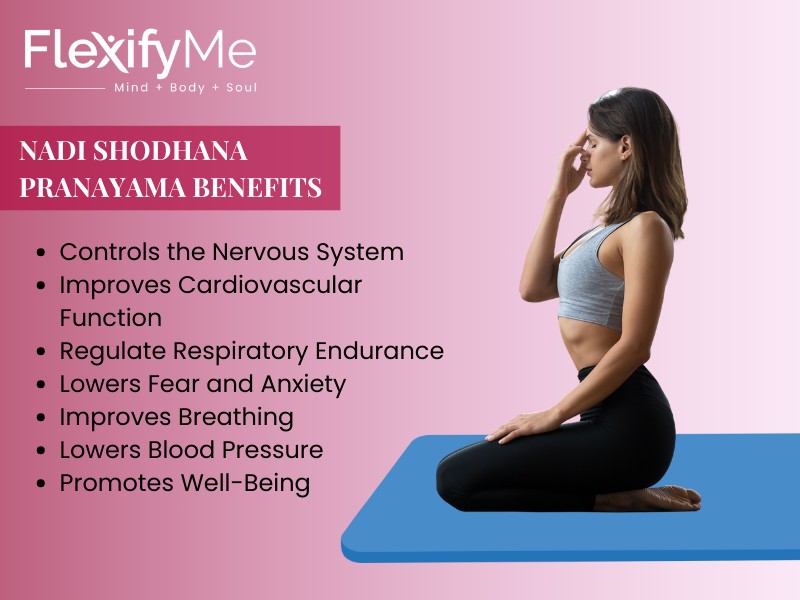
Nadi Shodhana Pranayama benefits both body and mind in many ways. According to a study, people who practised this alternate nostril breathing for 30 minutes daily for three months significantly reduced their stress. Controlling your breath and being attention-focused brings you the following benefits.
- Controls the nervous system: Nadi Shodhana Pranayama helps you regulate your nervous system by reducing stress.
- Improves cardiovascular function: It also reduces risk factors for cardiovascular disease, thereby improving pulse and blood pressure.
- Regulates respiratory endurance: This breathing exercise improves lung function. It is quite helpful for swimmers and athletes.
- Helps manage fear and anxiety: Practising the nadi shodhana pranayama helps you manage your emotions. This deep-breathing technique lowers blood lactate levels, thereby reducing the chemicals associated with panic episodes.
- Improves breathing: This breathing technique helps you breathe better by increasing the flow of oxygen into your respiratory tract. This may be beneficial for both acute bronchitis and chronic obstructive lung disease.
- Lowers blood pressure: Pranayama helps control high blood pressure (hypertension). When practised regularly, it lowers your heart rate and reduces your blood pressure.
Don’t just read about Nadi Shodhana Pranayama. Practise it the right way.
Join our live online yoga & meditation classes and get personal guidance from certified instructors to improve your breathing, reduce stress, support weight loss and balance your mind—safely and correctly.
Nadi Shodhana Pranayama Contraindications
While nadi shodhana pranayama is beneficial for many people, we should not ignore its contraindications.
Avoid or consult a doctor if:
- Asthma/COPD
- Pregnancy
- Recent surgery
- Severe nasal blockage
Stop immediately if you experience:
- Dizziness
- Chest pain
- Vomiting
- Fainting
Practice tips:
- Breathe gently
- Don’t force inhalation
- Avoid mouth breathing
- Don’t press hard on the nostrils
Nadi Shodhana Pranayama for Stress Relief and Relaxation
Nadi Shodhana Pranayama is a wonderful breathing technique that helps clear your body’s blocked energy channels, relieving stress and increasing overall well-being. It has numerous benefits, from lowering blood pressure and regulating breathing to reducing heart rate and weight. Follow this technique with mindfulness and caution, especially if you have any medical conditions.
Being more aware of this breathing technique enables you to manage many physical and emotional problems in your life. However, nadi shodhana pranayama is not an alternative to any medical treatments. Always talk to your doctor before opting for any breathing technique, and seek help from a professionally trained yoga expert for optimal results.
Conclusion
Nadi shodhana pranayama is a wonderful breathing technique that helps clear your body’s blocked energy channels, relieving stress and increasing overall well-being. It has numerous benefits, from lowering blood pressure to regulating breathing, lowering heart rate, and reducing weight. It is also essential to follow this technique with mindfulness and caution, especially when you have any medical conditions.
Nadi shodhana pranayama helps you clear your mind and relax. Being more aware of this breathing technique enables you to solve many physical and emotional problems in your life. In order to see the whole result and maintain the effects, you should practise regularly. Nadi shodhana pranayama is not an alternative for all medical treatment. However, it reduces the impact of many diseases. Always talk to your doctor before opting for any breathing technique, and avail yourself of a professionally trained yoga expert for the promised result.
Frequently Asked Questions About Nadi Shodhana Pranayama
1. How is Nadi Shodhana Pranayama different from Anulom Vilom?
A. Anulom Vilom and Nadi Shodhana are almost similar. Anulom Vilom is a simple yoga practice in which you inhale from one nostril and exhale through the other. It is practised without breath retention. On the other hand, Nadi Shodhana is a structured approach and includes breath retention.
2. How to practice Nadi Shodhana Pranayama properly?
A. Here’s how to practice Nadi Shodhana Pranayama:
- Sit comfortably with your back straight.
- Close your right nostril and inhale through the left.
- Now, close the left nostril, open the right, and exhale through the right.
- Continue this for 5-10 minutes.
3. Is there a best time to practice Nadi Shodhana?
A. The best time to practice Nadi Shodhana is early morning on an empty stomach. It can also be practised in the evening, 4 hours after your meals.
4. What are the proven benefits of Nadi Shodhana?
A. With regular practice, this powerful yoga gives many benefits, such as.
- Less anxiety and fear.
- Increase in mental clarity and focus.
- Feeling of relaxation and calmness.
- Better breathing leads to improved lung function.
- Good sleep quality and emotional well-being.
5. Can beginners do Nadi Shodhana Pranayama?
A. Yes, beginners can safely practice nadi shodhana pranayama. Beginners can start practising slowly for a few minutes and avoid holding their breath.
6. What are some precautions or contraindications?
A. Here are some precautions and contraindications:
- Practice it without forcing the breath.
- If you’re a beginner or have medical conditions, avoid breath retention.
- Do not practice when experiencing severe cold, nasal blockage, or breathing difficulty.
- People with serious respiratory or heart conditions should consult their doctor before performing.
- If you feel dizzy or uncomfortable, stop practising immediately.
7. Is Nadi Shodhana good for sleep disorders and anxiety?
A. Yes, by calming the mind and relaxing the nervous system, it helps to reduce anxiety, promoting better sleep.
8. For how long can I practice Nadi Shodhana Pranayama every day?
A. Beginners can start with 5–10 minutes daily. With regular practice, they can gradually increase it to 15–20 minutes.
9. Is it ok to practice Nadi Shodhana during pregnancy?
A. Yes, normally nadi shodhana is considered safe without breath retention during pregnancy. However, it is always advisable to consult your gynaec and practice under proper guidance.
10. What is the importance of holding your breath (Kumbhaka) in Nadi Shodhana?
A. It is believed that holding your breath during nadi shodhana elevates its benefits. It is an advanced practice that helps regulate your mind and breathing. Additionally, it also balances the flow of prana (life energy).


