
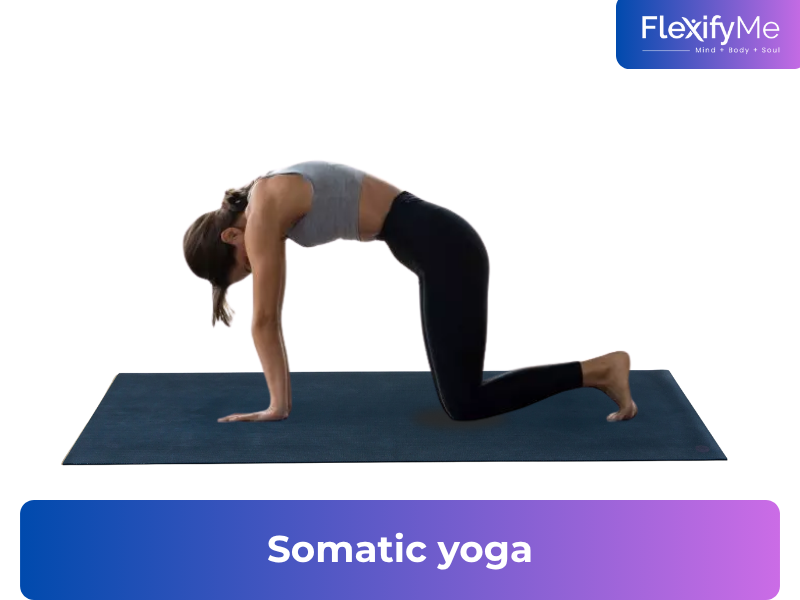

Somatic Yoga is a gentle and mindful practice that blends traditional yoga with somatic principles. Somatics is a field focused on internal physical perception and sensory experience. Unlike fast-paced or externally driven yoga styles, Somatic yoga poses emphasise slow, mindful movements and an internal felt sense of the body.
The beauty of these yoga poses is, they don’t aim for a perfect pose, but to notice and unwind long-held tension patterns, retrain the nervous system, and restore natural movement. In recent years, Somatic Yoga has gained popularity due to its healing properties.
Health professionals and yoga therapists are increasingly recommending Somatic yoga poses for pain reduction, mobility restoration and emotional resilience.
Here we’ll explore more about Somatic yoga, its benefits, and its variations.
Somatic Yoga Benefits
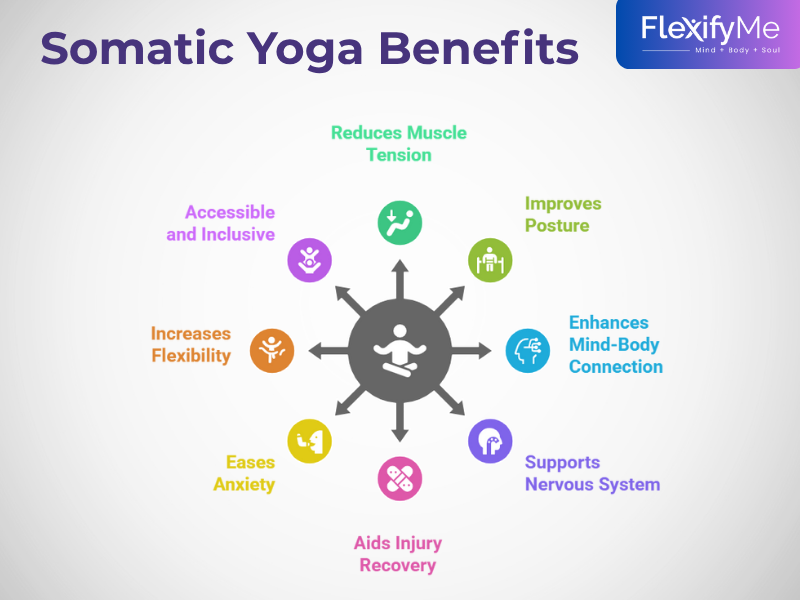
Somatic yoga poses are gentle yet powerful workouts that offer a spectrum of benefits. Let’s discuss some of the crucial benefits of this impactful form of yoga.
Reduces Chronic Muscle Tension
Somatic yoga involves slow and mindful movements that help retain the nervous system. This results in releasing the habitual tension patterns stored in the body. Especially in parts such as the shoulders, neck, back and hips.
Improves Posture and Movement Patterns
By increasing body awareness, Somatic yoga poses help you move more efficiently and with less strain. With regular practice, it can also improve your alignment, coordination and balance.
Enhances Mind and Body Connection
Somatic yoga poses emphasise internal sensation, helping you become attuned to your body signals. This helps support emotional regulation, focus and self-awareness.
Supports Nervous System Regulation
The gentle and rhythmic Somatic movements activate the parasympathetic response. This helps reduce pain and promote deep relaxation.
Aids Injury Recovery and Prevention
Since this yoga is low-impact and deeply mindful, Somatic yoga poses are safe for people with limited mobility, too. It helps to restore natural movement without overloading the body.
Eases Anxiety and Emotional Tension
Somatic yoga connects breath and movement in a non-striking way. This helps to calm the mind, release emotional holding patterns, and build resilience to stress.
Increases Flexibility Without Forcing
Easy flexibility is one of the main reasons people are turning towards Somatic yoga poses. It develops flexibility organically through the nervous system reeducation. As there is no regressive pushing and stretching aggressively, it makes it ideal for individuals who are stiff or recovering.
Accessible and Inclusive
Somatic yoga is adaptable for all body types, fitness levels and ages. It can be done lying down, seated or supported by props. This makes it widely accessible and easily inclusive.
Somatic Yoga Poses
Somatic yoga focuses on gentle, mindful movements rather than intensity or stretch. Here are some Somatic yoga poses and movements.
Constructive Rest Pose
- Find a quiet place and gently lower yourself.
- Keep your knees bent and feet flat on the floor with hip-width apart.
- Let your arms rest by your sides, palms facing up or down. Or you can also place your hands on your ribs or belly for breath awareness.
- Make sure your head, spine and pelvis are in the neutral line.
- Now, gently close your eyes and allow your body to be heavy and supported by the ground.
- Notice your natural breath, without trying to change it.
- Feel how the breath moves the body and stay present with subtle sensations.
- Stay there for 5-15 minutes and come out.
Pelvic Tilt
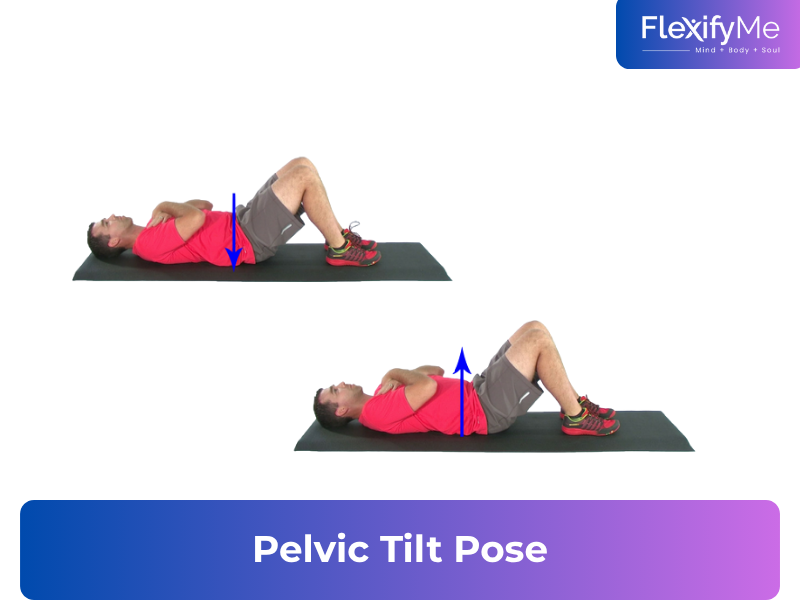
- Lie on your back, bend your knees, and place your feet hip-width apart. Rest your arms by your sides or on your stomach.
- Ensure your lower back has a natural curve and is not pressed to the floor.
- As you inhale, gently tilt your pelvis forward.
- Your tailbone dips slightly down toward the mat while the lower back gently arches away from the floor.
- Keep the movement small and smooth.
- As you exhale, gently tilt the pelvis back, and your tailbone tucks under slightly. The lower back presses gently into the floor.
- Perform this 6-10 times, moving like a wave. And keep your jaw, shoulders and neck relaxed.
Somatic Cow-Cat
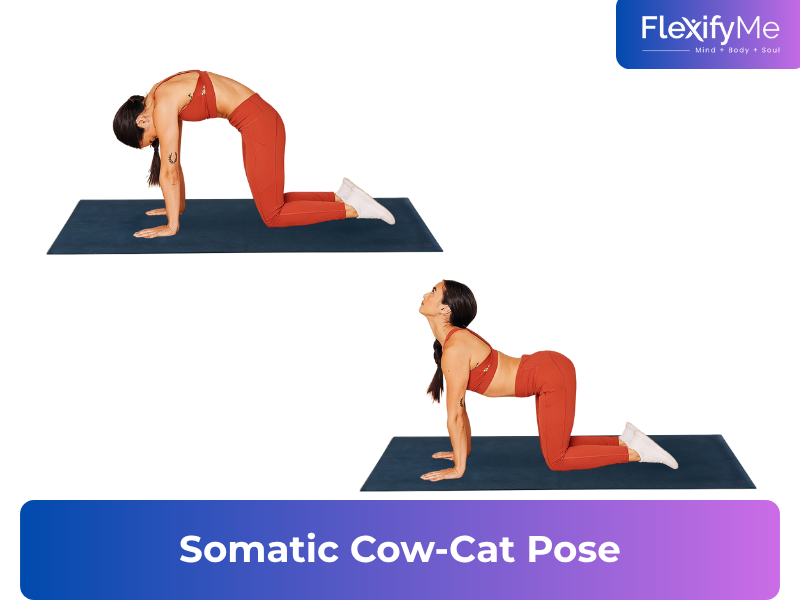
- Start by coming on all fours.
- Keep your knees under your hips and spread your fingers for better support.
- Let your spine settle in a neutral and relaxed position.
- Now, inhale and tilt your pelvis forward and let the lower belly drop toward the floor.
- Allow your chest to open slightly and your head to lift, only if it feels natural.
- Without overarching, stay connected to internal sensation.
- Now, exhale and tuck your pelvis downwards.
- Let that motion ripple up like the spine, like a wave.
- Keep your movement slow, small and wave-like.
- Follow the rhythm of your breath and aim for 5-10 cycles, maintaining an internal focus.
Shoulder Roll
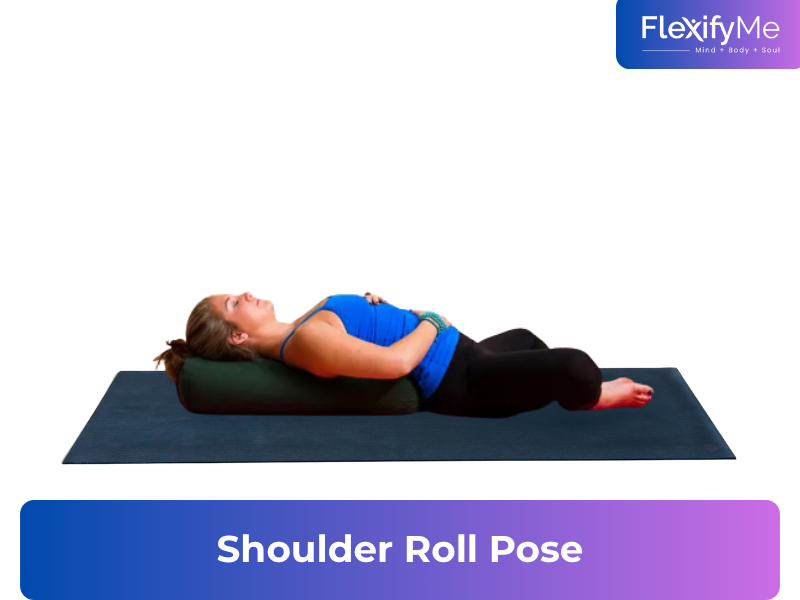
Rolling one shoulder at a time
- Sit or stand comfortably upright and let your arms hang loosely by your sides.
- Starting with the right shoulder, gently roll your arms forming a full circle.
- Slowly and mindfully, repeat it 3-5 times with breath.
- Switch to the left shoulder.
Rolling both shoulders together
- Inhale and lift both shoulders towards the ears.
- Exhale, roll them back and down, opening the chest.
- Move your shoulders slowly.
Leg Slides
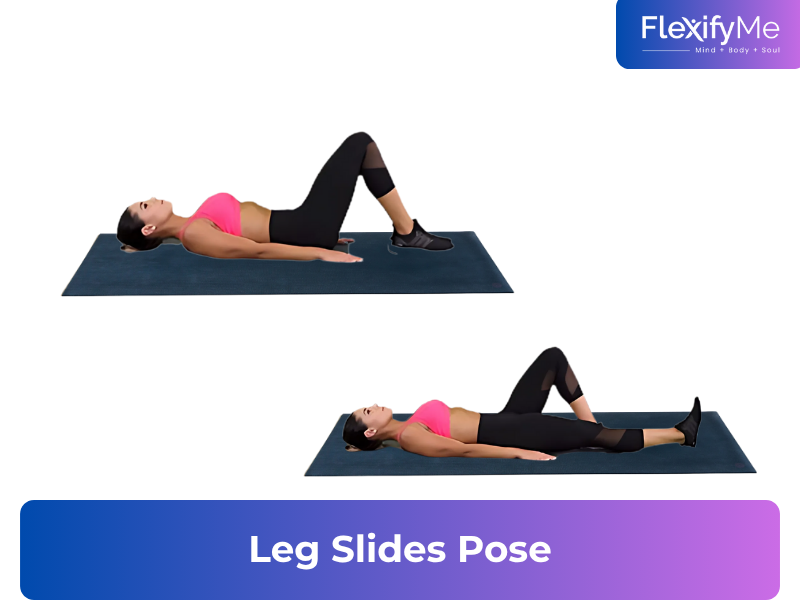
- Find a comfortable surface and lie down on your back.
- Keep your knees bent, feet flat on the floor, hip-width apart, and arms by your sides or on your belly.
- Now, inhale and slowly begin to slide your right heel along the floor and straighten your leg.
- When the leg is fully extended, pause briefly and observe the stretch, openness or any resistance.
- Exhale and draw back your leg, heel sliding towards the starting position.
- Do 3-5 slow repetitions on one side and repeat on the other leg.
Pelvic Clock
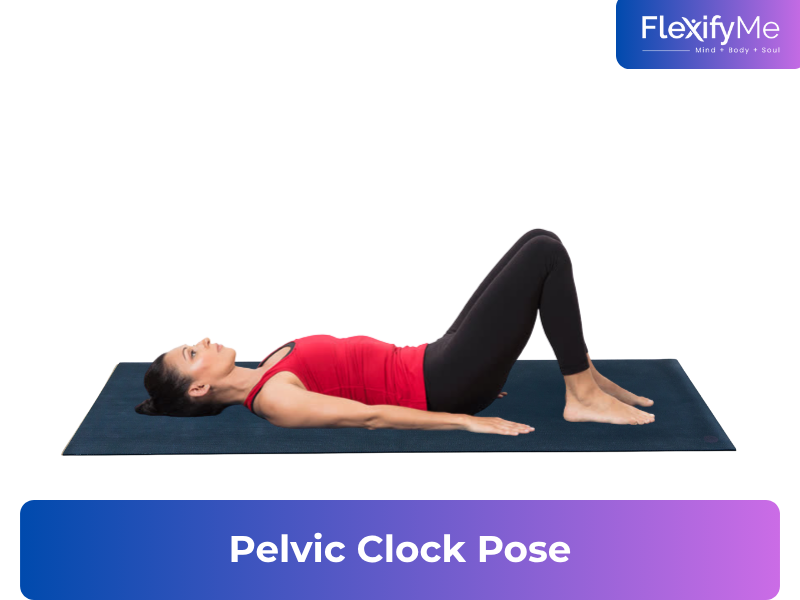
- Lie down on your back with knees bent, feet flat on the floor, hip-width apart, and arms relaxed by your sides or on your belly.
- Now, imagine a clock face lying flat across your pelvis, and you have to move your pelvis subtly around this clock.
- Inhale, and slowly tip your pelvis towards 12 o’clock, so that your lower back slowly arches.
- Exhale, and gently tip your pelvis towards 6 o’clock. Repeat this 5-8 slow cycles.
- Next, gently shift your pelvis towards 3 o’clock. Then shift to 9 o’clock.
- Repeat this side-to-side motion 5-8 times.
Mini Core Curls
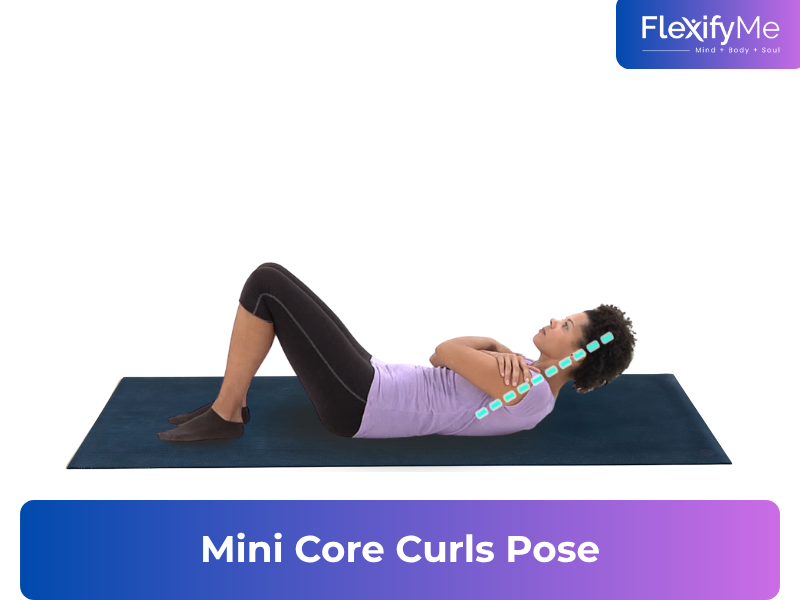
- Lie on your back in Constructive Rest Pose.
- Exhale and gently lift your chin slightly, then begin to lift your head and upper shoulders off the mat a bit.
- Keep your movements small and slow enough to feel your abdominals gently engage.
- Inhale to release slowly with control.
- Repeat this for 3-5 repetitions.
Segmental Bridge
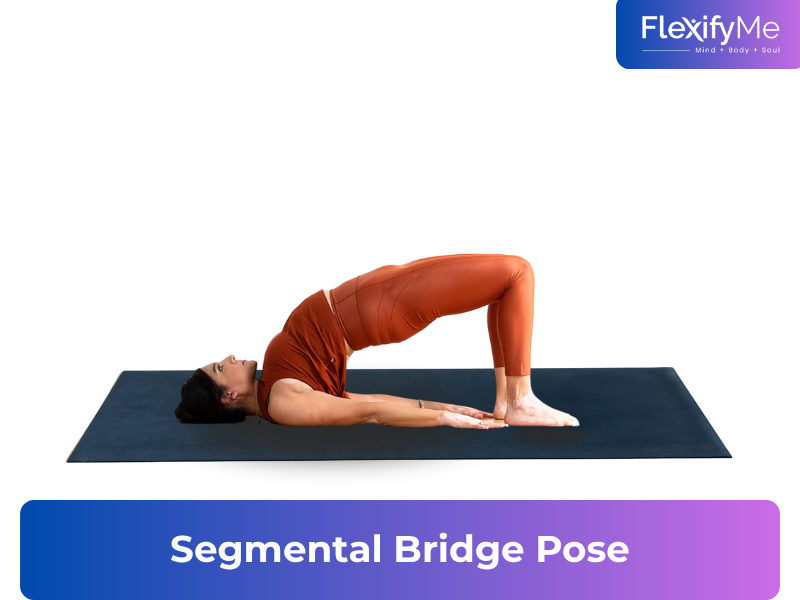
- In Segmental Bridge pose Lie down in Constructive Rest Pose and take a few slow breaths to settle down.
- Inhale and lengthen your spine and feel grounded through your feet.
- Now, exhale and gently tilt the pelvis into a posterior tilt.
- Slowly lift the lower back off the floor and roll up through the spine.
- Inhale at the top, expand the ribs and feel the length in the front body.
- Exhale and roll down to the starting position.
- Feel the full contact of your spine with the floor as you descend.
- Repeat it 3-6 times.
Breath & Belly Awareness
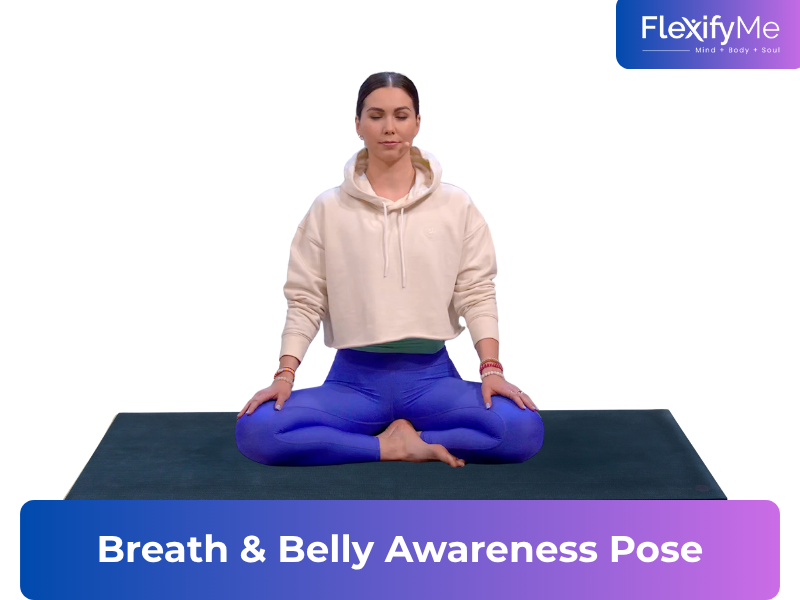
- Lie flat on your back in Constructive Rest Pose or sit straight in a chair or on a cushion, keeping your spine relaxed.
- Place one hand on your belly and one on your chest.
- Close your eyes or soften your gaze.
- Allow your shoulders and jaw to relax completely.
- Now, just watch your breath and feel how your belly rises on inhale and falls on exhale.
- Let the breath be smooth, effortless and rhythmic.
Gentle Marching
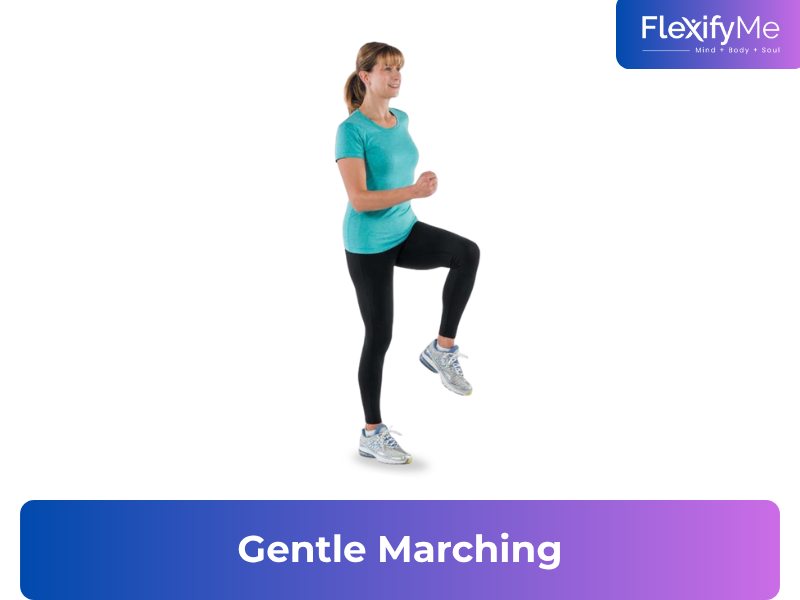
- Start by being in the Constructive Rest Pose.
- Inhale and while exhaling, slowly lift your right foot just a few inches off the floor.
- Keep your knees bent at 90 degrees.
- While lifting your foot slowly and smoothly, make sure your pelvis is steady.
- Inhale and gently return the foot to the floor.
- And repeat the left leg on the next exhale.
- Continue alternating legs for 6-10 rounds.
Supine Twist
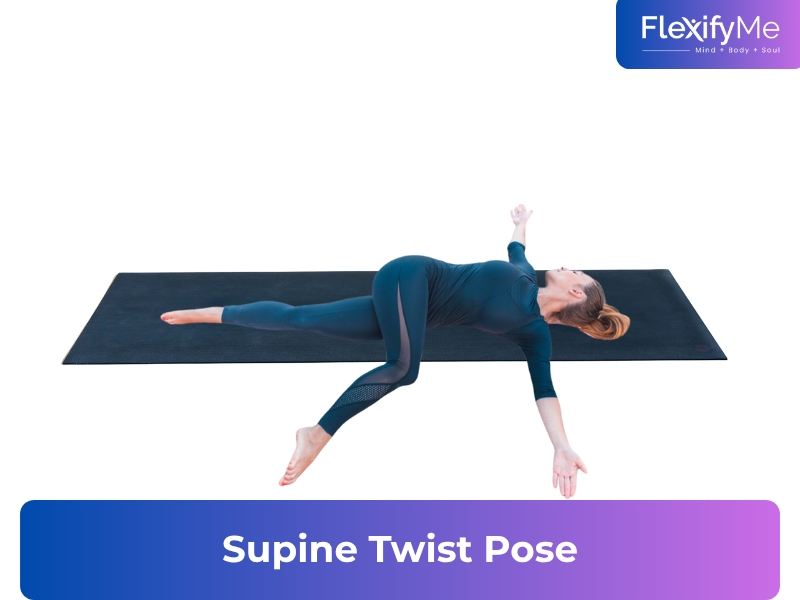
- Like any other pose, start this pose as well with the Constructive Rest Pose.
- Keep your arms out to the sides in a T or cactus shape.
- Inhale and lengthen your spine.
- Exhale and slowly lower both your knees to one side.
- Twist them only till you are comfortable; do not force.
- Keep your shoulders grounded.
- Inhale and return the knees to the normal position.
- And repeat it on the other side.
- Do it for 5-8 rounds, alternating sides.
Supported Child’s Pose
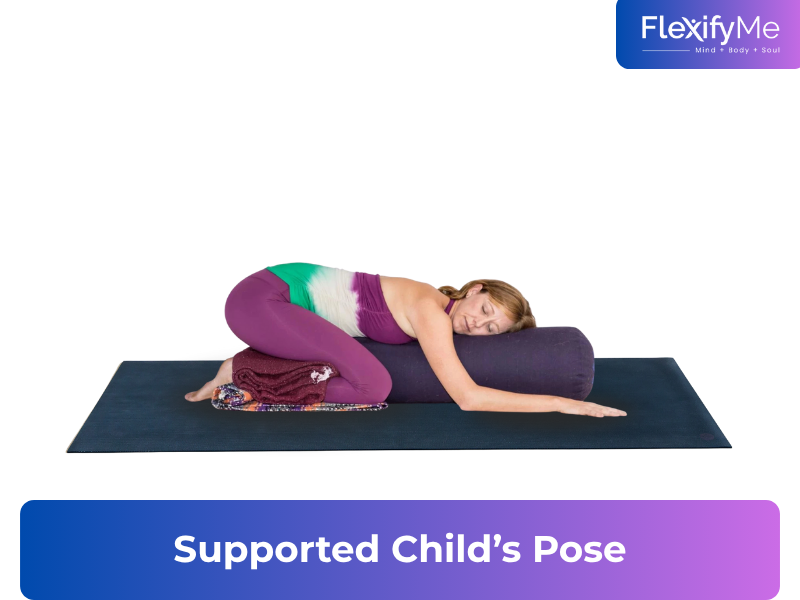
- Supported Child’s Pose requires props.
- Place a bolster or pillow on your mat.
- Kneel on the mat, big toes touching each other and knees wide apart.
- Keep a bolster between the knees.
- Sit back on your hips towards your heels.
- Gently fold your torso forward so that your chest and belly rest on the bolster.
- Turn your head to one side. Switch sides halfway to keep your neck balanced.
- You can wrap your hands around the bolster or stretch it out to the sides.
- Let yourself rest deeply in the sensation of being held.
- Be there for 3-5 minutes and come back to the starting position.
Neck Rolls
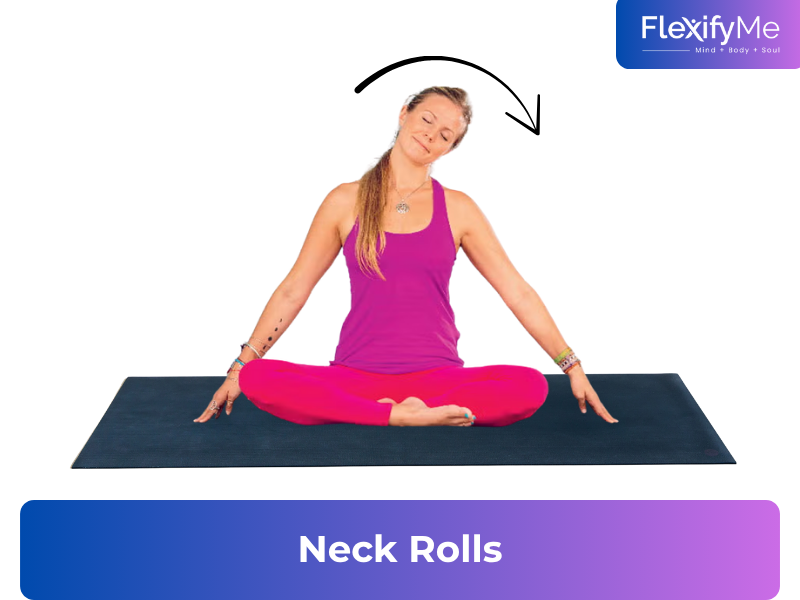
- Sit on a chair or a cushion with your spine relaxed but straight.
- Now, drop your chin slowly towards your chest.
- Inhale and slowly roll your right chin towards your right shoulder.
- Exhale and return to the centre.
- Inhale and roll the left chin towards the left shoulder.
- Exhale and back to the centre.
- Repeat this gentle arc 3-5 times, staying soft and smooth.
You can also try this with full circle only if your neck is healthy and the motion feels safe.
Butterfly Pose with Support
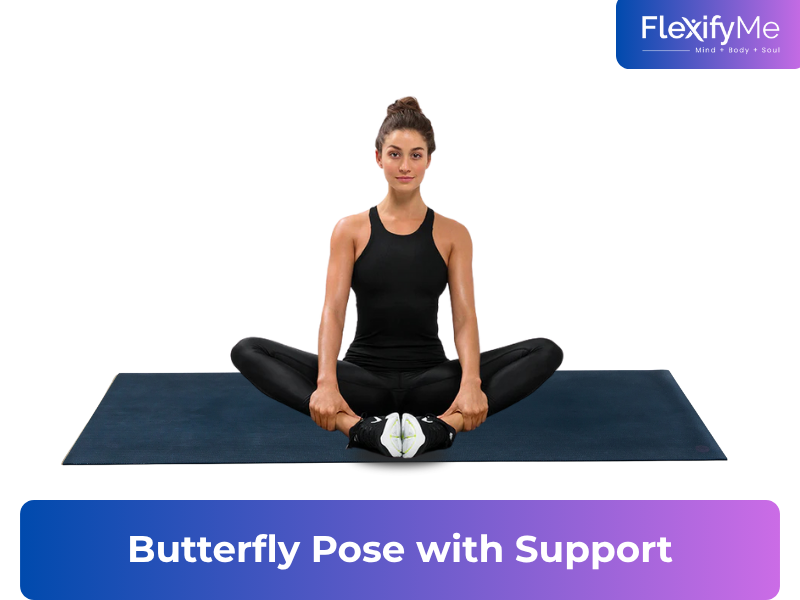
- First, set your props. Then sit on the mat with your knees bent and soles touching.
- Place a bolster behind you, starting at the base of your spine.
- Slowly recline back onto the bolster. Support your head and neck if needed.
- Let your knees drop out to the sides into a butterfly shape.
- Place blocks, blankets, or pillows under your outer thighs so that your knees feel supported, not stretched.
- Allow your belly to rise and fall naturally.
- Be there for 5-15 minutes and get up slowly.
Somatic Yoga for Beginners
Somatic yoga poses that focus on building awareness, mobility, and relaxation can be an excellent choice for beginners. Let’s check what some poses are for beginners and why they are an ideal choice.
- Constructive Rest Pose: This is an effortless pose that helps to ground the body, promotes relaxation and supports alignment.
- Pelvic Tilts: This simple Somatic yoga pose helps to increase spinal awareness and release lower back tension.
- Somatic Cow-Cat Pose: This is the easier version of the classic Cow-Cat yoga pose. It improves spinal mobility and coordination.
- Shoulder Rolls: Shoulder rolls help ease the tension neck and upper back.
- Leg Slides: This Somatic yoga pose builds body awareness in the hips, legs and core.
Somatic Yoga for Weight Loss
Somatic Yoga for weight loss does not reduce weight directly. Instead, they support metabolic balance in various ways that help lose weight.
- Segmental Bridge: This is one of the Somatic yoga poses that activates the glutes and core, improves body control and nervous system regulation.
- Mini Core Curls: Mini Core Curls strengthen the abdominal muscles.
- Gentle Marching: Gentle Marching helps activate the hips and core.
Somatic Yoga for Trauma
Almost all Somatic yoga poses are focused on the nervous system, emotional safety and self-trust. However, here are some easy poses.
- Supported Child’s Pose: This pose encourages comfort, introspection and deep rest.
- Butterfly Pose with Support: This pose fosters grounding and gentle hip opening in a gentle way.
Conclusion
Somatic yoga poses offer a gentle yet powerful approach to reconnect with your body. From reducing muscle tension to increasing flexibility without forcing, it provides a whole range of physical, mental and spiritual benefits. So, incorporate the simple but compelling Somatic yoga poses to lead a more conscious and embodied way of living.
Somatic Yoga FAQ’s
1. What is Somatic Yoga and how does it work
Somatic Yoga is a gentle practice combining yoga postures with somatic movement techniques. It retrains the nervous system, improves body awareness, and releases chronic muscle tension by using slow, mindful movements.
2. What are the benefits of Somatic Yoga for pain relief
Somatic Yoga helps relieve chronic pain by improving neuromuscular control, reducing tension patterns, enhancing mobility, and resetting the brain-body connection. It’s widely used for back pain, neck pain, and joint stiffness.
3. Can Somatic Yoga help with anxiety and emotional stress
Yes. Somatic Yoga activates the parasympathetic nervous system, calming the body and mind. It’s often recommended for managing anxiety, emotional trauma, and PTSD symptoms.
4. Is Somatic Yoga good for beginners or people with limited flexibility
Absolutely. Somatic Yoga is beginner-friendly and suitable for all ages. The slow, conscious movements don’t require flexibility and are ideal for seniors, those in recovery, or anyone dealing with chronic conditions.
5. How is Somatic Yoga different from regular yoga
While regular yoga focuses on stretching and poses, Somatic Yoga emphasizes internal sensing, neuro-muscular re-patterning, and subtle movement to release tension and restore balance from within.
6. Can I practice Somatic Yoga at home without equipment
Yes, Somatic Yoga can be easily practiced at home with minimal space and no equipment. Many online classes and video tutorials provide step-by-step guidance for home practice.
7. How often should I do Somatic Yoga for results
Practicing 3–5 times a week for 20–30 minutes can lead to noticeable improvements in pain, posture, and mental clarity within 2–4 weeks.
8. Does Somatic Yoga help with posture correction
Yes, Somatic Yoga helps correct posture by addressing muscle imbalances, increasing proprioception, and releasing habitual tension patterns caused by stress, sitting, or poor ergonomics.
9. Are there scientific studies backing the benefits of Somatic Yoga
There is growing evidence supporting somatic practices for chronic pain, trauma recovery, and nervous system regulation. Studies show benefits in mobility, mental health, and body awareness through somatic-based yoga techniques.
10. Where can I find the best online Somatic Yoga classes
You can find expert-led Somatic Yoga classes on platforms like YouTube, Insight Timer, FlexifyMe, and specialized somatic therapy websites. Look for instructors certified in somatics and therapeutic yoga.


