

Introduction
Here are Weight Reducing Yoga Poses In this fast-paced world, maintaining a healthy weight has become a challenge for many people. Busy lifestyles, poor eating habits, and stress often lead to weight gain and health issues. While countless fitness trends and diet plans promise fast results, only a few are holistic and sustainable. And yoga has emerged as one of the most sustainable ways to lose weight.
Yoga not only helps in weight loss but also strengthens the body and calms the mind. Weight-reducing yoga poses focus on increasing metabolism, improving digestion, and burning fat. It combines mindful movements, breath control, and mindfulness. Unlike intense gym workouts that may strain the body, yoga offers a gentler and effective path to weight loss.
In this guide, we’ll explore the most effective yoga poses for weight reduction, along with their benefits.
What is Weight Loss Yoga?
Weight loss yoga is a specific set of yoga practices that promote fat burning, metabolism, strengthen muscles, and improve digestion. Unlike traditional yoga, which emphasises relaxation and flexibility, this yoga focuses on dynamic poses and sequences to engage multiple muscle groups. These poses raise your heart rate mildly, improve circulation, and enhance oxygen delivery to the cells. Additionally, yoga also reduces stress, which is the biggest culprit behind mindless eating and weight gain.
14 Best Yoga Poses for Weight Loss
Here are seven yoga poses that not only aid weight loss but also improve flexibility, stamina, and mental clarity.
1.Surya Namaskar (Sun Salutation)
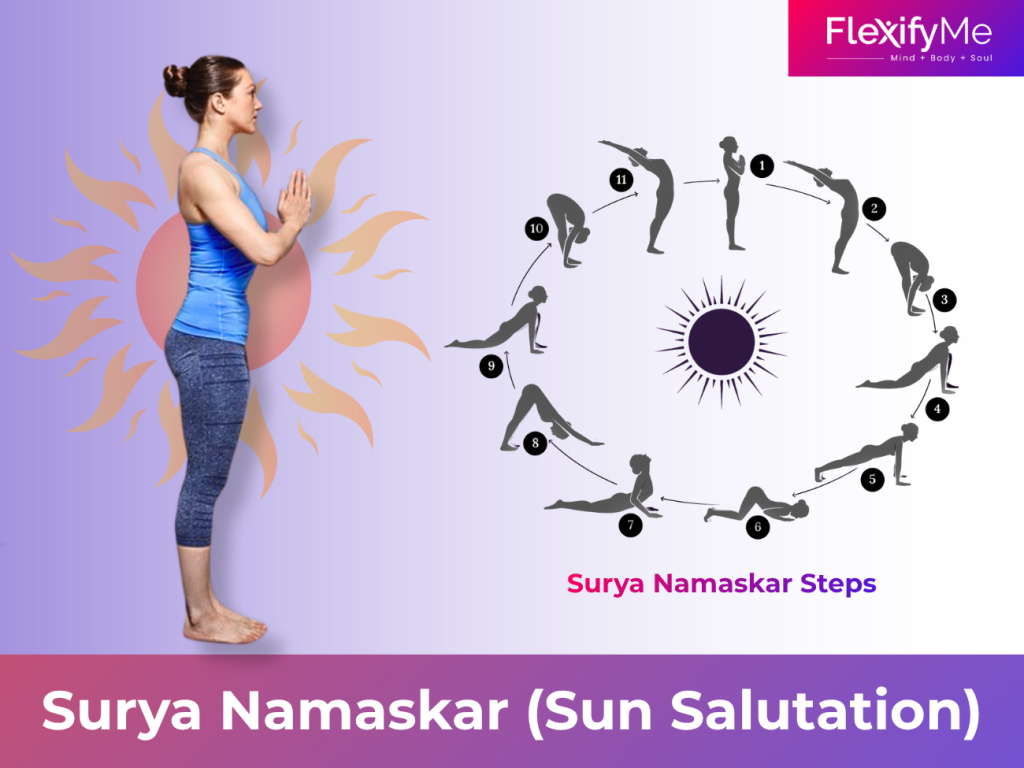
Surya Namaskar is a dynamic yoga practice with 12 postures performed in a flow. It involves stretching, bending, and strengthening movements that engage almost all the muscles in the body.
How to Perform
- Stand straight on your mat with your feet together. And fold your palm in front of your chest.
- Inhale and lift your arms upwards and slightly backwards. And arch your back slightly.
- Keep your biceps closer to your ears. Stretch your whole body upwards and expand your chest and lungs.
- Now exhale and bend forward from your hips. Keep your back straight, touch your toes.
- Inhale, slowly stretch your right leg back as far as possible. Keep your left foot between your hands. Now drop your right knee on the floor and look upward.
- Open your chest and stretch the spine and hips.
- Now hold your breath and take your left leg back, bringing the body into a plank position. Keep your arms and body in one straight line.
- Exhale and lower your knees, chest, and chin to the floor. Keep your hips slightly raised, toes tucked under.
- Take a deep breath and slide forward, lifting your chest into a gentle backbend. Keep your elbows close to your body and your shoulders relaxed.
- Again, exhale, and lift your hips upward, forming an inverted “V” shape. Keep your heels pressed.
- Inhale and bring your right foot forward between your hands. Keep your left leg extended and look upward.
- Exhale and bring your left foot forward beside the right one. Keep your palms on the floor and your forehead close to your knees.
- Inhale and lift your arms upwards and backwards, arching slightly from the lower back.
- Exhale and bring your palms together in front of your chest, returning to the starting position.
- You can repeat this sequence 5-10 times daily.
Benefits of Surya Namaskar
- As Surya Namaskar engages multiple muscle groups, it burns calories quickly.
- It enhances flexibility and stamina.
- It boosts metabolism and digestion.
- Also tones the abdomen, thighs, and arms.
- It also improves blood circulation and cardiovascular fitness.
2.Trikonasana (Triangle Pose)
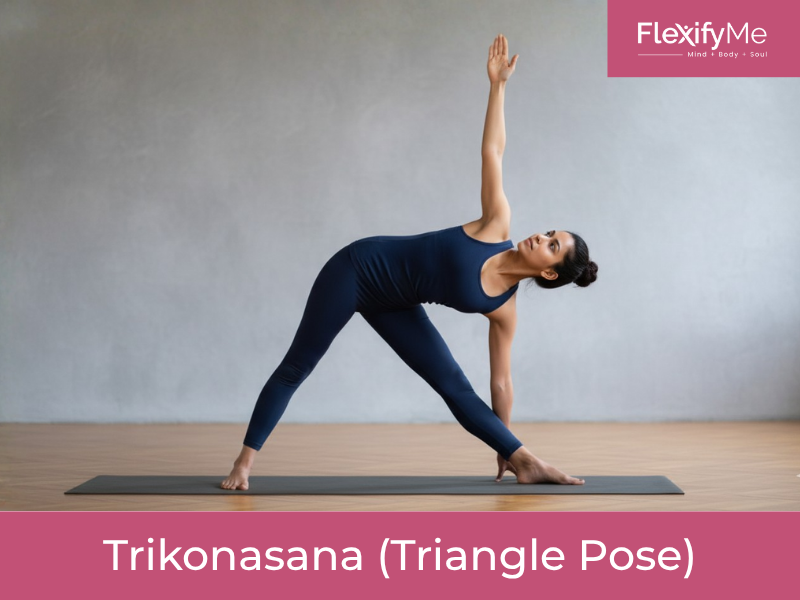
Trikonasana is a standing pose that requires stretching both sides of the body simultaneously.
Steps to Perform
- Stand with your feet about 3 feet apart. Keep your arms resting by your body.
- Now turn your right foot out at 90 degrees and your left foot slightly inward.
- Make sure both heels are aligned in a straight line.
- Now inhale deeply and extend your arms parallel to the floor with palms facing down.
- Keep your shoulders relaxed while you stretch your arms in opposite directions.
- Now exhale and slowly bend sideways from the hip, bringing your right hand to your shin, ankle, or floor, wherever you can reach comfortably.
- Extend your left arm upwards, aligned with your left hand.
- Now turn your head gently to look up at your left hand. And maintain the posture for 20-30 seconds, breathing deeply.
- Inhale and slowly come up, bringing your arms back to shoulder level.
- Exhale and lower your arms, return to the standing position, and repeat on the other side.
Benefits of Trikonasana
- It strengthens your legs, knees, and core muscles.
- It also stimulates digestion and reduces belly fat.
- Enhances flexibility in the spine and hips.
- Improves concentration and balance.
- Encourages better posture.
3.Utkatasana (Chair Pose)
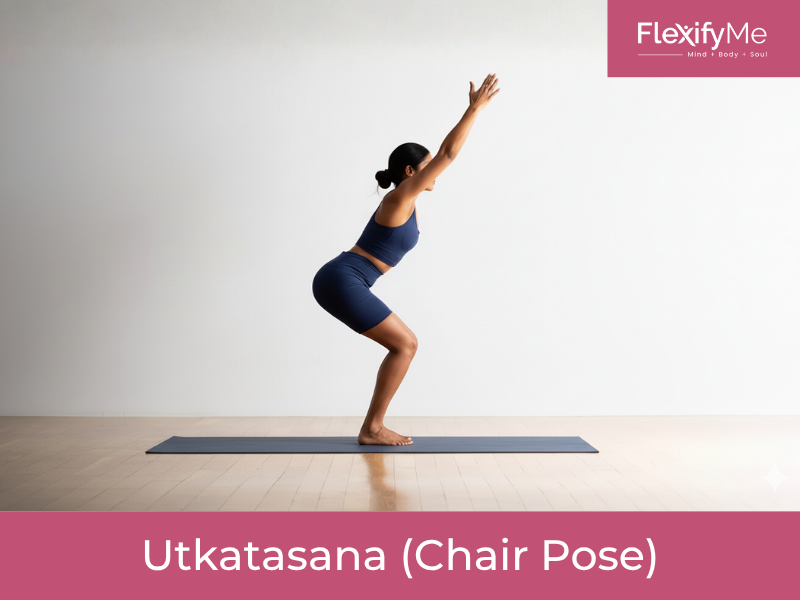
Utkatasana resembles the pose of sitting on an imaginary chair.
How to Perform
- Stand straight with your feet hip-width apart.
- Keep your arms by your sides and relax your shoulders.
- Inhale and extend your arms overhead, keeping them parallel, and palms facing each other. Keep your biceps close to your ears.
- Lengthen your spine and ensure your shoulders are relaxed.
- Breathe out and gently lower yourself by bending your knees, as though you’re about to sit on an invisible chair.
- Try to keep your thighs nearly parallel to the ground. But ensure your knees don’t cross your toes.
- Hold the position for 30-60 seconds.
- Now inhale and straighten your knees to return to the standing position.
Benefits of Utkatasana
- It tones the abdomen and buttocks.
- This pose also tones muscles in the lower body.
- Strengthens thighs, calves, and spine.
- Increases stamina and heart rate, and promotes fat burn.
4.Bhujangasana (Cobra Pose)
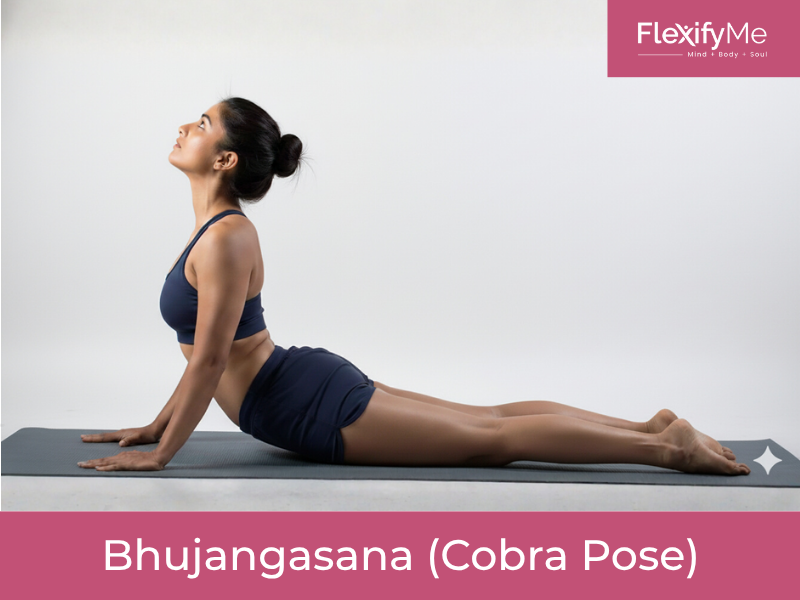
Bhujangasana is a part of the Surya Namaskar sequence but can also be practised independently.
Bhujangasana Steps
- Lie down flat on your stomach with legs extended and palms beside your shoulders.
- Keep your legs straight and feet together.
- Place your palms flat on the floor beside your chest and rest your forehead or chin on the mat.
- Keep elbows bent and palm directly under shoulders.
- Press the tops of your feet, thighs, and pubic area firmly into the floor.
- Now inhale, then gently press your palms into the mat and lift your head, chest, and abdomen off the floor.
- Keep your elbows slightly bent and shoulders relaxed.
- Raise your chest as high as you are comfortable and keep your navel on the floor.
- Now look slightly upward and maintain this pose for 15-30 seconds while breathing normally.
- Exhale slowly and gently lower your chest, shoulders, and head back to the mat.
Benefits of Bhujangasana
- This pose tones the abdominal area by stretching and strengthening muscles.
- Improves the flexibility of the spine and shoulders.
- It stimulates the digestive system, improving fat metabolism.
- Reduces stress and fatigue.
5.Dhanurasana (Bow Pose)
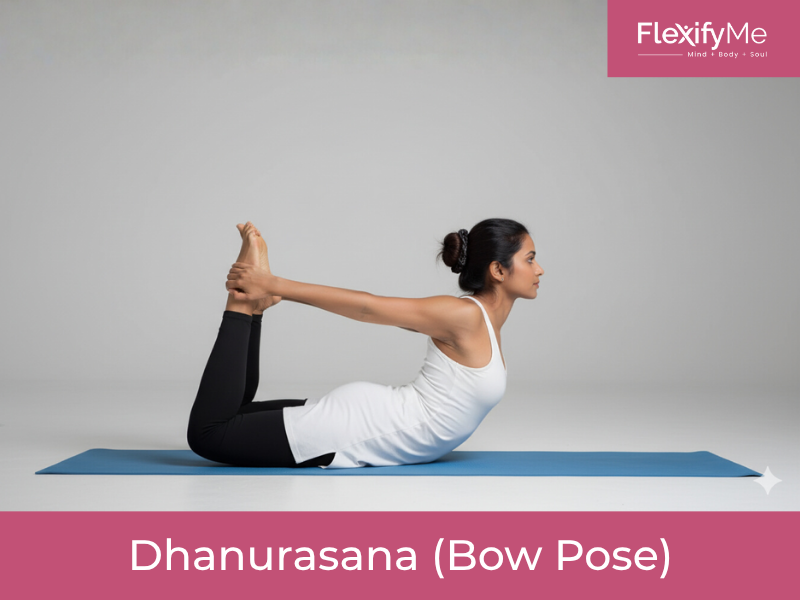
Dhanurasana is a powerful backbend that resembles a bow.
- Lie down on your stomach with legs hip-width apart and arms resting beside your body.
- Slowly bend both knees, bringing your heels as close to your hips as possible.
- Reach your hands back and grasp your ankles. Ensure your grip is firm.
- Take a deep breath and lift your chest and thighs off the floor simultaneously.
- Now, slowly pull your legs up and back while keeping your arms straight.
- Your body should form a bow shape with your abdomen pressing into the mat.
- Maintain the position for 15-30 seconds.
- Feel the stretch in your chest, abdomen, thighs, and arms.
- Exhale slowly, release your ankles, and gently lower your thighs, chest, and head back to the floor.
- Relax for a few breaths before switching to another pose.
Benefits of Dhanurasana
- Dhanurasana helps to burn fat in the abdomen and thighs.
- It stimulates digestive organs and improves metabolism.
- It also strengthens the back, shoulders, and legs.
- It enhances flexibility and posture.
6.Navasana (Boat Pose)
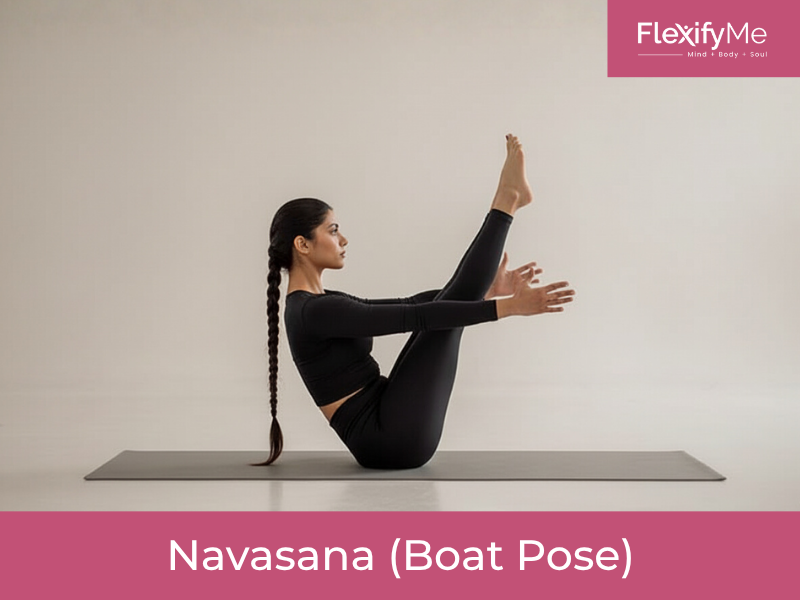
Navasana targets the core muscles and helps build strength in the abdomen and hip flexors. It’s one of the most effective yoga poses for burning belly fat.
Steps to Perform Navasana
- Sit down on your mat with your legs extended straight in front of you.
- Keep your spine straight and place your hands beside your hips for support.
- Now slowly bend your knees and place your feet flat on the floor.
- Keep your back straight and avoid rounding the spine.
- Now lean your upper body slightly backward, keeping your chest open and your spine straight.
- Engaging your core muscles, slowly lift both feet off the mat.
- Balance on your sitting bones.
- When you feel balanced, straighten your legs to form a “V” shape with your body.
- Try to keep your toes at eye level.
- Make sure your back stays straight and don’t slump forward.
- Stretch your arms parallel to the floor, and your shoulders relaxed.
- Maintain this posture for 15-30 seconds and gradually increase the duration.
- To come out of the pose, exhale, slowly lower your legs and arms, and return to the starting position.
Navasana Benefits
- Navasana helps reduce belly fat and builds endurance.
- It enhances core stability and tones the waistline.
- It strengthens the abdominal muscles and hip flexors.
- It improves digestion and metabolism.
- This pose also improves balance and coordination.
7.Setu Bandhasana (Bridge Pose)
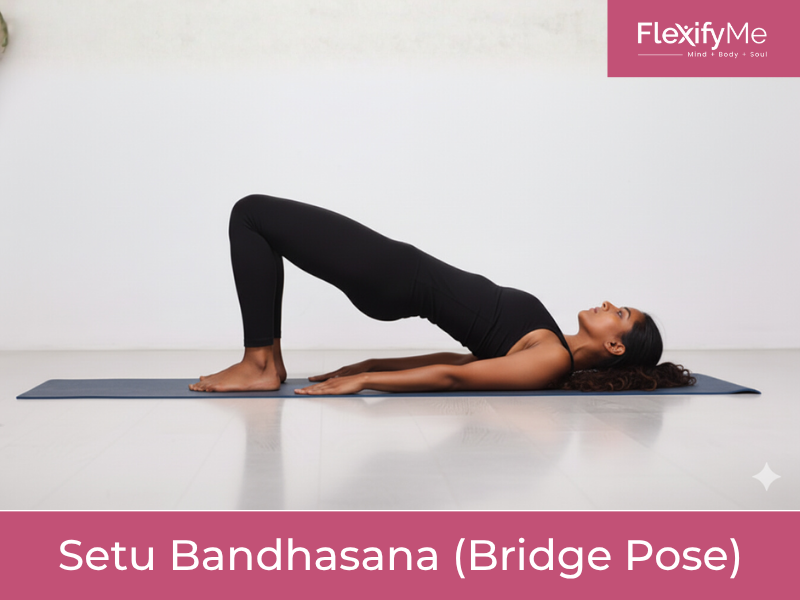
Setu Bandhasana is a gentle backbend that tones the lower body, improves circulation, and stimulates thyroid function.
How to Perform Setu Bandhasana
- Lie down flat on your back on your mat.
- Keep your arms at your sides, palms facing down.
- Bend your knees and bring your feet hip-width apart, flat on the floor.
- Make sure your heels are close to your sitting bones. You must be able to touch them lightly with your fingertips.
- Keep your head, neck, and spine in one straight line.
- Now take a deep breath and press your feet and arms into the floor.
- Slowly lift your hips upwards toward the ceiling.
- Gently roll your shoulders slightly under your body to open the chest.
- Keep thighs parallel to each other and buttocks firm but not tense.
- Do not turn your head during the pose and keep your chin slightly tucked.
- You can interlace your fingers beneath your back for extra lift or keep palms flat on the mat.
- Hold the pose for 15-30 seconds, breathing deeply and evenly.
- Now exhale and gently lower your hips back to the mat.
- Relax your spine in shavasana for a few moments.
Benefits of Setu Bandhasana
- Setu Bandhasana helps strengthen glutes, thighs, and core.
- It stimulates the thyroid gland and improves metabolism.
- It enhances blood circulation and detoxifies the body.
- It also opens the chest, improves lung function, and reduces stress and anxiety.
For a personalised and sustainable approach to fat loss, join the Weight Loss Yoga Classes from FlexifyMe and start your transformation journey today.
8.Plank Pose (phalakasana)
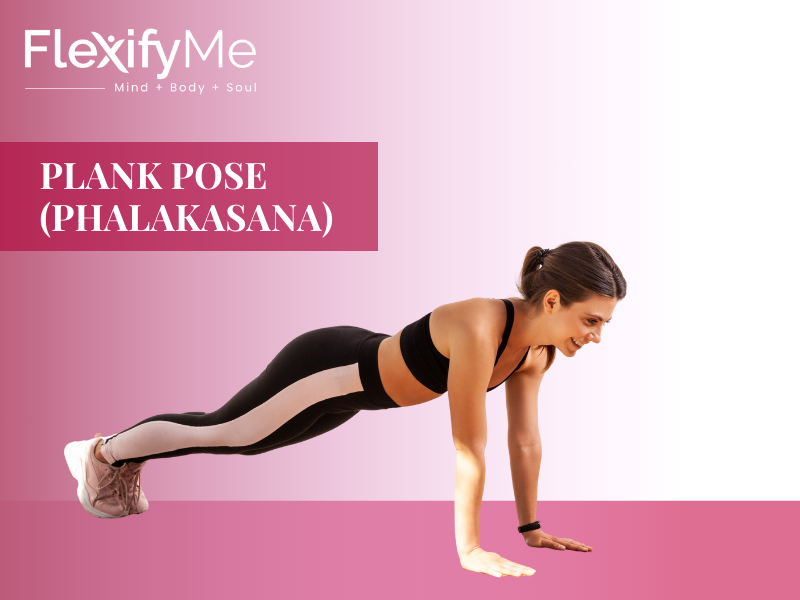
The plank pose is excellent for strengthening your core. This yoga asana is ideal for beginners and is packed with weight loss benefits and other healthy outcomes. Including a plank pose in your workout routine can improve your shoulders, abs, core back, buttocks, and thighs. By following these steps, you can do the plank pose perfectly.
- To start with a plank position, make a push-up posture.
- Press your hands to the floor and lift your body.
- Keep your wrist and shoulders engaged while you are making the push-up posture.
- Sink your head toward the ground and relax your neck.
- Hold the posture as long as you can.
Plank Pose (phalakasana) Benefits:
- Burns calories by engaging multiple muscle groups simultaneously
- Boosts metabolism through increased muscle activation
- Tones the entire core, reducing belly fat
- Strengthens arms and shoulders, improving overall calorie burn
- Improves posture, which helps optimize breathing and fat burning
9. Four-Limbed Staff Pose (Chaturanga)
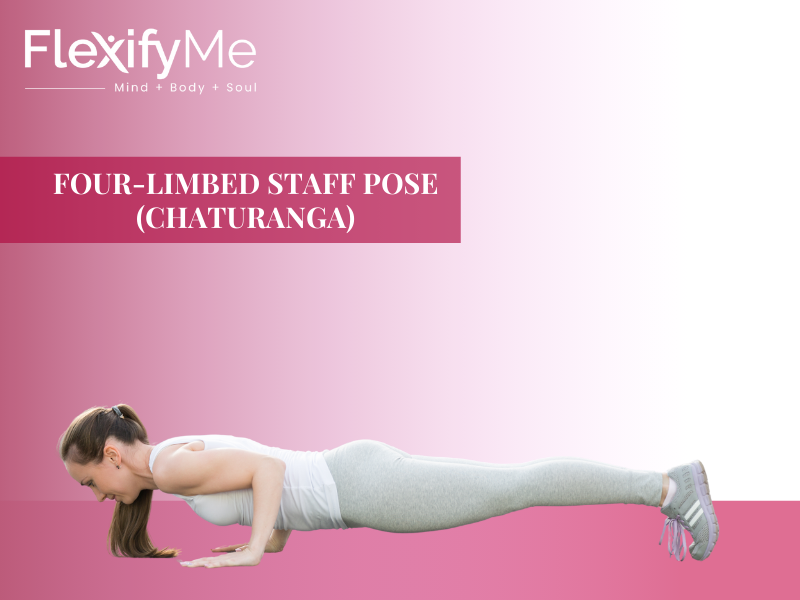
Chaturanga is a part of vinyasa yoga for weight loss and Power Yoga. This asana provides strength to the spine, which fixes bad posture. Furthermore, this yoga pose tones abdominal muscles, lower back, wrists and arms. To incorporate chaturanga, follow these steps:
- Start with a plank pose. Keep the elbows above your wrists and gently lower your body to hover a few inches from the ground. Keep your back straight.
- Lift through your chest to align your shoulders and elbow. Don’t let your chest slump to the floor.
- Totally engage your abdominal and leg muscles.
- If you think the whole posture is difficult at a beginner level, you can start with your knees. Bend your torso to over a few inches over the floor. This is called half chaturanga.
- Don’t let your elbows spread on the side. Keep them together, clutching your ribs.
Four-Limbed Staff Pose (Chaturanga) Benefits
- Burns significant calories through full-body muscle engagement
- Builds lean muscle mass in arms, shoulders, and core
- Increases metabolic rate by strengthening major muscle groups
- Tones the entire upper body, especially triceps and chest
- Improves core stability, enhancing calorie burn in other exercises
- Strengthens wrists and forearms for better workout performance
10. Standing Forward Bend Pose (Uttanasana)
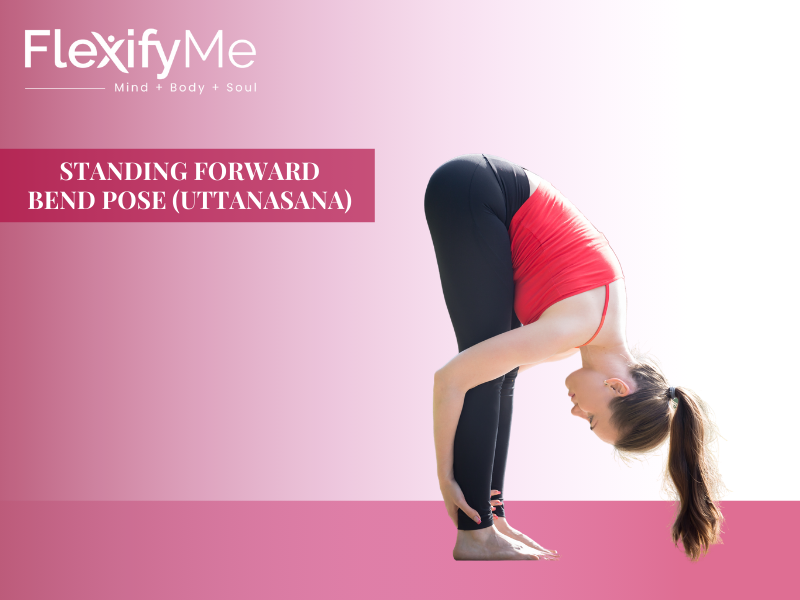
Indigestion can lead to bloating and can be one of the primary reasons for weight gain. To manage your weight, you should practise the standing forward bend pose. This yoga pose works on your abdominal muscles and glutes, boosting digestion. Uttanasana exercise also allows you to better your overall physical and mental health. Here are the steps to do standing forward bend pose:
- Stay in a standing position, keeping your feet apart.
- Use your feet to distribute your body weight evenly.
- Raise your arms above while breathing in.
- Bend forward towards your feet and breathe out, keeping your back straight.
- Breathe deeply while holding this stance for 20-30 seconds.
- Rest your hands alongside or on your feet while keeping your legs and spine upright.
- As you breathe out, expand your chest toward your knees and lift your tailbone and hips higher.
- Continue taking deep breaths and allow your head to relax and reach toward the feet.
- While inhaling, allow your arms to move forward and up.
- Go back to the standing position.
- While you exhale one final time, allow your arms to move toward your sides.
Standing Forward Bend Pose (Uttanasana) Benefits
- Improves digestion and reduces bloating, preventing weight gain
- Stimulates abdominal organs, boosting metabolism
- Stretches hamstrings and calves, improving flexibility for other exercises
- Relieves stress and anxiety, reducing cortisol-related weight gain
- Increases blood circulation to the brain, improving mental clarity
- Stretches the spine, promoting better posture for optimal breathing
11. Warrior I Pose (virabhadrasana )
Warrior I Yoga Pose
To tone your upper body, you can perform the Warrior I yoga pose. This position aims to strengthen arms, shoulders and legs. By performing this position, you can fix your alignment issues and body balance. To do the Warrior I pose, you have to:
- Stand straight, keeping your legs distant from one another at least 3-4 feet apart.
- Take a deep breath to calm your mind.
- At a 90-degree angle, turn your right foot so the toes touch the top of the floor/mat.
- Move your left foot inward at an angle of 45 degrees.
- Maintain an alignment between your front heel and the back foot’s arch.
- Shift your body weight to the left heel as you’re bending your right knee over your right ankle.
- Make sure your shin is perpendicular to the floor.
- Raise your hands facing the ceiling, keeping your palms and fingers engaging.
- Gently tilt your head back, look at your thumbs, and keep your shoulders away from your ears.
- Push down to the outer edge of your back foot while keeping the back leg straight.
- Hold the position for a minute.
Warrior I Pose (virabhadrasana )
- Burns calories through sustained muscle engagement in legs and core
- Builds strength in thighs, glutes, and calves for increased metabolism
- Opens the chest and lungs, improving oxygen intake and fat burning
- Strengthens the entire lower body, boosting overall calorie expenditure
- Improves balance and stability, enhancing workout performance
- Tones arms and shoulders when held properly Increases
- stamina and endurance for longer, more effective workouts
12. Downward Facing Dog Pose (Adho mukha svanasana)
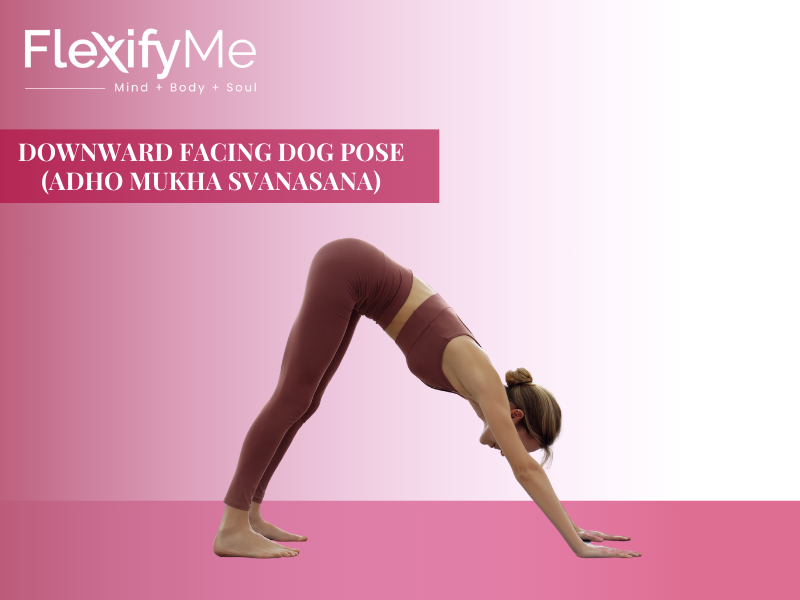
Along with weight loss meditation, you can practice the downward-facing dog pose, which would help you to tone your body. This pose helps strengthen your hamstrings, glutes, arms, thighs and back. The pose may feel like you’re resting, but when you do it, you can feel the burn. For performing a downward-facing dog pose, you have to:
- Sit with your knees touching the ground or mat and place your hands and knees a few feet apart.
- Lift your body through your knees and hands, and while doing so, try to keep your legs as straight as possible and push the heels down to the floor.
- Press your palm to the floor so that you can hold the bent.
- For about 10 seconds, you can hold that stance.
Downward Facing Dog Pose (Adho mukha svanasana) Benefits
- Engages multiple muscle groups, increasing calorie burn
- Strengthens arms, shoulders, and core for improved metabolism
- Stretches and tones the back of the legs (hamstrings and calves)
- Improves circulation and blood flow, supporting fat metabolism
- Relieves stress, reducing cortisol levels that contribute to belly fat
- Energizes the body, making it easier to stay active throughout the day
- Builds upper body strength, burning more calories at rest
13. Chair pose ( Utkatasna )
Chair pose yoga ( Utkatasna yoga )
To get your legs engaged, you can include chair pose yoga in your daily routine. The pose has different variations and a lot of health benefits when it comes to weight loss and toning the body. Each chair pose variation is great for muscle building around the lower body. It mainly targets the abdominal region, hips, waist, inner and outer thighs, pelvis and glutes. Following are the steps for doing a chair pose:
- To begin the pose, you have to stand straight.
- Join your hands, making a namaste gesture.
- Raise your arms above your hand. While you’re doing so, make sure your arms travel parallel to your ears.
- Bend your knees so that the thighs are parallel to the floor.
- Hold this position for about 30 seconds.
Chair pose yoga ( Utkatasna yoga )
- Burns significant calories by engaging large leg muscles
- Builds lean muscle in thighs, glutes, and calves for higher metabolism
- Strengthens the core, reducing belly fat
- Tones inner and outer thighs, creating leaner legs
- Improves balance and stability for better workout performance
- Increases heart rate, promoting cardiovascular fat burning
- Stimulates digestive organs, improving metabolism
- Builds endurance, allowing for longer, more intense workouts
14. Upward Facing Dog Pose
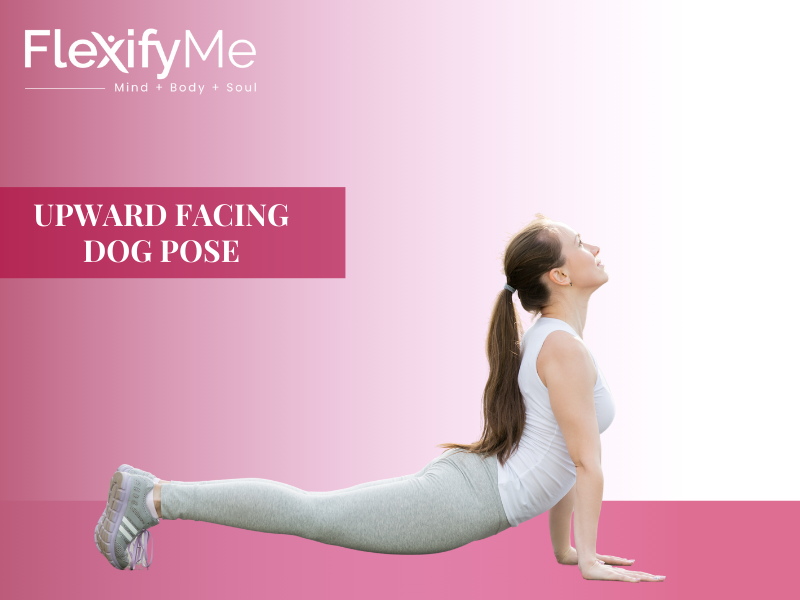
For stretching and improving the capacity of your lungs to hold oxygen, upward-facing dog pose is quite beneficial. Furthermore, the pose will help you to strengthen your arms, wrists and back. To do this pose, you need to:
- Lie on your stomach.
- Extend your arms with palms facing down below your shoulders.
- Lift your body up.
- Keep your face, head and shoulders away from your ears.
- Rest your glutes, raise your hips and knees and press your knee and hand to the floor.
- You can also do the pose on the yoga mat if performing on a direct floor seems inconvenient.
Upward Facing Dog Pose Benefits
- Opens the chest and lungs, improving oxygen intake for better fat burning
- Strengthens arms, wrists, and shoulders, building calorie-burning muscle
- Stretches and tones the abdominal muscles, reducing belly fat
- Improves posture, which optimizes breathing and metabolism
- Stimulates thyroid gland, supporting healthy metabolic function
- Increases spinal flexibility, improving overall movement and activity levels
- Energizes the body, combating fatigue and promoting physical activity
- Strengthens the back muscles, preventing injury during other workouts
Conclusion
Weight-reducing yoga is not just a workout; it’s a lifestyle transformation. By combining physical movement, mindful breathing, and mental focus, yoga helps you lose weight in a healthy way. Unlike diets high in fat or high-intensity exercise, yoga cultivates discipline and patience, both essential for lasting weight management.
The forteen yoga poses discussed here offer a complete body routine that burns calories, tones muscles, and restores harmony between mind and body. Yoga for weight loss works best when practised consistently and combined with mindful eating and a positive attitude.
Frequently Asked Questions for Weight Loss Yoga
1. How long does it take to see weight loss results from yoga?
Most practitioners begin noticing visible changes within 1-2 weeks of regular practice (5+ sessions weekly), with significant weight loss typically occurring between 8-12 weeks. Results vary based on practice intensity, frequency, diet, and individual body composition. Power yoga and Vinyasa practitioners may see faster results, while gentler styles contribute to gradual, sustainable weight loss over 3-6 months.
2. Is morning or evening yoga better for weight loss?
Morning yoga is generally more effective for weight loss as it kickstarts your metabolism on an empty stomach, improves fat burning throughout the day, and enhances consistency. However, the best time is when you can maintain regular practice. Evening yoga offers benefits like stress reduction and improved flexibility, which indirectly support weight loss by managing cortisol levels and promoting better sleep.
3. Can you lose belly fat specifically with yoga?
While spot reduction isn’t possible, yoga effectively reduces overall body fat, including belly fat, through core-strengthening poses, stress reduction, and hormonal balance. Poses like Navasana, Plank, and Bhujangasana target abdominal muscles while reducing cortisol—a stress hormone linked to belly fat storage. Consistent practice (4-5 times weekly) combined with mindful eating shows the best results for reducing abdominal fat.
4. How many calories does yoga burn compared to other exercises?
A 60-minute yoga session burns approximately 180-600 calories depending on style and intensity. Power Yoga and Vinyasa burn 400-600 calories per hour (comparable to gym workouts), while Hatha and restorative styles burn 180-250 calories. Though yoga may burn fewer calories than high-intensity workouts, its metabolic benefits, muscle building, and stress reduction create sustainable long-term weight loss.
5. What should I eat before and after yoga for weight loss?
Eat a light snack 1-2 hours before yoga, such as a banana, handful of almonds, or small fruit. Avoid heavy meals that cause discomfort during practice. After yoga, wait 30-60 minutes, then consume protein-rich foods like smoothies with plant-based protein, eggs, or tofu with vegetables to support muscle recovery and metabolism. Maintain hydration with water throughout the day.
6. Can beginners lose weight with yoga or do you need to be flexible first?
Beginners can absolutely lose weight with yoga—flexibility is a result of practice, not a prerequisite. Start with beginner-friendly styles like Hatha yoga 3-4 times weekly, gradually progressing to more intense Power or Vinyasa classes as strength and flexibility improve. Modifications are available for all poses, and many successful weight loss journeys begin with zero yoga experience.
7. Do I need to combine yoga with other exercises to lose weight?
Yoga alone can facilitate weight loss when practiced consistently (5-6 times weekly) and combined with a healthy diet. However, combining yoga with cardio (2-3 times weekly) or strength training accelerates results by increasing overall calorie burn. Many practitioners successfully lose weight using only yoga, while others prefer mixing it with other activities for faster transformation.
8. Does yoga help lose weight?
Yes, yoga helps with weight loss when practiced consistently (5-6 times weekly) and combined with mindful eating. Yoga burns 180-600 calories per session depending on style, builds lean muscle that increases metabolism, and reduces stress hormones that cause fat storage. Studies show regular practitioners can lose 2-5 pounds monthly. Power Yoga and Vinyasa are most effective for weight loss, burning 400-600 calories per hour—comparable to moderate gym workouts.
9. How does yoga reduce weight differently than gym workouts?
Yoga promotes weight loss holistically through muscle building, metabolic enhancement, stress reduction, improved sleep quality, and mindful eating habits—rather than just calorie burning. It reduces cortisol levels that cause fat storage, improves digestion, balances hormones, and creates sustainable lifestyle changes. Unlike gym workouts that can increase stress hormones, yoga activates the parasympathetic nervous system, supporting long-term weight management.
10. Can hot yoga or Bikram yoga accelerate weight loss results?
Hot yoga (practiced at 40°C/104°F) can burn slightly more calories due to increased cardiovascular demand and may reduce weight within 1-2 weeks with 5 weekly sessions. However, much of the immediate weight loss is water weight from sweating. For sustainable fat loss, consistent regular yoga practice (hot or room temperature) combined with proper nutrition proves more effective than relying solely on heated classes.
11.How often should I do yoga to lose weight?
For effective weight loss, practice yoga 5-6 times per week with sessions lasting 45-60 minutes. Beginners should start with 3-4 sessions weekly (30-45 minutes) and gradually increase frequency. Combine intense styles like Power or Vinyasa Yoga (3-4 sessions) with gentler recovery practices like Hatha or Yin (1-2 sessions) for balanced results. Consistency matters more than intensity—daily 30-minute practice often yields better results than sporadic longer sessions.
12.Which yoga style is best for weight loss?
Power Yoga and Vinyasa Yoga are the best styles for weight loss, burning 400-600 calories per hour through dynamic movements that increase heart rate and build lean muscle. For beginners, start with Hatha Yoga (3-4 times weekly) to build foundation, then progress to Power or Ashtanga Yoga for faster results. Combining intense styles (3-4 sessions) with gentler restorative yoga (1-2 sessions) provides optimal weight loss while preventing burnout.


