
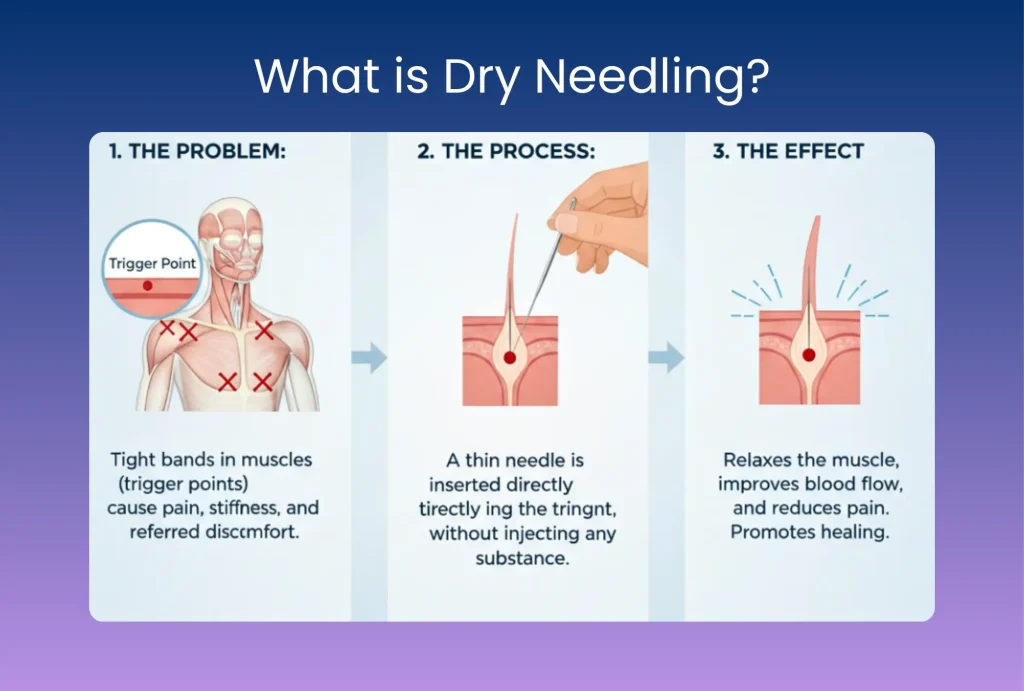

Dry needling therapy has experienced remarkable growth in the fields of physical therapy and pain management. It can relieve muscular pain and increase mobility without the use of medications or surgery. Dry needling is often confused with acupuncture due to its use of thin needles; however, it is a different technique that has scientific backing and is based on Western medicine principles.
Dry needling involves inserting fine, sterile needles into particular muscle tissue. Its main purpose is to target muscle knots known as “myofascial trigger points,” which are knots in the muscles. This helps reduce pain, improve function, and restore flexibility. It is an effective treatment for several musculoskeletal disorders, ranging from persistent back and neck pain to sports injuries and tension headaches.
Here, we’ll provide a comprehensive overview of dry needling therapy, including its working principles, various techniques employed, potential benefits, and associated risks.
What is Dry Needling?

Dry needling is a treatment that involves inserting thin, solid, sterile needles into muscle tissue. These are specifically inserted into trigger points or taut bands of muscle that are painful or dysfunctional. Here, the term “dry” refers to the fact that no medication or fluid is injected, and the needle itself is the tool.
The main objective is to release or deactivate trigger points, reduce muscle tension, improve mobility, and decrease pain. It is usually one component of a broader rehabilitation or pain management programme, which also may include stretching, strengthening exercises, and manual therapy.
How Dry Needling Works?
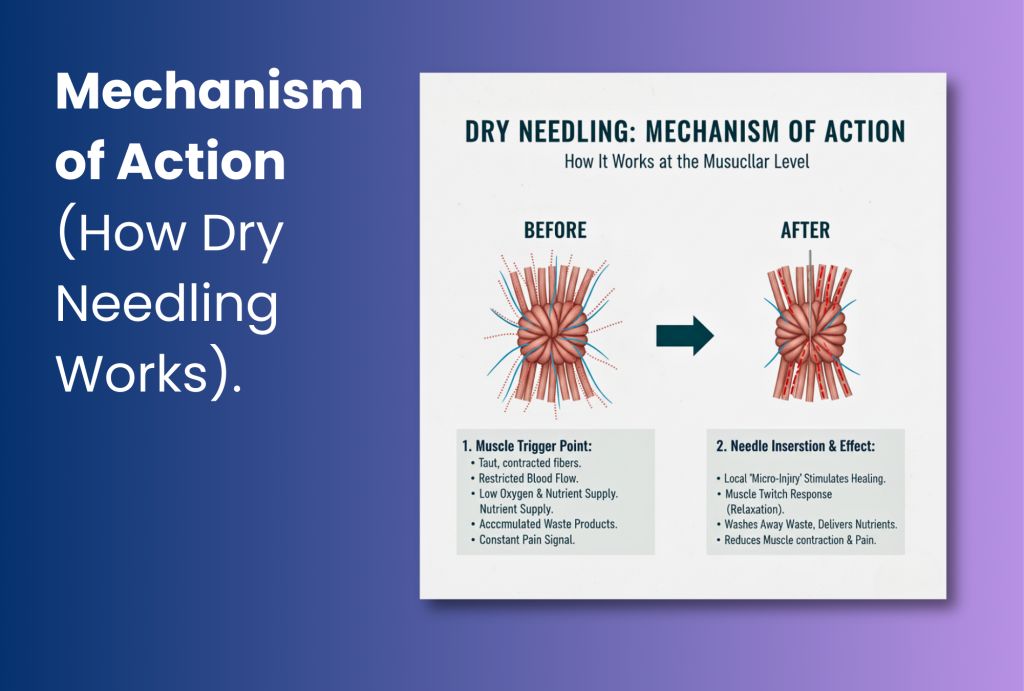
Dry needling is a process that involves several mechanisms. Here are the physiological mechanisms that are involved in needling.
Trigger Point Inactivation
When the needles stimulate the trigger point, it may provoke a local twitch response (a contraction of the muscle fibres in that taut band). This is often taken as an indication that the trigger point has been hit. The twitch may help reset the abnormal muscle contraction and reduce sensitivity.
Improved Blood Flow and Metabolic Reset
Trigger points are the points with reduced blood flow. This can lead to a lack of oxygen, buildup of metabolic waste, or increased acidity, making one feel like they are in an “energy crisis”. Needling helps restore circulation, flushing out waste products, and supplying nutrients and oxygen, enabling the tissue to recover.
Pain Modulation via Nerve Stimulation
A small mechanical stimulation can activate the dermic and muscle sensory nerve fibres. This can, in turn, trigger analgesic mechanisms in the spinal cord and brain. This can involve endomorphin release, gate control phenomena, and other central nervous system effects.
Reduced Muscle Tension
Releasing the taut band or knots makes the muscles relax. This helps improve the range of motion, reduces stiffness, and makes movement less painful.
Physiological Effects
Just like any other treatment, physiological effects are equally important. The treatment, expectations, therapist-patients’ interactions, and belief in the procedure can influence the result. Some patients report feeling immediate relief during or right after the treatment.
Benefits of Dry Needling Therapy
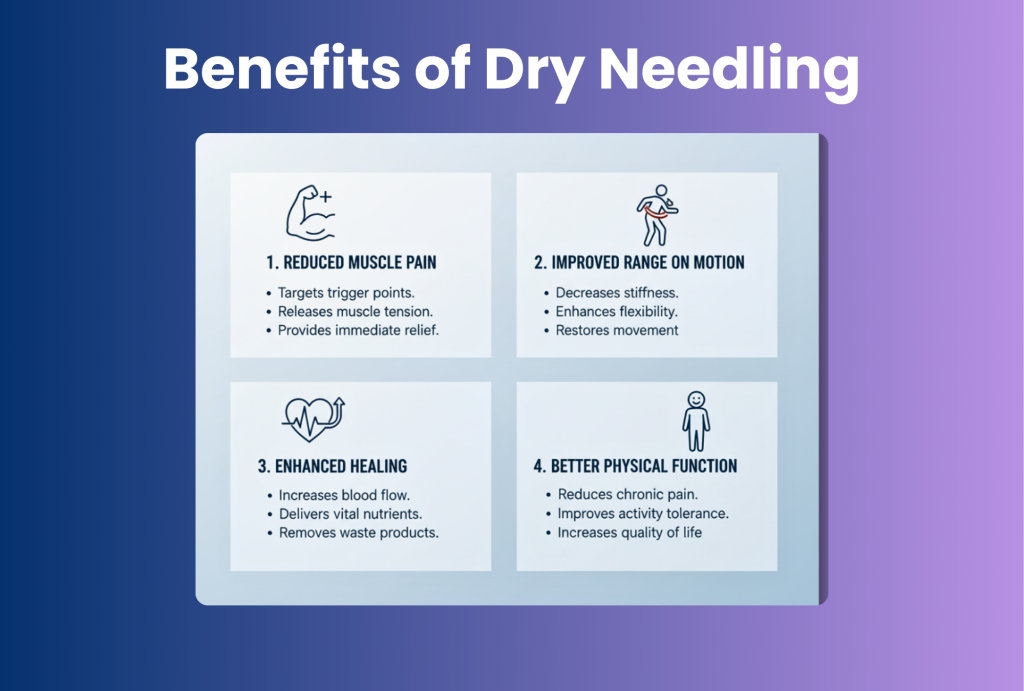
Let’s discuss some of the main benefits that people have experienced with dry needling.
Pain Relief
Dry needling is highly effective in reducing both acute and chronic musculoskeletal pain related to trigger points. It works by disrupting the pain cycle, decreasing local inflammation, and stimulating the nervous system’s natural pain-relieving mechanism. This is commonly treated in areas such as the neck, back, shoulders, hips, legs, and headaches caused by muscle tension.
Deactivation of Trigger Points
Dry needling helps deactivate the trigger points that can cause pain. It elicits a local twitch response (LTR), which relaxes the contracted muscle fibres and reduces tenderness. This is one of the reasons why dry needling is used in physical therapy.
Improved Flexibility
By releasing tight muscle tissue and reducing stiffness, this therapy can improve joint mobility and flexibility. This makes way for a smoother and pain-free movement. This is particularly valuable for athletes and people recovering from injuries. Thus, it is often used with exercise therapy to restore full function more quickly.
Reduced Muscle Tension
Muscle tightness and spasms for long periods can bring discomfort, fatigue, and poor posture. The needling helps relax overactive muscles, improving posture, and reducing the strain around the tissues.
Faster Recovery from Injury
Dry needling increases blood flow and stimulates repair. This can accelerate healing from muscle strain, overuse injuries, and even postural imbalances. This makes it a useful tool in rehabilitation programs.
Less Dependency on Medication
By providing natural and non-pharmacological pain relief, this therapy can help reduce reliance on medicines such as muscle relaxants. This helps to reduce the risk of side effects and dependency. This is especially beneficial for people suffering from chronic pain, looking for safer and longer-term solutions.
Versatility and Compatibility
Another important characteristic of dry needling is that it can be combined seamlessly with other therapeutic approaches. Whether it’s manual therapy, exercise therapy, massage, or electric stimulation, needling offers an added advantage to a comprehensive treatment plan. It is also used along with modalities like ultrasound therapy, stretching routines, or CBT (Cognitive Behavioural Therapy).
Functional Improvement
In addition to pain relief, dry needling therapy also plays a crucial role in improving functional movement. Dry needling also helps prevent future injury by improving movement efficiency. Functional improvement is especially beneficial for athletes, workers with physical labour demands, and individuals in rehabilitation.
Dry Needling Procedure (What to Expect)
If you are considering dry needling, here’s what to expect from before, during, and after treatment.
Before Treatment
- The therapist will take your medical history, check the pain location, muscle function, movement, and other things that indicate trigger points.
- The therapist will explain what dry needling is, what to expect, its risks, the appropriate number of sessions, and side effects.
- Then you may be asked to wear comfortable clothing that allows your therapist to access the area.
During Treatment
- The therapist will touch and locate trigger points, then insert sterile needles. Its depth and angle depend on the muscle and trigger point.
- You may feel a prick or mild discomfort. Some people might also feel a deep ache, pressure, or tightness.
- The needle may be moved in, out, twisted, or left in place. In case of multiple trigger points, multiple needles are inserted.
- Needles might be left inserted for a short time or a long time, depending upon the plan.
After Treatment
- After treatment, some patients feel relief immediately, while others may feel soreness, stiffness, or tiredness in muscles.
- Post treatment, you can move the muscle gently, stay hydrated, and avoid intense activity for a short time.
- Generally, more than one session is required, depending on severity, chronicity, and response.
Is Dry Needling Safe?
Yes, dry needling is generally considered safe, but it must be performed by a licensed and properly trained professional. Here are some reasons why dry needling is considered safe:
- Minimally invasive: Here, no drugs are injected; only thin, sterile needles are used.
- Single-use needles: Practitioners use disposable, sterile needles, which reduces the risk of infection.
- Anatomical precision: Professionals are trained to avoid nerves, blood vessels, and organs while inserting needles.
Some Common Side Effects
Though most people tolerate dry needling very well, it has some mild and temporary side effects.
- Soreness: There may be mild muscle soreness at the needle site that might last for 24-48 hours.
- Bruising: Small bruises may appear, especially in the highly vascular areas.
- Fatigue or dizziness: Some people may feel lightheadedness right after treatment; however, it’s short-lived.
- Minor bleeding: Once the needle is removed, small drops of blood may appear.
Some Rare Serious Risks
While rare serious risks exist that depend on anatomical location and the practitioner’s skills.
- Collapsed Lung: This is a rare complication when dry needling is done near the lungs without proper technique or knowledge.
- Infection: This is also a rare case that can happen when the sterilisation of the needles is compromised.
- Nerve irritation: This is also uncommon; it may cause temporary tingling or altered sensation.
Who Must Avoid Dry Needling?
Dry needling may not be appropriate for everyone. Let’s see who must avoid them.
- People with needle phobia or anxiety.
- Those on blood thinners or bleeding disorders.
- A pregnant woman, as some points are contraindicated during pregnancy.
- People with a weak immune system.
- Individuals with infections, skin lesions, or wounds at the treatment site.
Hence, it is always advised to consult your doctor before beginning dry needling, especially if you have any pre-existing conditions.
Dry Needling vs Other Treatments
Dry needling is one of the several options available in physical therapy. Let’s see how it’s different or similar to other treatments.
| Treatment | Mechanism | Effectiveness | Invasiveness | Primary Goals |
| Dry needling | Uses a thin needle to deactivate trigger points and reduce tension. | Effective for muscle pain, tightness, and restricted movement | Minimally invasive | Release muscle knots, relieve pain, and enhance mobility |
| Wet needling | Injects an anaesthetic or anti-inflammatory agent directly into the trigger point. | Effective for severe trigger point pain | Invasive | Deactivate trigger points through chemicals |
| Acupuncture | Stimulates specific points along the energy meridians, balancing the body’s energy. | Effective for chronic conditions | Minimally invasive | Restores energy, manages chronic pain, and promotes wellness. |
| Massage therapy | Applies pressure to soft tissues to improve circulation and reduce tension. | Effective for general muscle tension, stress, and mild pain | Non-invasive | Eases muscle tightness, promotes relaxation, and enhances recovery. |
| Physical therapy | Uses exercises to improve strength, flexibility, coordination, and joint function. | Effective for long-term recovery and function restoration | Non-invasive | Corrects dysfunction and restores physical performance. |
Conclusion
Dry needling has emerged as a powerful and versatile tool in the treatment of musculoskeletal pain. Rooted in modern medical science, it focuses on the precise treatment of myofascial trigger points. From sports injuries and postural imbalances to chronic pain and tension headaches, it offers long-term benefits for a wide range of conditions.
This therapy’s ability to reduce pain, improve mobility, restore function, and complement other therapeutic interventions makes it a popular choice amongst patients and practitioners. When performed by a qualified practitioner, dry needling is generally safe, minimally invasive, and highly effective.
As research continues to evolve, dry needling is poised to remain a cornerstone in the modern toolkit for physical rehabilitation and pain relief.
Dry Needling Therapy – FAQs
1. What is Dry Needling Therapy and how does it work?
Dry needling is a physiotherapy technique where thin needles are inserted into tight muscles or trigger points to release tension, reduce pain, and improve mobility. It helps in treating musculoskeletal pain, stiffness, and injuries.
2. What conditions can Dry Needling Therapy treat?
Dry needling is effective for back pain, neck pain, shoulder stiffness, tennis elbow, sciatica, arthritis pain, migraines, muscle spasms, and sports injuries. It is often recommended for chronic pain and mobility issues.
3. Is Dry Needling Therapy safe?
Yes. When performed by a trained physiotherapist, dry needling is a safe and evidence-based treatment. The needles used are sterile, single-use, and extremely fine, minimizing discomfort and risks.
4. What is the difference between Dry Needling and Acupuncture?
While both use thin needles, dry needling targets muscle knots and trigger points to relieve pain and restore function. Acupuncture, on the other hand, is based on traditional Chinese medicine and focuses on energy meridians.
5. Does Dry Needling Therapy hurt?
Most patients feel only a mild prick or muscle twitch during insertion. Some experience temporary soreness, which usually subsides within 24–48 hours, leaving muscles more relaxed and pain-free.
6. How many sessions of Dry Needling are required for results?
The number of sessions depends on the condition and severity. Some patients notice relief after the first session, while chronic pain may require 4–6 sessions for long-term results.
7. Who should not undergo Dry Needling Therapy?
Pregnant women, people with needle phobia, bleeding disorders, or certain medical conditions should consult their physiotherapist before opting for dry needling.
8. How effective is Dry Needling compared to other physiotherapy treatments?
Dry needling often provides faster relief for muscle-related pain compared to traditional massage or stretching. When combined with physiotherapy exercises and posture correction, it gives long-lasting results.
9. Can athletes benefit from Dry Needling Therapy?
Absolutely. Dry needling helps athletes recover from muscle fatigue, injuries, and overuse by reducing stiffness, improving circulation, and enhancing performance.
10. Where can I book a Dry Needling Therapy session near me?
You can book an online physiotherapy consultation or visit a nearby physiotherapy clinic that offers dry needling. A qualified physiotherapist will assess your condition and create a customized treatment plan.


