

Here are Yoga Poses for Insomnia aids in creating an alignment in the body and mind to ensure mindfulness and agility of the body. You can induce long hours of sleep by combining physical postures, alertness of your body, and breath control. Lack of sleep is a rising concern among ageing individuals and youth. Especially after the menopause stages and during pregnancy, women are also found to face insomnia. Working on yoga poses every day can help in reducing stress and inducing a sense of calmness in the mind.
If you are facing stress-related insomnia, then certain yoga postures and poses that we are about to share can help you cure the issue.
Yoga For Insomnia: Does It Help?
Often, before we begin anything, a question comes to our mind whether the outcomes are effective. In the case of yoga for insomnia, you will surely find benefits if you are consistent and doing it right. That’s why it is essential to know which are the right steps so you don’t end up with unnecessary sprains or aches.
Combining conscious breathing with strength and flexibility, yoga for insomnia can aid in effectively reducing the level of stress and inducing peaceful slumber. While some of these yoga poses focus mainly on spirituality and tapping into one’s inner core, some involve flexibility and movement. If you combine both kinds, the outcomes will gradually work in your favour. Especially women with insomnia who have already tried all types of medication and found it futile can focus on yoga poses to better the situation.
Types Of Yogas That Help With Insomnia
Although yoga is generally helpful for several health issues, not all poses can benefit you when it comes to inducing sleep and curing insomnia. For instance, yoga poses like hot yoga or Vinyasa can increase the heart rate; hence, it will not be useful for creating a sense of calmness in the body.
On the other hand, low-intensity forms of yoga are beneficial when you are facing insomnia. These include-
- Gentle Hatha Yoga- There are several sub-categories of yoga for insomnia, one of which is termed Gentle or Hatha Yoga. You need to slowly sway your body in these forms and, in the process, create synchronisation. These yogas are used to calm down your heart and hence do not involve hardcore movement. If you are looking for yoga for insomnia, practice Gentle hatha yoga before you head off to bed at night.
- Restorative / Yin Yoga- Here is another form of yoga for insomnia. It is concerned with inducing sleep, especially when you are facing a stressful schedule. In this yoga for insomnia, you need to engage in a lot of stretching and then hold the posture for a long time. This way, stability is created in the body, inducing a state of peace and calmness.
- Yoga Nidra– In this kind of yoga, the poses involve lying in the resting posture and aiming to create a state where you can exist in a state between being awake and asleep completely. This way, you are somewhat conscious but in a state of drowsiness to relax the mind. Researches reveal that by practising Nidra yoga for 11 minutes every day, you can induce sleep and observe positive results in just 30 days.
Best yoga poses for better sleep
Check out the poses and how to perfect them as you practise yoga poses for insomnia before sleep.
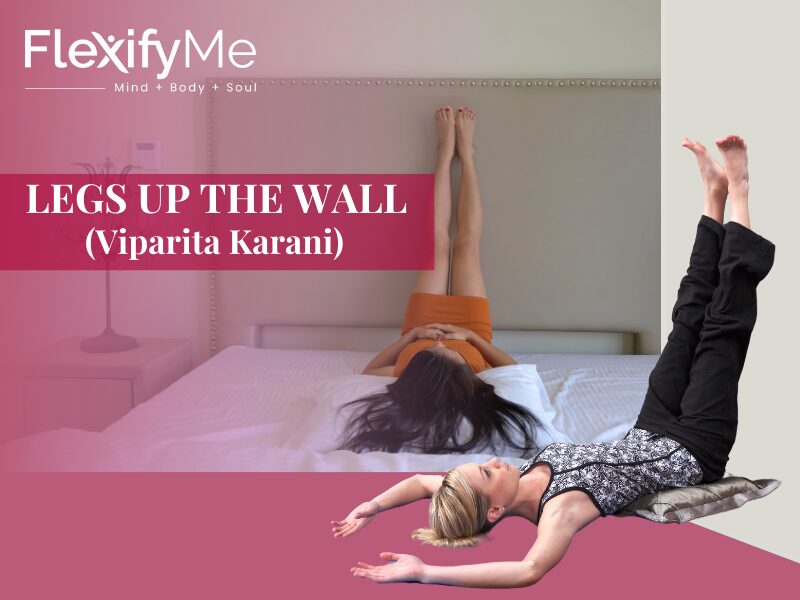
1.Legs Up The Wall (Viparita Karani)
How to Do It:
- Sit sideways against the wall with your legs stretched out in front of your body
- As you exhale, gently lower your upper body to the floor while swinging your legs up and over so they rest against the wall
- Your sitting bones should be close to the wall, but you can adjust the distance for comfort
- Keep your arms relaxed at your sides with palms facing upward
- Allow your shoulder blades to rest naturally on the floor
- Close your eyes and breathe deeply, letting gravity gently stretch your legs
Benefits for Insomnia:
- Reduces cortisol levels by activating the body’s relaxation response
- Calms the nervous system by reversing blood flow from the legs to the upper body and brain
- Releases tension in the legs, feet, and lower back accumulated from daily activities
- Reduces anxiety and quiets racing thoughts
- Helps regulate blood pressure and heart rate for better sleep preparation
Hold Time: 5-10 minutes
Precautions:
- Avoid if you have glaucoma, high blood pressure, or serious eye conditions
- Not recommended during menstruation or pregnancy (consult your doctor)
- If you have neck problems, place a folded blanket under your neck for support
- Modify by placing a cushion or bolster under your sacrum (lower back) to elevate your hips and reduce strain on the lower back
Pro Tip: This is one of the most effective poses for insomnia—practice it 30 minutes before bed for maximum benefit. If your legs feel tingly or uncomfortable, move slightly away from the wall to reduce the intensity. You can also place an eye pillow over your eyes to deepen relaxation and block out light.
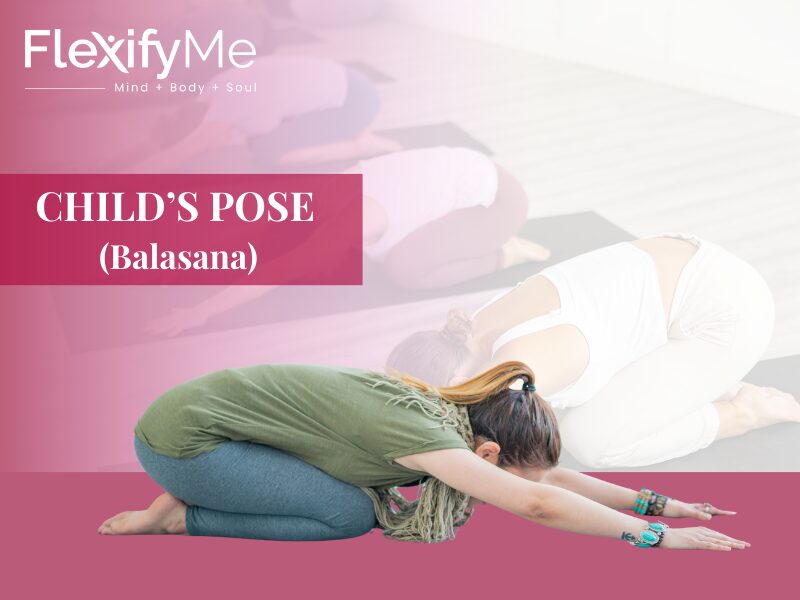
2.Child’s Pose (Balasana)
How to Do It:
- Begin by kneeling on the floor with your knees hip-width apart or together
- Allow the tops of your feet to flatten on the ground with your big toes touching
- Sit back on your heels, finding a comfortable resting position
- Take a deep breath in, then as you exhale, lean forward and fold your spine over your legs
- Rest your forehead gently on the floor (or on a block or folded blanket if it doesn’t reach comfortably)
- Extend your arms forward in front of your body with palms facing down, or rest them alongside your body with palms facing up
- Allow your entire body to soften and release with each exhale
Benefits for Insomnia:
- Reduces cortisol and stress hormones by creating a sense of safety and security
- Calms the nervous system through gentle compression of the torso and deep breathing
- Releases tension in the shoulders, neck, upper back, and spine
- Quiets the mind by encouraging inward focus and surrender
- Gently massages internal organs, promoting better digestion for restful sleep
Hold Time: 3-5 minutes (or longer if comfortable)
Precautions:
- Avoid if you have knee injuries or severe knee pain
- Not recommended if you’re pregnant (use a wide-knee variation with space for your belly)
- If you have hip problems, place a folded blanket between your hips and heels for cushioning
- Modify by placing a bolster or stack of blankets between your thighs and torso for support, or rest your forehead on a yoga block if it doesn’t comfortably reach the floor
Pro Tip: This pose is often called the “ultimate stress reliever.” Make it even more calming by practicing deep belly breathing—feel your abdomen expand against your thighs with each inhale. You can also gently rock side to side to massage your forehead and release facial tension. Practice this pose whenever you feel overwhelmed during the day or as the final pose before sleep.
3.Reclined Butterfly Pose (Supta Baddha Konasana)
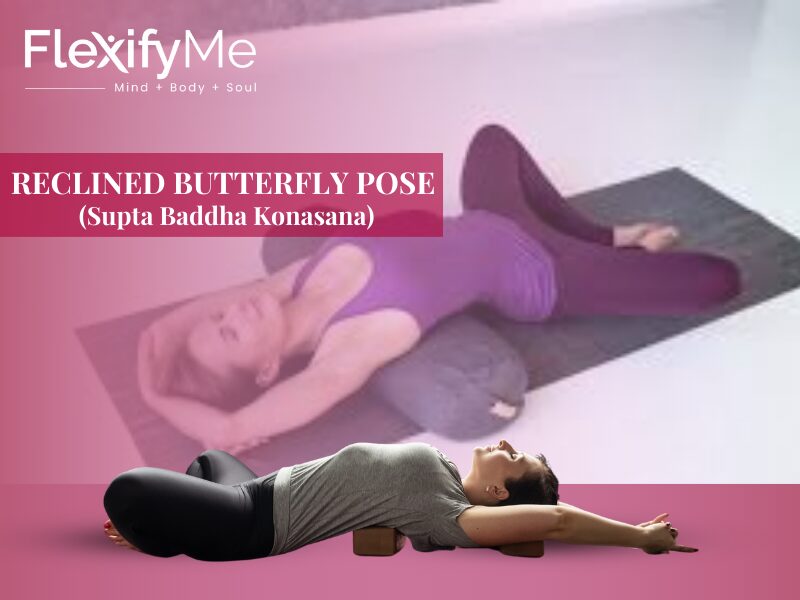
How to Do It:
- Lie down on your back on a comfortable surface with your legs and arms stretched out straight
- Bend both knees and draw your feet toward your pelvis
- Bring the soles of your feet together, allowing your knees to fall open naturally to the sides, creating a diamond shape with your legs
- Let your knees relax toward the floor without forcing them down
- Rest your arms comfortably at your sides with palms facing up, or place one hand on your heart and one on your belly
- Close your eyes and allow your body to completely surrender to gravity
- Breathe naturally and feel your chest gently opening with each inhale
Benefits for Insomnia:
- Reduces cortisol levels and promotes deep relaxation throughout the entire body
- Calms the nervous system by opening the chest and encouraging fuller, slower breathing
- Releases tension in the hips, groin, and inner thighs where emotional stress is often stored
- Opens the heart center, reducing anxiety and promoting feelings of peace
- Improves circulation and reduces physical discomfort that interferes with sleep
Hold Time: 5-10 minutes
Precautions:
- Avoid if you have groin or knee injuries without adequate support
- If you have lower back discomfort, place a rolled blanket or bolster under your spine for support
- Pregnant women should elevate their upper body with pillows or cushions and avoid lying flat after the first trimester
- Modify by placing blocks, cushions, or folded blankets under each knee to reduce the intensity of the hip opening and prevent strain
Pro Tip: Make this pose as comfortable as possible—comfort is more important than depth of stretch for sleep benefits. Use as many props as needed so you can hold the pose for at least 5 minutes without any discomfort. Practice this as your final pose before sleep, or even do it in bed. Pair it with visualization: imagine tension melting away from your body with each exhale, like ice melting in warm sunshine.
4. Corpse Pose (Savasana)
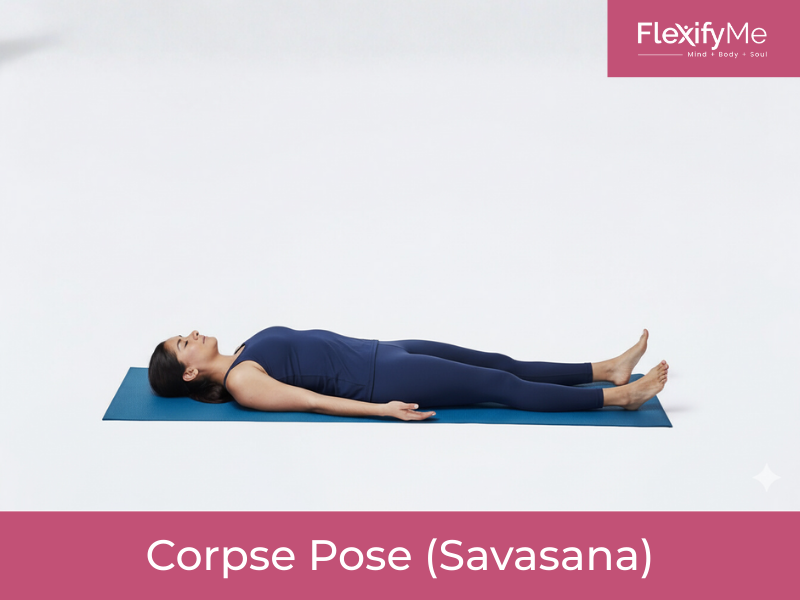
How to Do It:
- Lie flat on your back on a comfortable surface with your legs extended
- Allow your feet to fall open naturally, about hip-width apart
- Rest your arms alongside your body, palms facing upward, about 6 inches away from your torso
- Close your eyes gently and relax your facial muscles
- Take slow, deep breaths and consciously release tension from each body part, starting from your toes and moving up to your head
- Allow your body to feel heavy and supported by the ground beneath you
Benefits for Insomnia:
- Activates the parasympathetic nervous system, triggering the body’s natural relaxation response
- Reduces cortisol levels and lowers blood pressure
- Releases accumulated tension throughout the entire body
- Calms mental chatter and prepares the mind for sleep
- Helps transition from active state to rest mode
Hold Time: 5-10 minutes
Precautions:
- Avoid if you have severe lower back pain (place a bolster under knees for support)
- Pregnant women after 20 weeks should use a side-lying variation instead
- If you feel anxious lying flat, try placing a folded blanket under your head
- Modify by covering yourself with a light blanket if you tend to feel cold
Pro Tip: Set a gentle alarm for 10 minutes so you can completely let go without worrying about time. Focus on making your exhalations longer than your inhalations to enhance the relaxation effect.
5. Standing Forward Bend (Uttanasana)
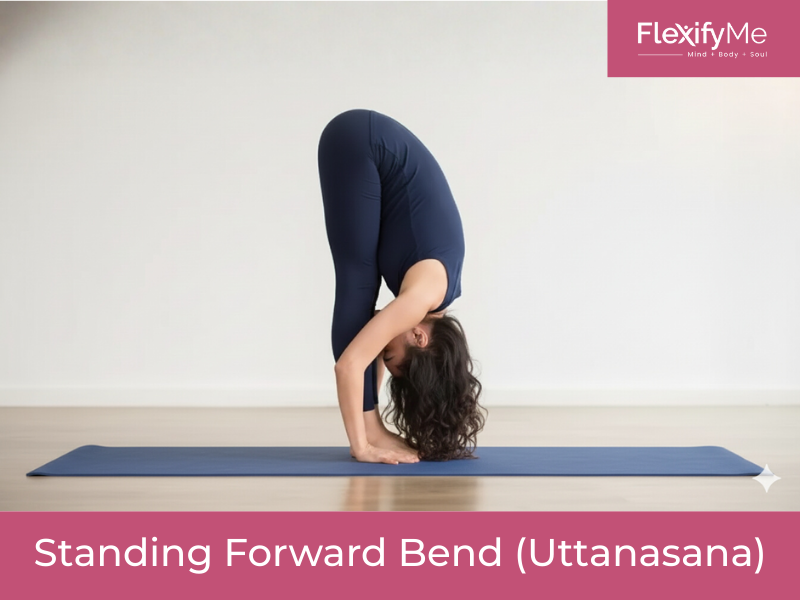
How to Do It:
- Stand with your feet hip-width apart, toes pointing forward
- Inhale and lengthen your spine, lifting your chest
- As you exhale, hinge at your hips and fold forward, allowing your upper body to hang loosely
- Let your head and neck relax completely, releasing all tension
- Bend your knees slightly if you feel strain in your hamstrings or lower back
- Allow your arms to dangle toward the floor, or hold opposite elbows
- Sway gently side to side if it feels comfortable
Benefits for Insomnia:
- Calms the nervous system by bringing your head below your heart
- Reduces anxiety and mental fatigue
- Releases tension in the spine, shoulders, and neck
- Improves blood circulation to the brain, promoting mental clarity and calmness
- Gently stretches the hamstrings and lower back
Hold Time: 1-3 minutes
Precautions:
- Avoid if you have uncontrolled high blood pressure or glaucoma
- Skip this pose if you have a herniated disc or severe back injury
- Keep knees bent if you have tight hamstrings
- Modify by placing your hands on blocks or a chair if you cannot reach the floor comfortably
Pro Tip: Try this pose right before bed as part of your wind-down routine. Focus on releasing the weight of your thoughts with each exhale, imagining stress draining out through the crown of your head.
6. Supine Spinal Twist (Supta Matsyendrasana)
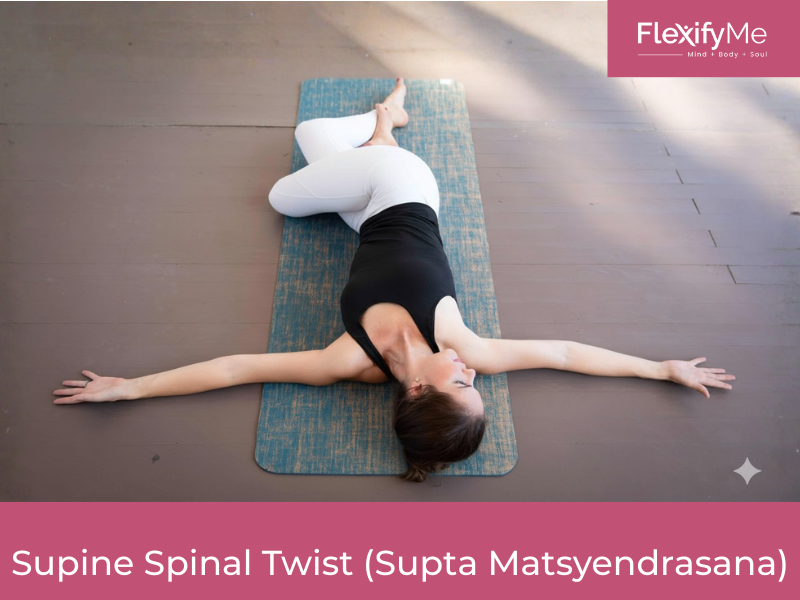
How to Do It:
- Lie on your back with your legs extended and arms stretched out to the sides at shoulder height, forming a T-shape
- Draw your right knee into your chest, keeping your left leg extended
- Gently guide your right knee across your body to the left side, allowing it to rest on the floor
- Turn your head to look toward your right hand
- Keep both shoulders grounded on the floor as much as possible
- Hold for several breaths, then repeat on the opposite side
Benefits for Insomnia:
- Releases tension accumulated in the spine and lower back throughout the day
- Gently massages internal organs, promoting better digestion (important for sleep)
- Calms the nervous system through gentle twisting motion
- Reduces physical discomfort that may interfere with sleep
- Creates a sense of release and letting go
Hold Time: 2-4 minutes per side
Precautions:
- Avoid if you have a spinal injury or herniated disc
- Pregnant women should consult with their doctor before practicing twists
- If you have knee problems, place a cushion under the bent knee for support
- Modify by keeping the bottom leg bent if the extended position feels uncomfortable
Pro Tip: As you twist, visualize wringing out all the stress and tension from your day like wringing water from a towel. Breathe deeply into any areas of tightness.
7. Happy Baby Pose (Ananda Balasana)
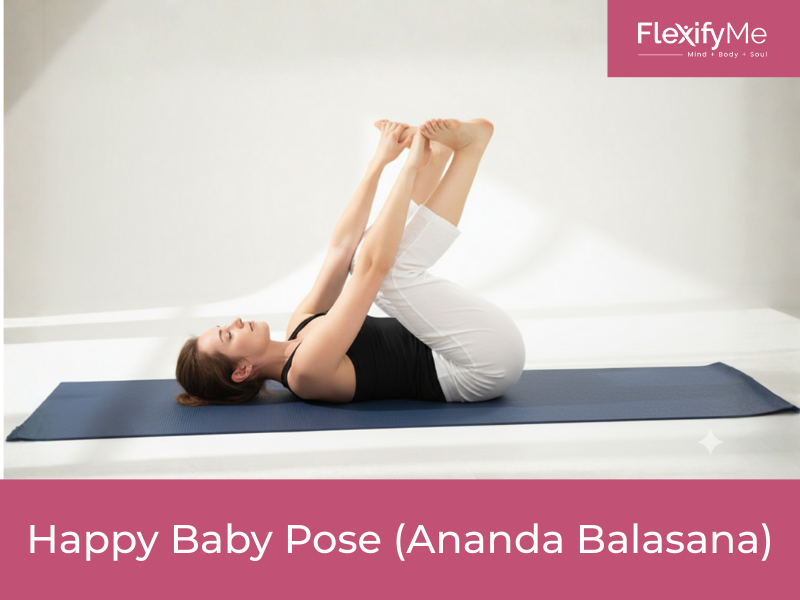
How to Do It:
- Lie on your back and draw both knees toward your chest
- Bend your knees so your shins are perpendicular to the floor
- Reach up and grab the outer edges of your feet with your hands (or hold your ankles or shins)
- Gently pull your knees down toward your armpits, keeping them wide apart
- Flex your feet, pushing your heels toward the ceiling
- Rock gently side to side if it feels good, massaging your lower back
- Keep your tailbone grounded and your spine neutral
Benefits for Insomnia:
- Releases deep tension in the hips, which often store emotional stress
- Calms the mind through gentle, playful movement
- Massages the lower back and sacrum
- Reduces anxiety and promotes feelings of safety and comfort
- Opens the inner groin and stretches the spine
Hold Time: 1-3 minutes
Precautions:
- Avoid if you are pregnant
- Skip this pose if you have knee or ankle injuries
- If you have tight hips or hamstrings, use a strap around your feet instead of holding them directly
- Modify by holding behind your thighs instead of your feet if you cannot reach comfortably
Pro Tip: This pose should feel nurturing and comfortable, like a baby at rest. If you feel any strain, ease up on the intensity. Focus on your breath and allow yourself to feel playful and relaxed.
8. Cat-Cow Pose (Marjaryasana-Bitilasana)
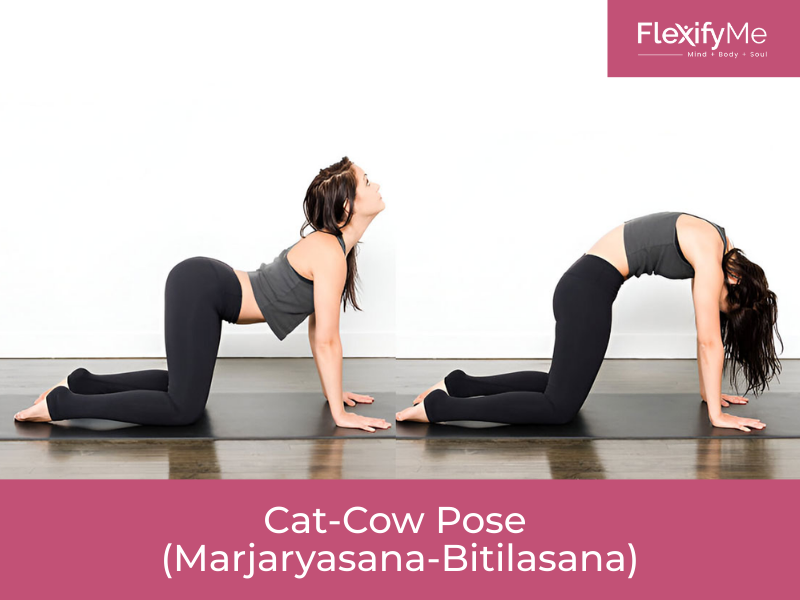
How to Do It:
- Start on your hands and knees in a tabletop position
- Align your wrists directly under your shoulders and knees under your hips
- Inhale as you drop your belly toward the floor, lifting your chest and tailbone upward (Cow Pose)
- Look gently upward, creating a gentle arch in your back
- Exhale as you round your spine toward the ceiling, tucking your chin to your chest (Cat Pose)
- Draw your navel toward your spine
- Continue flowing between these two positions, synchronizing movement with breath
- Move slowly and mindfully, focusing on the wave-like motion of your spine
Benefits for Insomnia:
- Synchronizes breath with movement, creating a meditative state
- Releases tension in the spine, neck, and shoulders
- Calms the nervous system through rhythmic, gentle movement
- Improves spinal flexibility and reduces physical discomfort
- Encourages mindfulness and present-moment awareness
Hold Time: 5-10 rounds (1-2 minutes total)
Precautions:
- Avoid if you have a recent back or neck injury
- If you have wrist pain, try doing this on your forearms instead
- Pregnant women should keep the spine more neutral and avoid deep arching
- Modify by placing a folded blanket under your knees for cushioning
Pro Tip: Make this your evening ritual to release the day’s tension. Match each movement to your breath—inhale for Cow, exhale for Cat. Let the movement be fluid like waves, washing away stress and preparing you for restful sleep.
9. Seated Forward Bend (Paschimottanasana)
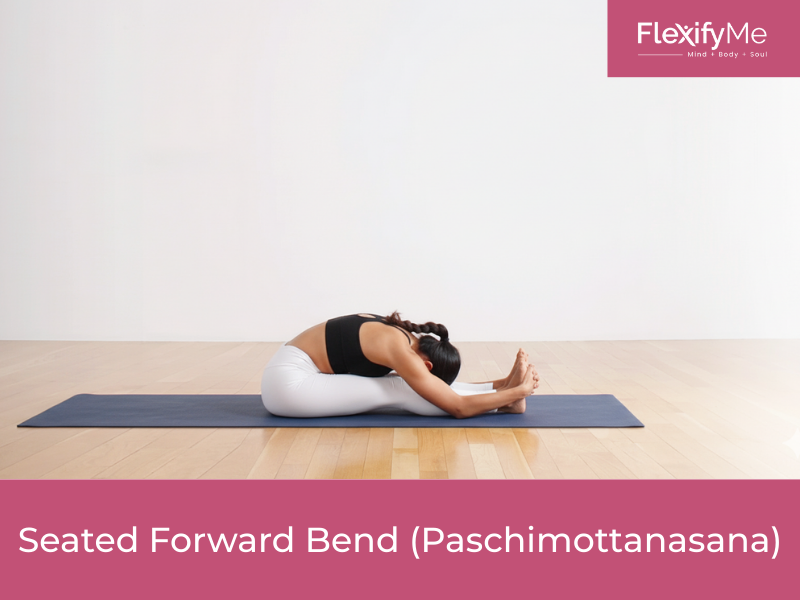
How to Do It:
- Sit on the floor with your legs extended straight in front of you
- Flex your feet, pressing through your heels
- Sit up tall, lengthening your spine
- Inhale and raise your arms overhead
- As you exhale, hinge at your hips (not your waist) and fold forward over your legs
- Reach for your feet, ankles, or shins—wherever you can comfortably reach
- Keep your spine long rather than rounding your back
- Allow your head and neck to relax
- With each exhale, try to release a little deeper into the stretch
Benefits for Insomnia:
- Calms the brain and helps relieve stress and mild depression
- Reduces anxiety by activating the parasympathetic nervous system
- Stretches the spine, shoulders, and hamstrings
- Stimulates the liver, kidneys, and reproductive organs
- Helps quiet the mind by encouraging inward focus
Hold Time: 3-5 minutes
Precautions:
- Avoid if you have asthma, diarrhea, or back injury
- Do not force the stretch if you have tight hamstrings
- Pregnant women should keep legs wide apart to accommodate the belly
- Modify by sitting on a folded blanket or cushion to elevate your hips, making the forward fold easier
Pro Tip: Place a bolster or stack of pillows on your legs to rest your torso on if you can’t reach far forward. This supported version is even more relaxing and allows you to hold the pose longer without strain. Focus on lengthening with each inhale and softening with each exhale.
10. Reclining Bound Angle Pose (Supta Baddha Konasana)
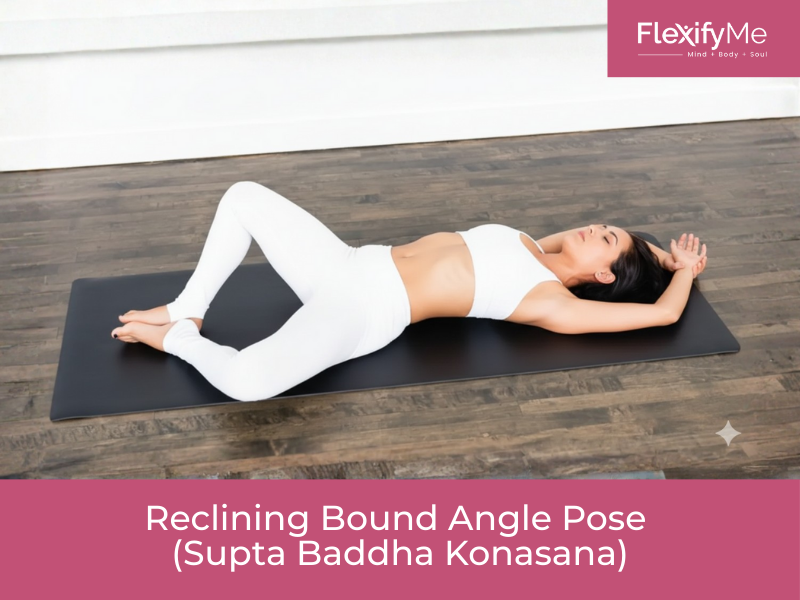
How to Do It:
- Lie on your back with a bolster or folded blanket under your spine for support
- Bend your knees and bring the soles of your feet together
- Allow your knees to fall open to the sides, creating a diamond shape with your legs
- Place cushions or blocks under each knee for support if needed
- Rest your arms out to the sides, palms facing up, or place one hand on your heart and one on your belly
- Close your eyes and breathe naturally
- Allow gravity to gently open your hips without forcing
- Feel your chest opening and your body relaxing into the support beneath you
Benefits for Insomnia:
- Opens the chest and encourages deep, diaphragmatic breathing
- Reduces cortisol levels and promotes hormonal balance
- Releases tension in the hips and groin, where we often hold emotional stress
- Calms the nervous system and reduces anxiety
- Creates a sense of vulnerability and surrender that aids sleep
Hold Time: 5-10 minutes
Precautions:
- Avoid if you have groin or knee injuries without proper support
- If you have lower back issues, use more support under your back and knees
- Pregnant women should use adequate support and avoid lying flat after the first trimester
- Modify by placing blocks or cushions under your knees to reduce the intensity of the hip opening
Pro Tip: This is one of the most restorative poses for insomnia. Make yourself as comfortable as possible with blankets and props—the goal is complete relaxation, not a deep stretch. Practice this pose in bed as the last thing before turning off the lights. Pair it with 4-7-8 breathing: inhale for 4 counts, hold for 7, exhale for 8.
Insomnia can be a dreadful condition to manage. Reach out to the finest yoga gurus on FlexifyMe and learn about various yoga for insomnia which can work for you. They will customise plans to help you get fruitful results within a short span. Book your free Demo for online yoga classes today.
Tips To Practise Yoga Poses For Insomnia
The duration for which you are practising yoga for insomnia does not matter as long as you are doing it right and consistently. Here are some tips that can help you get started.
- Create a calm environment around you- While you are practising yoga for insomnia, make sure that you are in a space that is dimly lit. The rooms should also be calm, without any chaos around you. A pleasant sound and soothing light with a sweet fragrance is effective for reducing insomnia. Perhaps you can use a diffuse essential oil, which can help create a sensation of calmness and focus. In the end, you need to create a connection between yoga and sleep for an aligned state of mind.
- Pick a regular timing schedule- It is recommended that you pick a particular time of the day to practise yoga. A specific time will help you have a regular circadian rhythm, which is essential for the induction of sleep. You might choose to do yoga right before you wake up or before going to bed. Be consistent with your clock and increase the duration gradually.
- Loose nightwear while practising- You can change into a yoga outfit or choose to wear loose night clothes so that you feel relaxed and go to bed right after the session.
- Begin slow but steady- There is no need to exert yourself at the beginning of the sessions. Initially, you should go slow and gentle on yourself. Listen to your body to understand which yoga poses for insomnia suit you the best. Moreover, as a beginner, you might find it hard to remain focused for a long time, and hence you need to schedule shorter periods.
Some Prenatal Yoga Precautions
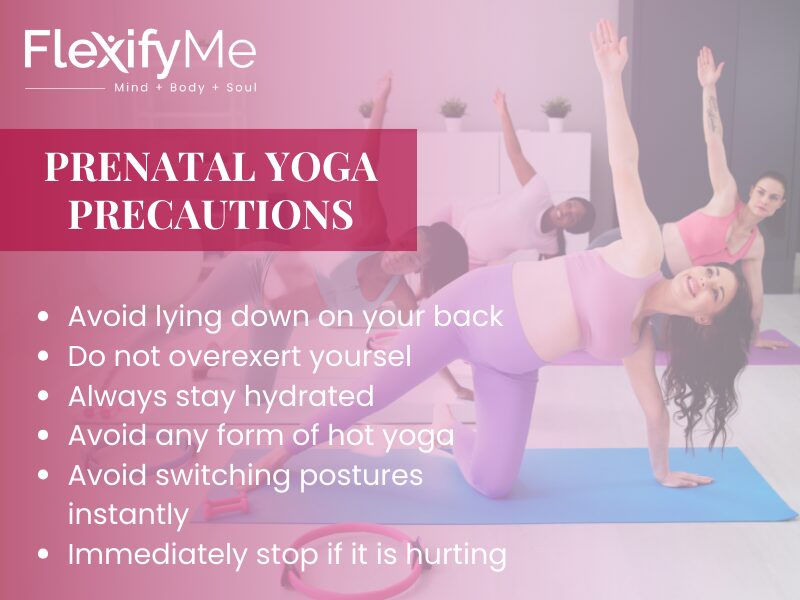
Lack of sleep during pregnancy is a very common condition that is observed in many women. Hence, in the prenatal stage, a mother has to take significant precautions to ensure safety while practising yoga for insomnia. We have listed some of them for you below.
- Avoid lying down on your back- After 16 to 20 weeks into the stage of pregnancy, a woman should avoid lying on the floor while facing their back. Even lying on your stomach is avoided during this time. While performing this yoga for insomnia, you can use a cushion to support your uterus.
- Do not overexert yourself- Never exert yourself to go beyond and more than you can manage to do in a single session. Perform yoga as much as your body permits without hurting.
- Always stay hydrated- Do not let your body get dehydrated during the session, and continue to drink water while you perform the steps.
- Avoid any form of hot yoga- Avoid raising the core of your body and engaging in intense exercises like hot yoga that can potentially hurt one or lead to miscarriage.
- Avoid switching postures instantly- Keep your breathing consistent while you perform the poses, and do not transition from one stage to another instantly.
- Immediately stop if it is hurting- During the sessions, if you feel out of breath or dizzy, immediately avoid and drink fluids in plenty.
Bottom line
Indulge in mind-body therapy through poses like yoga for insomnia. There are many forms of yoga that you can practice to induce sleep and enter a relaxed state of mind.
Whether it is Yin Yoga or Hatha Yoga that you are practising, give your sessions some time to show the beneficial effects. Some good poses for taking care of sleep disorders include butterfly pose, child pose, corpse pose for curing insomnia, and so on. Try practising them shortly before going to bed, and you will eventually find it beneficial. Although under conditions of age, chronic aches or pregnancy, you need to keep these precautions in mind.
Frequently Asked Questions for Yoga for Insomnia
1. What is the best time to practice yoga for insomnia?
The optimal time to practice yoga for insomnia is 1-2 hours before bedtime, ideally between 8-10 PM. This allows your body temperature to naturally decrease after practice, which promotes sleep. Avoid practicing vigorous yoga right before bed, as it may be too stimulating. A gentle 15-20 minute evening routine is most effective for sleep preparation.
2. How long does it take for yoga to help with insomnia?
Most people notice improvements in sleep quality within 2-4 weeks of consistent practice. Some experience better sleep after just 3-5 sessions, while chronic insomnia may require 6-8 weeks of regular practice. The key is consistency—practicing 4-5 times per week yields better results than sporadic sessions. Your body needs time to retrain its relaxation response.
3. Can I do yoga in bed for insomnia?
Yes, several yoga poses can be safely performed in bed, including Reclined Butterfly, Supine Spinal Twist, Legs Up The Wall (against headboard), and gentle breathing exercises. Bed yoga is particularly helpful for those with mobility issues or when you wake up in the middle of the night. However, ensure your mattress provides adequate support and avoid poses that require balance or stability.
4. Is yoga better than sleeping pills for insomnia?
Yoga addresses the root causes of insomnia (stress, anxiety, physical tension) without side effects like dependency, daytime drowsiness, or tolerance that sleeping pills can cause. Studies show yoga improves sleep quality by 42-55% naturally. However, for severe or chronic insomnia, consult a healthcare provider. Many people successfully combine yoga with reduced medication under medical supervision.
5. Which breathing technique is best for falling asleep fast?
The 4-7-8 breathing technique is most effective for rapid sleep induction. Inhale through your nose for 4 counts, hold your breath for 7 counts, and exhale slowly through your mouth for 8 counts. Repeat 4-8 cycles. This technique activates your parasympathetic nervous system within 2-3 minutes, naturally lowering heart rate and inducing drowsiness. Practice it lying in bed with lights off.
6. Can yoga help with anxiety-related insomnia?
Yes, yoga is particularly effective for anxiety-induced insomnia. Research shows that regular yoga practice reduces anxiety levels by 30-40% by lowering cortisol, activating GABA neurotransmitters, and regulating the stress response system. Focus on restorative poses, Yoga Nidra, and breathing exercises. Combining yoga with meditation provides even stronger anxiety relief and sleep improvement.
7. How many yoga poses should I do before sleep?
A bedtime yoga routine should include 5-8 poses held for 2-5 minutes each, totaling 15-30 minutes. Quality matters more than quantity. Focus on restorative poses that promote relaxation rather than trying to fit in many poses. A simple sequence might include: Cat-Cow, Child’s Pose, Seated Forward Bend, Supine Twist, Reclined Butterfly, and Legs Up The Wall.
8. Should I do yoga for insomnia on an empty stomach?
Yes, it’s best to practice yoga 2-3 hours after your last meal. A full stomach can cause discomfort in forward bends and twisting poses, and digestion can interfere with relaxation. If you must eat, have a light snack (banana, warm milk, or herbal tea) at least 1 hour before practice. Avoid caffeine, heavy meals, and alcohol within 4 hours of bedtime yoga.
9. Can yoga cure insomnia permanently?
While yoga cannot “cure” all types of insomnia, it can effectively manage and significantly reduce symptoms for 60-70% of practitioners when practiced consistently. For stress-related and mild-to-moderate insomnia, yoga can provide long-term relief. However, insomnia caused by medical conditions, sleep disorders like sleep apnea, or medication side effects requires medical evaluation. Yoga works best as part of comprehensive sleep hygiene.
10. What should I do if yoga makes me more awake instead of sleepy?
If you feel energized after yoga, you may be practicing too vigorously or too close to bedtime. Switch to gentler styles (Yin, Restorative, or Yoga Nidra) and avoid stimulating poses like backbends or inversions in the evening. Practice earlier (2-3 hours before bed), dim the lights, focus more on breathing than physical poses, and always end with Corpse Pose for at least 5 minutes to allow your nervous system to fully relax.


